
Last updated September 23, 2026
Whole-system duct and dryer vent check with before-and-after photos - you see exactly what came out of your vents
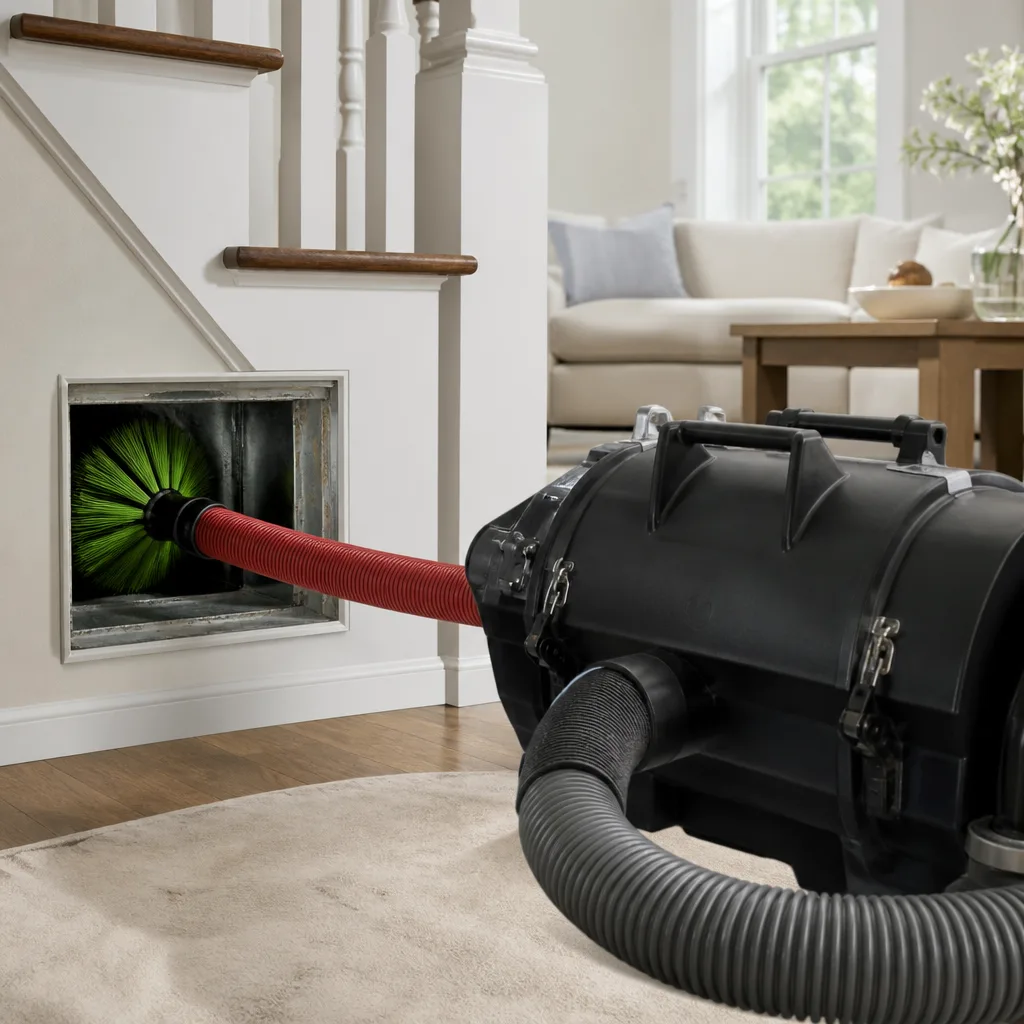
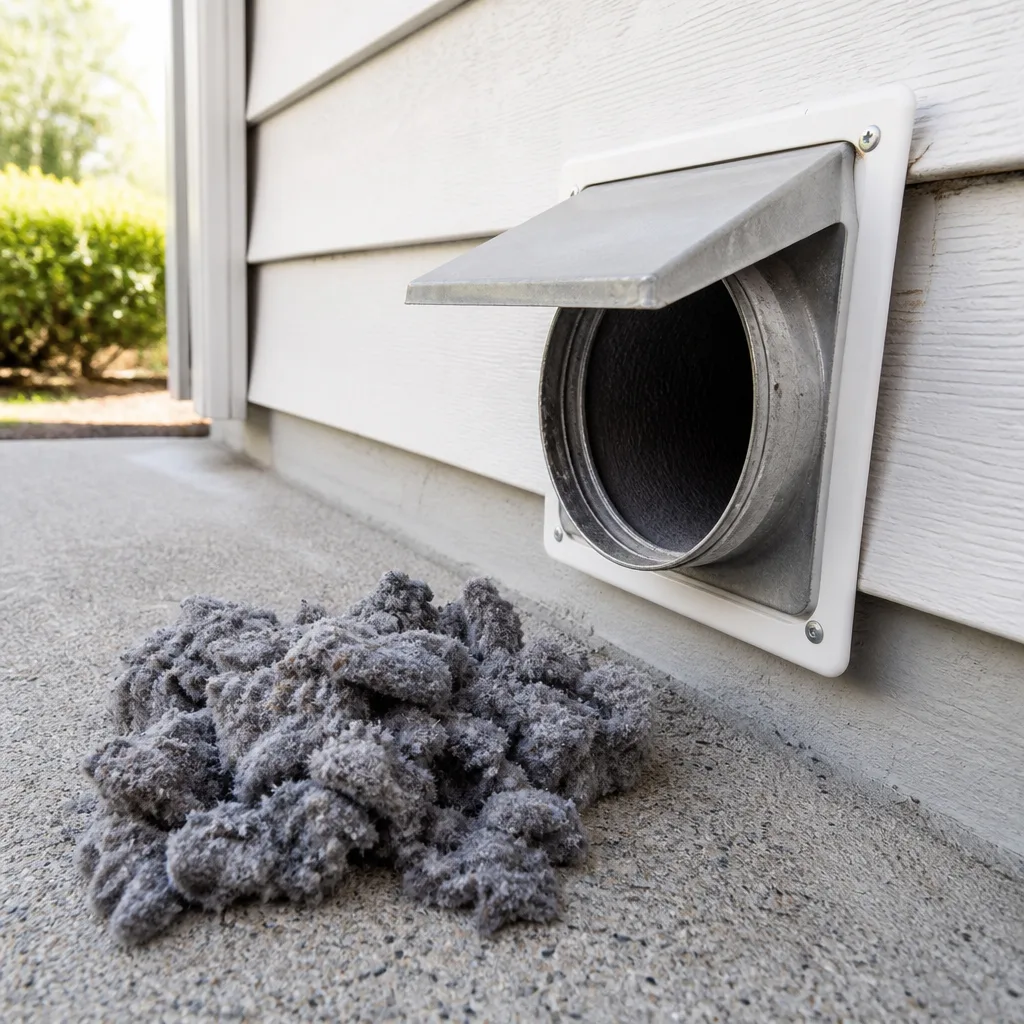
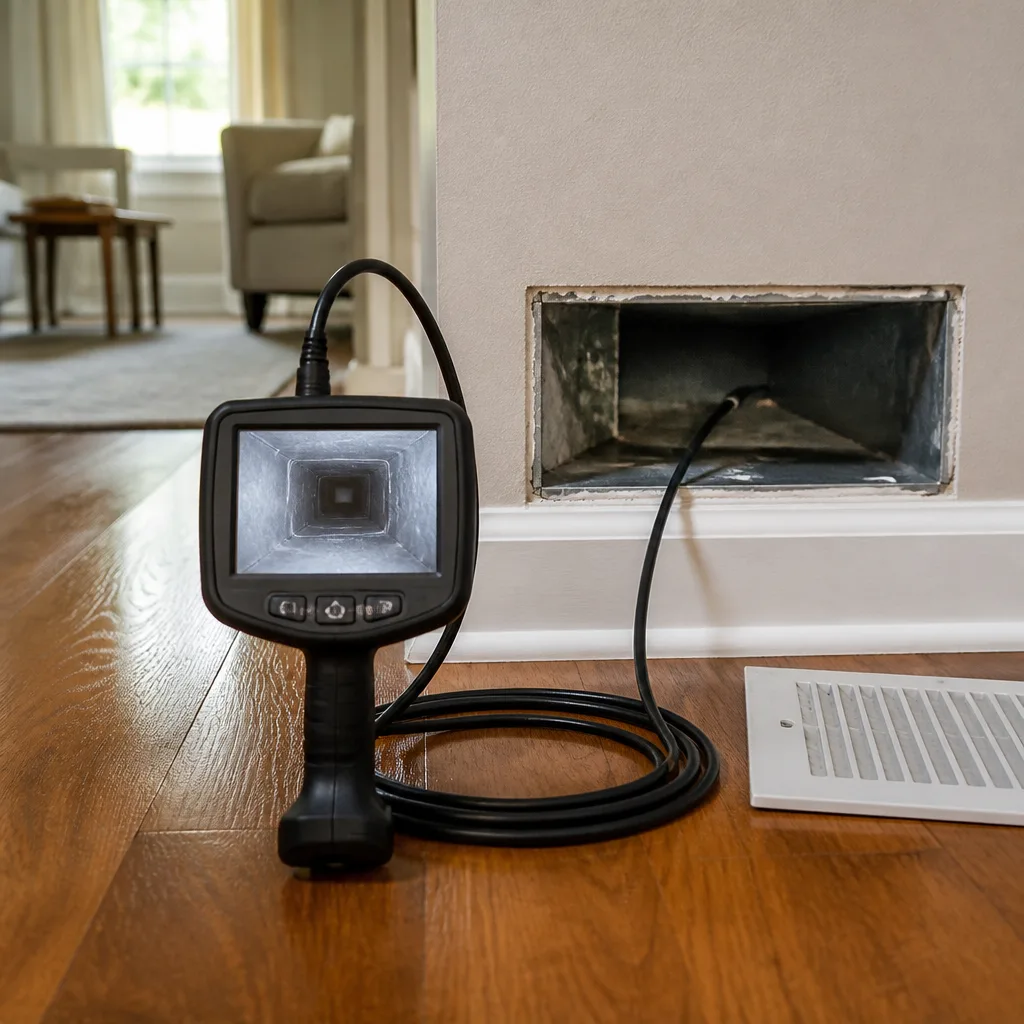
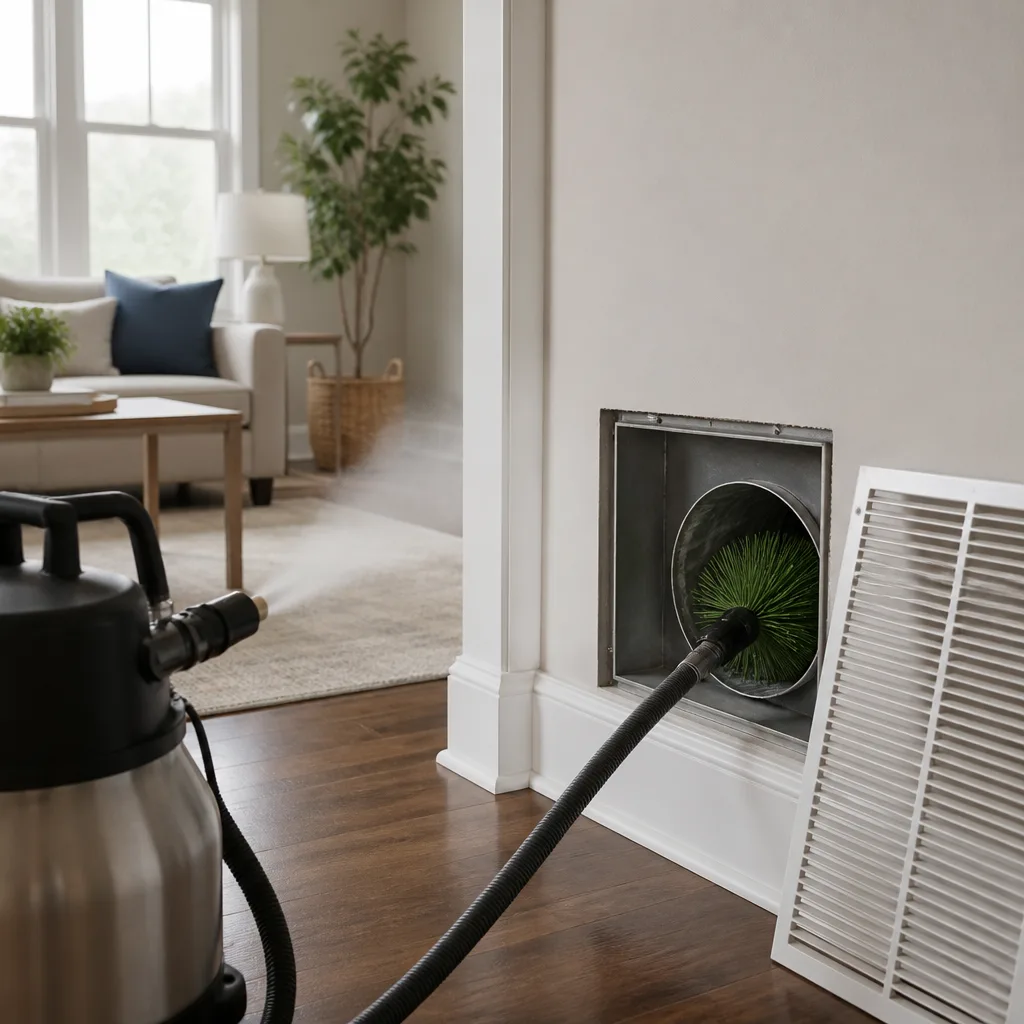
That "$99 whole-house special" is a bait ad - the real number appears once they are in your hallway, or the "clean" is a shop-vac at the register. We photograph the inside of your ducts before and after instead.
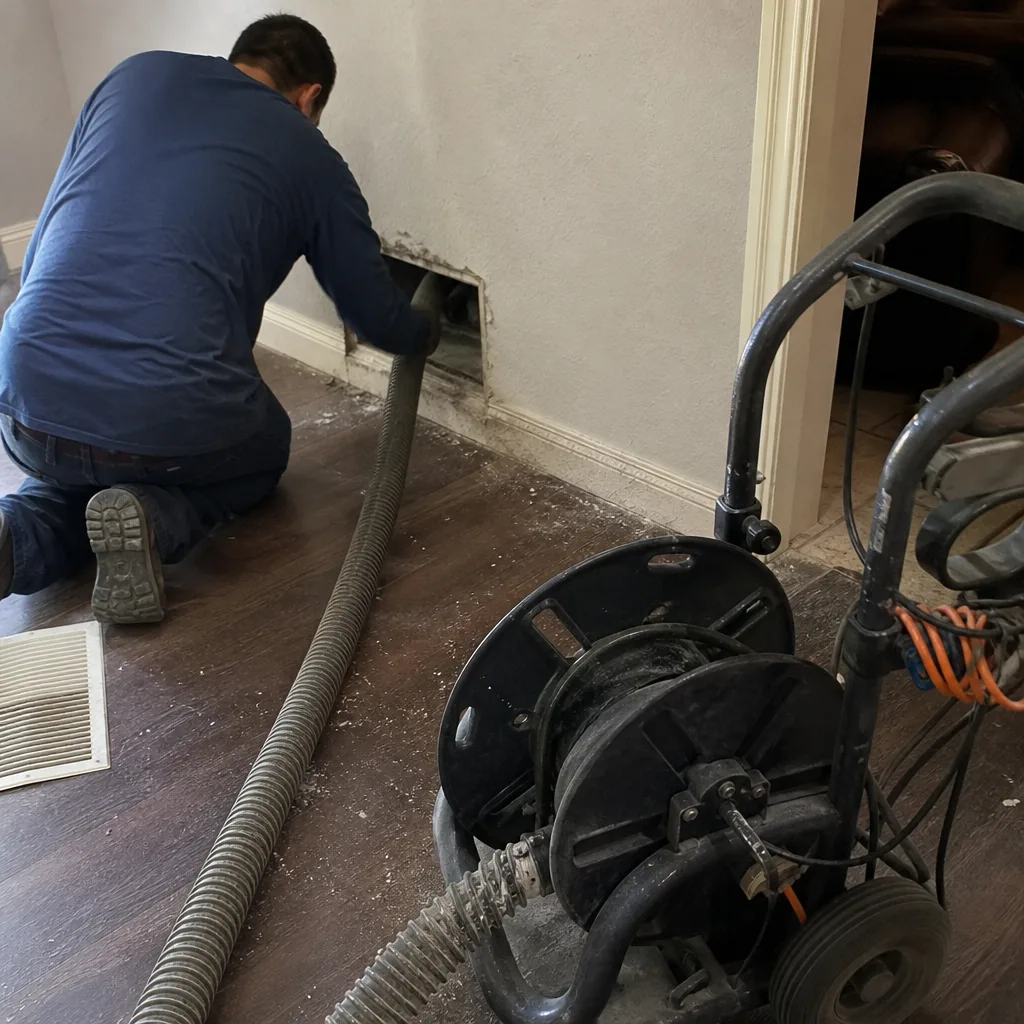 Before
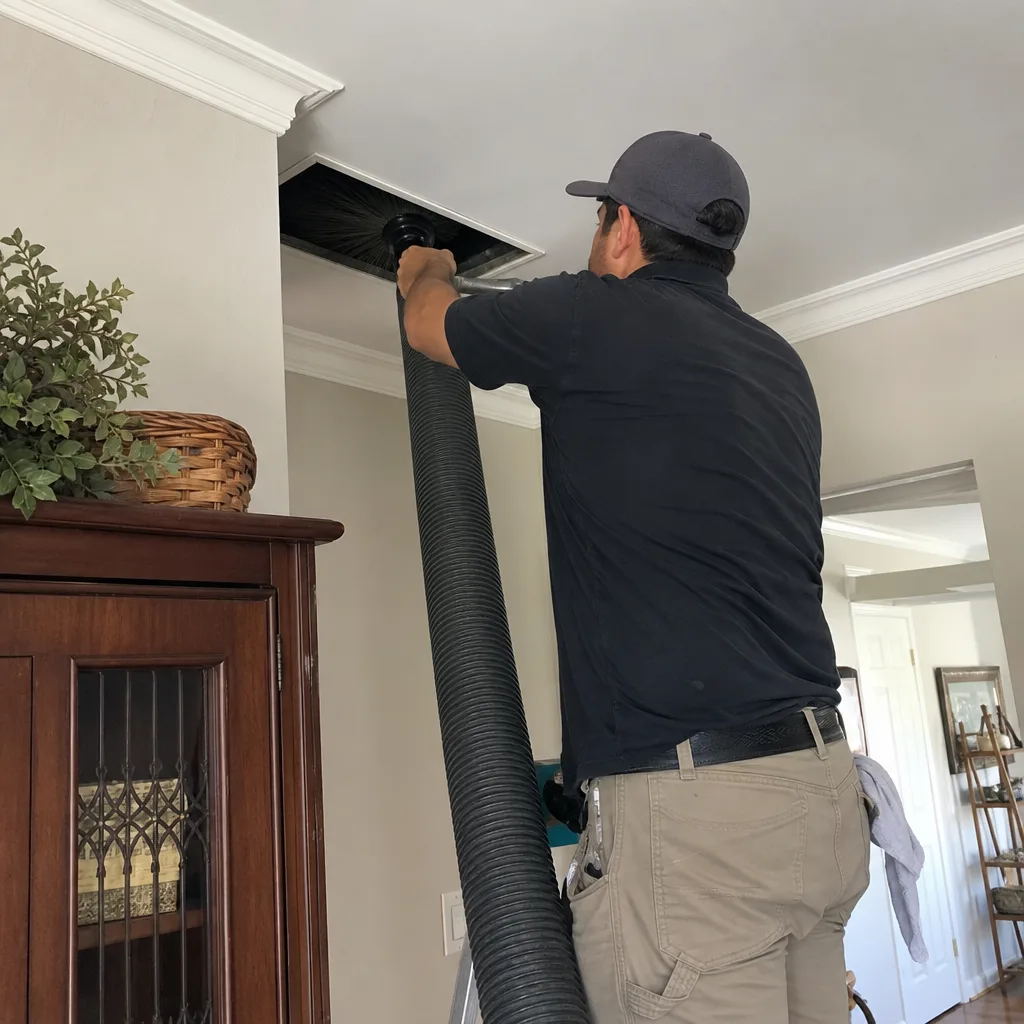 After
After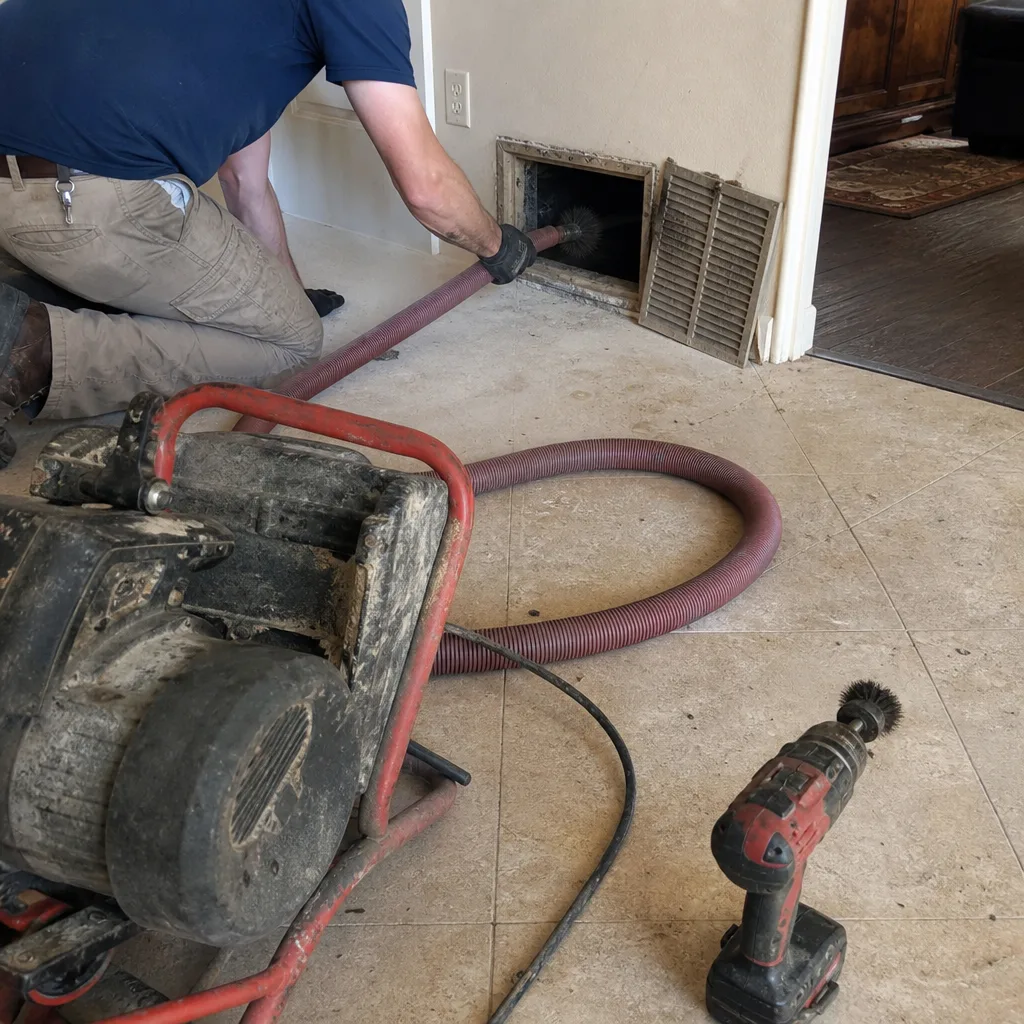 Before
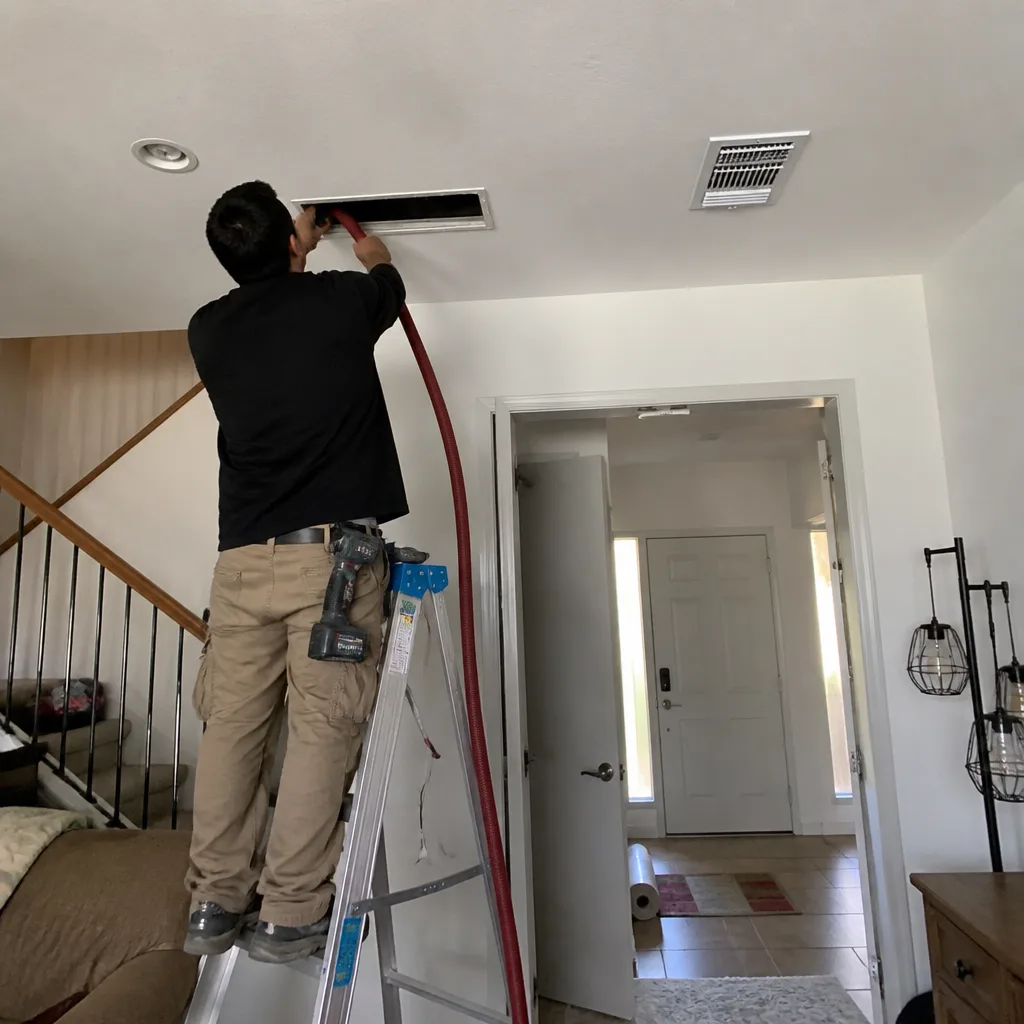 After
After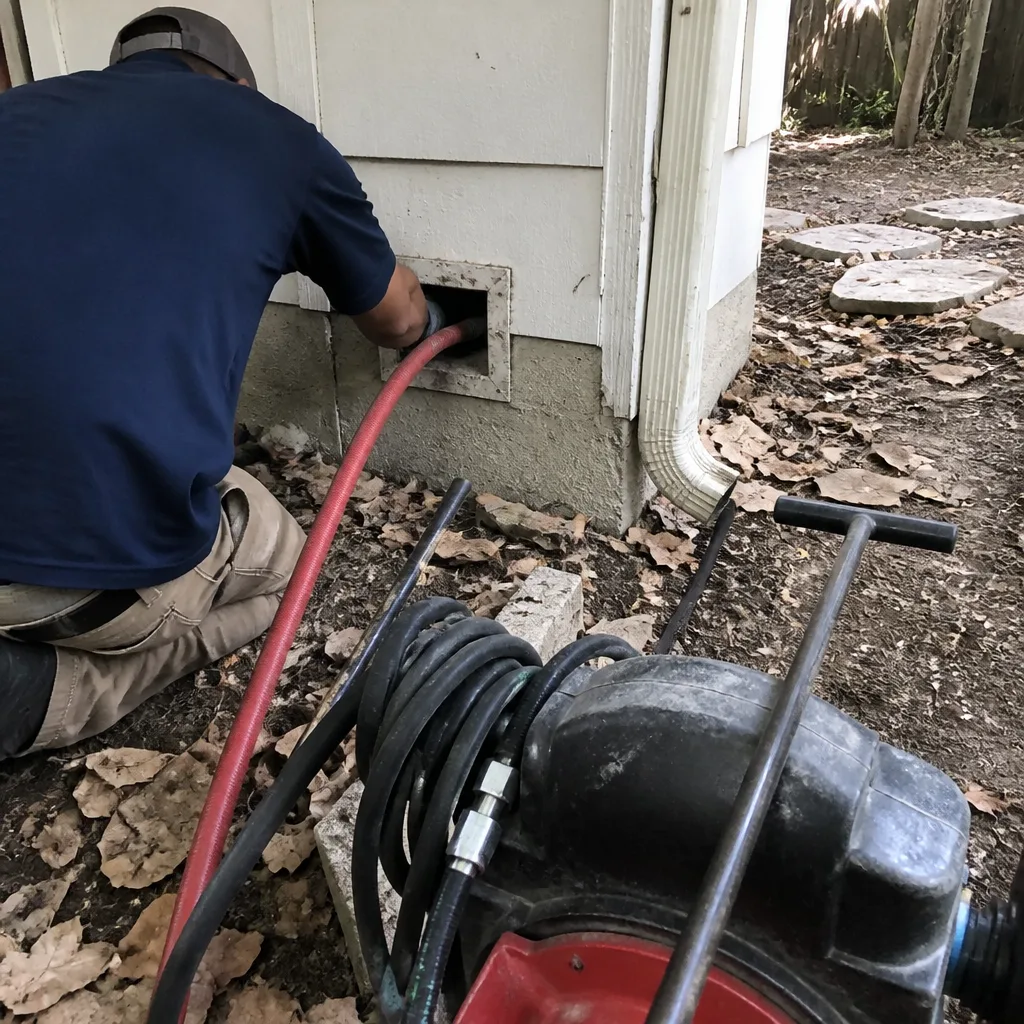 Before
 After
AfterDIY vs Professional Air Duct Cleaning: The New Braunfels Homeowner’s Decision Guide
Every vacuum manufacturer that sells a “duct cleaning attachment” omits one specification from the product description: the negative air pressure required to capture dislodged debris inside a duct run is approximately 1 inch of water column. A standard shop vacuum generates roughly 0.1 to 0.2 inches. That gap is not a minor difference. It is the difference between debris leaving your ducts and debris simply resettling deeper in the system, where you cannot see it. In New Braunfels, where summer humidity regularly pushes 75% and winter temperature swings force HVAC systems through rapid expansion cycles, this matters more than in drier climates. This guide defines exactly where the boundary sits between what a homeowner can legitimately accomplish and what requires equipment that does not exist in consumer form.
Quick Answer
Homeowners in New Braunfels can effectively clean register grilles, vacuum the first 12 inches of visible duct at each opening, and maintain filters on their own. Interior duct cleaning requires our Air Duct Cleaning services with powered negative-pressure extraction equipment that captures dislodged debris before it resettles, which no consumer tool provides. For a typical 2,200 square foot home, professional whole-system cleaning runs $350-$550 with documentation; DIY attempts with rented or purchased consumer equipment typically cost $80-$150 and produce no verifiable result.
Table of Contents
- What Homeowners Can Actually Do Themselves
- The Physics: Why Interior Duct Cleaning Requires Professional Equipment
- New Braunfels System Types and DIY Risk
- Honest Cost Comparison: DIY vs Professional
- When Professional Cleaning Is Non-Negotiable
- What Genuine Professional Cleaning Includes
- How to Verify the Work Was Actually Done
- Common Mistakes to Avoid
BeforeAfterWhat Homeowners Can Actually Do Themselves
There are three maintenance tasks a homeowner can perform with standard household equipment that produce measurable, verifiable improvement in system performance and indoor air quality. These tasks are not “duct cleaning” in the trade sense, but they are worth doing, and they are within reach of anyone with a screwdriver, a vacuum, and thirty minutes.
Task 1: Remove and Wash Register Grilles
Floor and wall registers accumulate a surprising load of dust, hair, and cooking grease at the grille surface. This layer restricts airflow and acts as a breeding surface for dust mites. The procedure is straightforward:
- Shut off the HVAC system at the thermostat to prevent the fan from engaging while grilles are removed.
- Unscrew each register grille (most use two to four Phillips-head screws; some floor registers lift out without fasteners).
- Wash grilles in warm water with mild detergent. A soft brush dislodges buildup in the louvers.
- Dry completely before reinstallation to prevent moisture from entering the duct boot.
We have photographed register grilles in New Braunfels homes, particularly in neighborhoods like River Chase and Vintage Oaks where construction activity was heavy in the 2015-2020 period, that carried a visible debris layer reducing effective airflow by 10-15% at the opening. Cleaning the grille restores that airflow immediately.
Task 2: Vacuum the First 12 Inches of Visible Duct
With the grille removed, most duct systems reveal a short section of duct interior before the first bend or transition. A standard vacuum with a hose extension and brush attachment can remove loose debris from this visible section. The key limitation: do not force the attachment deeper than you can see. In flex duct, the corrugated interior can snag rigid attachments. In metal duct, aggressive insertion can damage the boot connection or dislodge the duct liner.
The measurable benefit here is modest but real. You are removing debris that would otherwise be the first to recirculate when the system cycles on.
Task 3: Filter Maintenance
This is the highest-impact DIY task and the most frequently neglected. A clogged filter increases system static pressure, reduces airflow, and forces the blower motor to work harder. In New Braunfels, where caliche dust from construction and pollen from the Hill Country combine to load filters faster than in many Texas markets, the standard 90-day replacement interval often proves too long.
We recommend checking filters monthly during peak summer and peak pollen season (March through May). Use a filter with a MERV rating appropriate to your system; higher is not always better, as dense filters can overload blower motors not designed for the resistance.
These three tasks, performed regularly, maintain surface cleanliness and support system efficiency. They do not clean the interior duct system. That distinction matters, and the next section explains why. For deeper maintenance strategies, see our guide on Seasonal Air Duct Cleaning Care for New Braunfels: Year-Round Homeowner’s Guide.
The Physics: Why Interior Duct Cleaning Requires Professional Equipment
The central challenge of duct cleaning is not dislodging debris. It is capturing debris once it has been dislodged.
Inside a duct run, debris adheres to interior surfaces through a combination of static charge, moisture bonding, and mechanical interlocking with surface irregularities. Agitation breaks this adhesion and suspends particles in the airstream. But suspension is temporary. Without continuous negative pressure pulling air toward a collection point, gravity and turbulence deposit particles back onto surfaces, often deeper in the system where access is worse.
Professional negative-pressure extraction systems, such as those manufactured by Nikro and Abatement Technologies, solve this with a specific engineering approach:
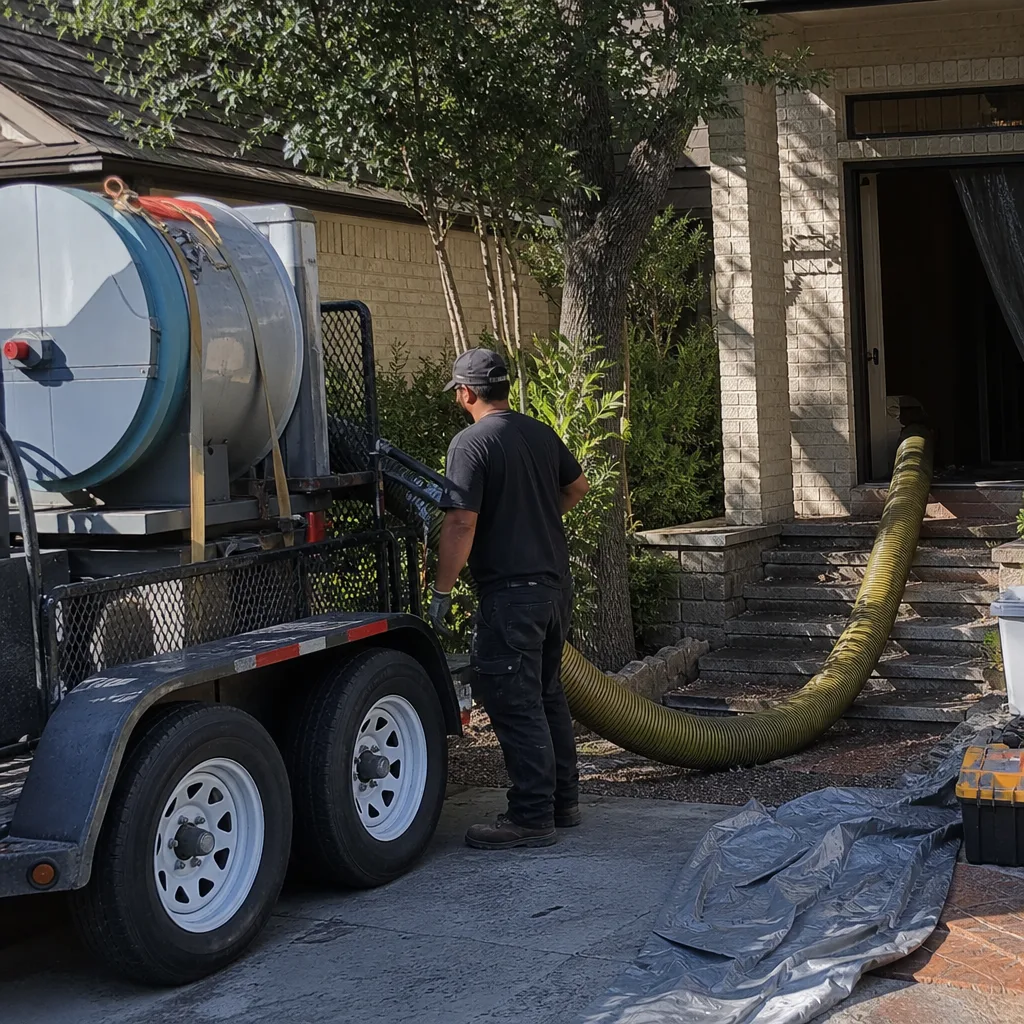
- A powered collection unit, typically mounted on a truck or portable frame, generates sustained negative pressure of 1 to 3 inches of water column across the entire duct system.
- This suction is applied at a central point, usually near the air handler, creating airflow toward the collection unit from every register simultaneously.
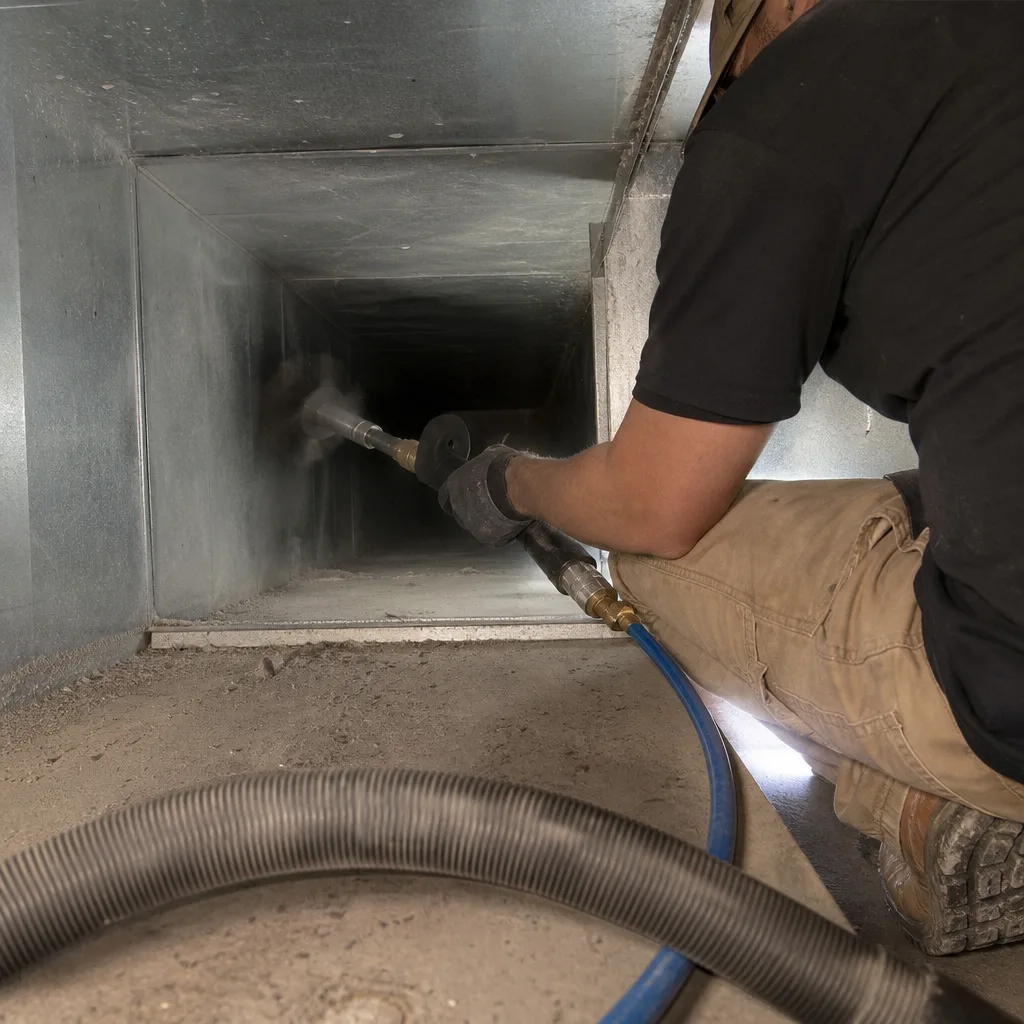
- Agitation tools, including powered brushes and compressed-air whips, dislodge debris at each register while the negative pressure draws it immediately into the collection hose.
- High-efficiency filtration on the collection unit captures particles down to 0.3 microns, preventing reintroduction into the home or the technician’s breathing zone.
A shop vacuum, by contrast, generates insufficient negative pressure to create system-wide airflow. Its suction is localized to the hose tip. When a homeowner inserts a brush attachment and dislodges debris, the vacuum captures only what happens to fall within inches of the hose opening. Everything else resettles. Worse, the agitation often drives debris deeper into branch lines, where it accumulates at elbows and transitions, potentially restricting airflow more than before the “cleaning” began.
This is not a matter of more powerful motors or larger hoses. It is a fundamental difference in system design. Consumer vacuum cleaners are engineered for surface cleaning at atmospheric pressure. Duct cleaning requires engineered negative pressure across a closed, distributed system. No attachment changes that physics.
New Braunfels System Types and DIY Risk
The housing stock in New Braunfels reflects rapid growth across two distinct periods: the 1990s-2000s buildout of established neighborhoods like Gruene and Mission Hills, and the 2015-2025 surge in communities like Veramendi, River Chase, and Morningside. These periods used different duct materials and installation practices, and the DIY risk profile varies accordingly.
Flex Duct Systems (Common in Post-2005 Construction)
Flex duct, the flexible insulated tubing common in newer New Braunfels homes, is easily damaged by rigid tools. The inner liner is a thin polymer supported by a wire helix. A standard vacuum brush attachment, or any rented “duct cleaning” tool with a rigid shaft, can:
- Puncture or tear the inner liner, creating a leak into the insulation layer that reduces efficiency and can harbor moisture.
- Snag the wire helix, collapsing or kinking the duct and permanently restricting airflow.
- Dislodge the duct from the boot connection at the register, creating a leak that blows conditioned air into wall or ceiling cavities.
In Veramendi and similar developments, we have documented flex duct runs where DIY attempts with consumer tools created damage that required repair before professional cleaning could proceed. The repair cost exceeded what professional cleaning would have cost initially.
Metal Duct Systems (Common in Pre-2000 Homes)
Older metal duct, typically galvanized steel with fiberglass liner or bare metal, is more durable against mechanical damage but presents a different risk. The boot-to-duct connection, often sealed with mastic or foil tape that has degraded over decades, can be dislodged by aggressive vacuuming. In homes near the Guadalupe River or in low-lying areas of New Braunfels where humidity has accelerated tape degradation, this is a particular concern.
Additionally, metal duct with fiberglass liner requires care to avoid damaging the liner surface, which can release fiberglass particles into the airstream. Professional equipment uses controlled agitation designed for lined duct; consumer tools do not.
Hybrid Systems
Many New Braunfels homes, particularly those built during the 2005-2015 period, combine metal trunk lines with flex duct branches. These systems require assessment before any cleaning approach is selected. A homeowner cannot determine from visual inspection at the register whether the duct behind the wall is metal or flex, or whether the transition is secure.
Honest Cost Comparison: DIY vs Professional
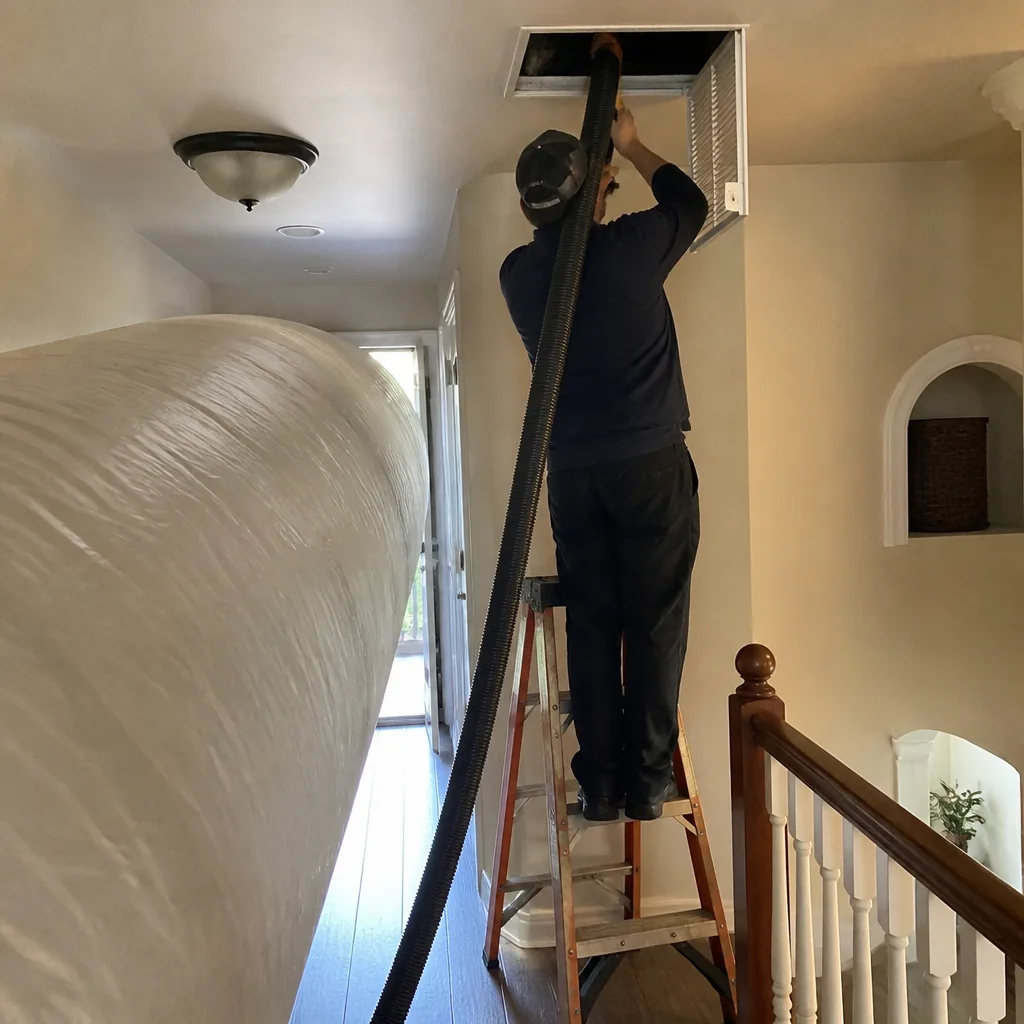
The duct cleaning industry in New Braunfels, like markets nationwide, is distorted by coupon pricing that bears little relation to actual cost. Understanding the real numbers is essential to an honest decision.
DIY Cost Range
| Item | Typical Cost |
|---|---|
| Shop vacuum with “duct cleaning” attachment kit | $80-$150 |
| Rented duct cleaning tool (consumer grade, 4-hour minimum) | $60-$90 plus deposit |
| Replacement filters (if due) | $15-$40 |
| Time investment (research, setup, execution, cleanup) | 4-6 hours |
The DIY total for equipment and time runs $80-$150 for owned tools, or $140-$230 for rented equipment. The output is surface cleaning at registers with no documentation of interior condition, no verification of system integrity, and no guarantee.
Professional Cost Range in New Braunfels
| Home Size / System Complexity | Professional Cleaning Range |
|---|---|
| 1,200-1,800 sq ft, single system, straightforward access | $280-$380 |
| 1,800-2,500 sq ft, single system, standard layout | $350-$550 |
| 2,500-3,500 sq ft, dual system or complex layout | $500-$750 |
| Additional services (dryer vent, sanitizing, sealing) | $120-$280 per service |
These ranges reflect genuine professional cleaning with negative-pressure extraction, powered agitation, and documentation. The low end of the range assumes accessible ductwork, cleanable condition, and no required repairs. The high end reflects larger homes, complex layouts, or additional services.
The critical difference is not the dollar figure but what is delivered. Professional cleaning includes:
- A written price before work begins, under CleanRun Air Duct Cleaning New Braunfels home Haven Standard Clause 1.
- Powered negative-pressure extraction with equipment from trade-recognized manufacturers such as Nikro and Abatement Technologies.
- Agitation tools appropriate to duct material.
- Documented Photo Record of every duct run, before and after, delivered as part of the standard job record.
- System integrity verification: connections checked, boots secured, no damage introduced.
- 365-Day Done Right Promise: if the work is not right, we make it right, backed in writing.
The DIY path saves money only if the homeowner values their time at zero and accepts unverified results. For most New Braunfels homeowners who purchased homes at 2015-2025 price points, the documentation and accountability of professional service represent better value. If you’re still deciding, read How to Hire a Air Duct Cleaning Contractor in New Braunfels: A Step-by-Step Guide.
When Professional Cleaning Is Non-Negotiable
There is one category of condition where DIY approaches are not merely insufficient but potentially hazardous: verified contamination that requires containment protocols. These conditions require professional assessment and remediation regardless of budget constraints.
Verified Mold Growth
Mold in ductwork is not a cleaning issue; it is a remediation issue. Disturbing mold colonies without containment spreads spores throughout the home. Professional remediation requires negative-pressure containment, HEPA filtration, and often antimicrobial treatment with EPA-registered products. In New Braunfels, where summer humidity and occasional water intrusion create favorable conditions for mold growth, we encounter this most often in homes with crawl space ductwork or past roof leaks.
Rodent or Insect Activity
Droppings, nesting material, or carcaces in ductwork present biological hazards. Rodent droppings can carry hantavirus; disturbed without proper PPE and containment, they become airborne. Professional cleaning includes removal under controlled conditions, followed by sanitizing treatment and sealing of entry points.
Construction Debris
New Braunfels has seen continuous construction, and homes built or renovated during active development often contain significant construction debris in ducts: drywall dust, wood scraps, insulation fragments, and fastener debris. This material is abrasive to blower motors and can obstruct dampers. Removal requires powered extraction; surface vacuuming is ineffective.
Post-Fire or Smoke Damage
Even minor kitchen fires or fireplace backdrafts can deposit soot and odor compounds in ductwork. These require specialized cleaning agents and often sealant application to prevent odor recurrence.
In any of these conditions, DIY attempts risk personal exposure, system damage, and incomplete remediation that allows problems to recur. The cost of professional service is not comparable to routine maintenance; it is a remediation expense that protects home value and occupant health.
What Genuine Professional Cleaning Includes
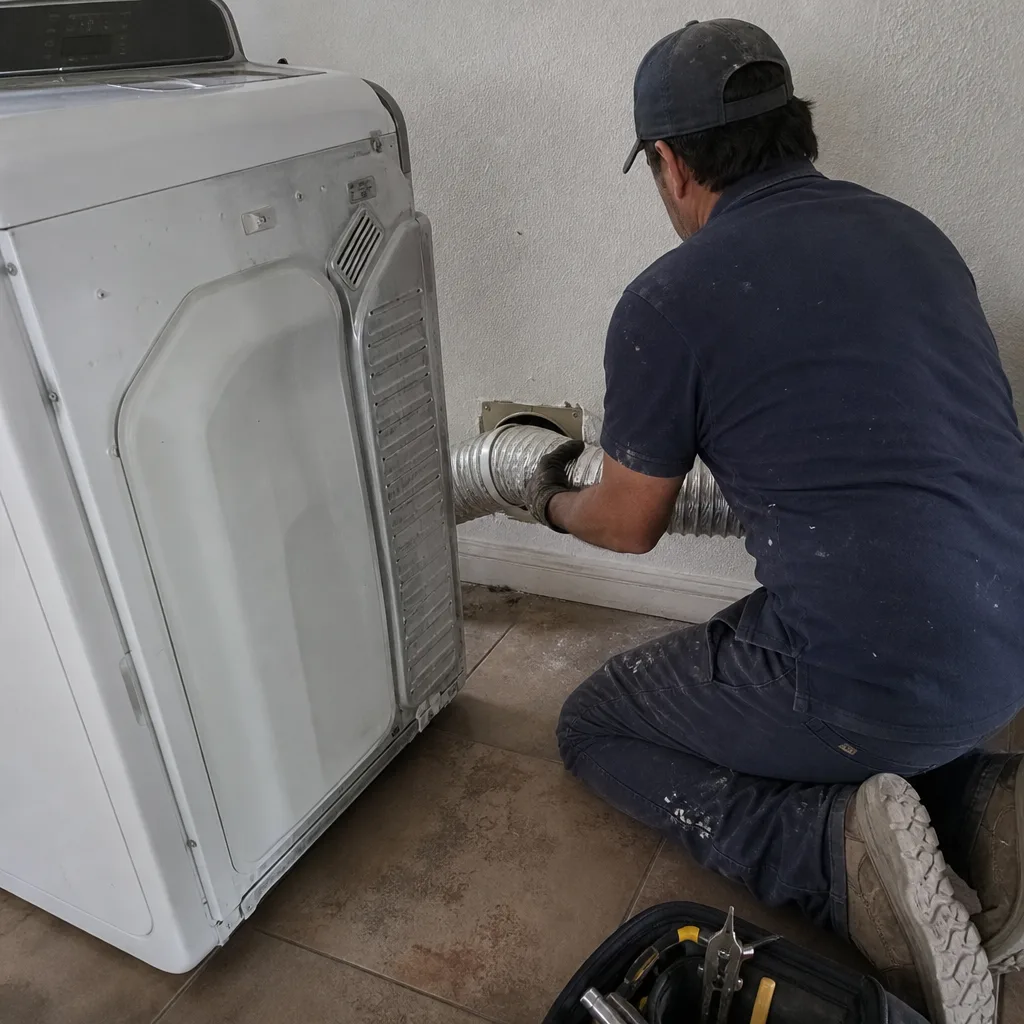
Not every service marketed as “duct cleaning” delivers the same result. Homeowners evaluating professional options should verify that the scope includes specific, documentable elements. The following describes the standard delivered by Air Duct Cleaning in New Braunfels under the H.A.V.E.N. Standard.
Pre-Job Documentation
- Written scope and price delivered before work begins, with no requirement to proceed if the price is not acceptable.
- System assessment: duct material, layout, access points, and any visible damage or contamination noted.
- Photography of system condition at key access points before cleaning begins.
Cleaning Execution
- Negative-pressure extraction unit connected at the air handler or main trunk to create system-wide suction.
- Register-by-register agitation using powered brushes or compressed-air whips sized to duct diameter.
- Collection of dislodged debris into HEPA-filtered containment.
- Cleaning of the air handler cabinet, blower assembly, and coil if included in scope.
Post-Job Documentation
- Photography of the same duct runs after cleaning, showing measurable change.
- Written completion summary noting any conditions requiring repair or monitoring.
- Delivery of the Documented Photo Record to the homeowner as part of the standard job record.
Equipment used includes professional-grade tools from manufacturers such as Rotobrush, Nikro, Abatement Technologies, and Honeywell. These are not marketing names; they are verifiable equipment lines that customers can research independently to understand capabilities and limitations.
Haven Standard Clause 3, Verified Crews, requires that every technician be background-checked, uniformed, and identified by name before arrival. The license number is published on every page, not buried in a footer, because verifiable credentials are a core brand commitment.
How to Verify the Work Was Actually Done
The most common hesitation among informed homeowners is not cost but uncertainty: how do I know the work I paid for was actually performed? The duct cleaning industry has earned this skepticism through decades of low-price coupons followed by brief, ineffective service.
Verification requires documentation that cannot be fabricated after the fact. The following are legitimate verification methods:
- Before-and-after photography of interior duct surfaces: Not photos of the equipment or the technician, but the actual duct interior showing debris removal. These should be timestamped and location-identified by register.
- Debris collection documentation: Professional systems collect debris in a visible containment vessel. The volume and character of collected material is a physical verification.
- Written scope completion: A checklist or narrative confirming each duct run was accessed and cleaned.
- Post-cleaning airflow measurement: Some services measure static pressure or airflow at registers before and after; while not universal, this provides quantitative verification.
At CleanRun, the Documented Photo Record is standard on every visit, not an upsell or optional add-on. Since 2013, every one of the 52,000+ homes served has received this documentation. The practice was established with the first job and has never been waived.
Homeowners evaluating any service should ask specifically: “Will I receive dated, location-identified photos of the inside of my ducts before and after cleaning?” If the answer is no or qualified, the service is not delivering verifiable work.
Common Mistakes to Avoid
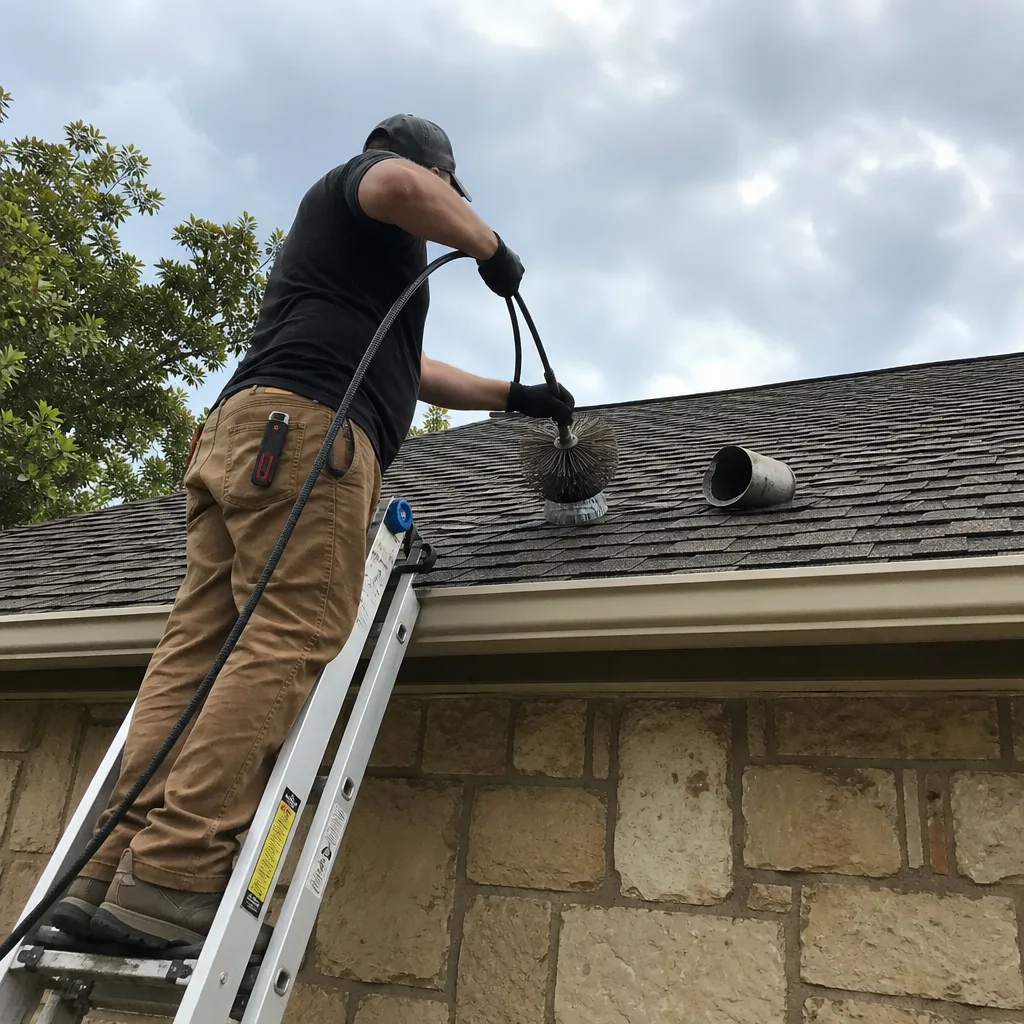
- Using a shop vacuum on flex duct. The rigid hose and brush attachments tear the polymer liner and can collapse the wire helix, creating leaks that reduce system efficiency by 20% or more. In New Braunfels neighborhoods with extensive flex duct, like newer Veramendi builds, this is the most common DIY damage we repair.
- Applying chemical cleaners or foams without knowing duct material. Some consumer products corrode metal or degrade flex duct adhesive. The first question before any chemical application should be: what is my duct made of? Most homeowners cannot answer this without professional inspection.
- Cleaning only visible registers while ignoring the return system. The return side, particularly the return plenum (the large chamber where air enters the system), typically accumulates more debris than supply ducts. It is also less accessible. Partial cleaning that ignores returns leaves the dirtiest portion untouched.
- Believing that “if I can’t see it, it must be fine.” Duct interiors are not visible without specialized cameras. In New Braunfels homes near active construction or with mature oak trees, we regularly find significant debris accumulation that presents no symptoms at the register. The absence of visible dust does not indicate clean ducts.
- Accepting a per-vent price without understanding scope. Per-vent pricing incentivizes rapid, superficial work. A legitimate whole-system price covers all accessible ductwork, not a count of registers. The $79 coupon model relies on upselling once the technician is in the home; the final invoice typically runs $400-$800 with little documentation.
- Ignoring the air handler. The blower assembly, evaporator coil, and plenum are integral to system airflow and air quality. Cleaning ducts without addressing these components leaves the source of recirculation untouched. Professional scope should always include or explicitly address the air handler.
- Attempting DIY after visible mold or rodent evidence. Disturbing biological contamination without containment spreads hazards. The correct response to visible mold, droppings, or nesting material is professional containment and remediation, not household cleaning tools.
When to Call a Professional
Call a professional when: your home has not had documented duct cleaning in five or more years; you observe visible debris, mold, or moisture at registers; you have verified rodent or insect activity; your home was built or renovated during active construction in your area; you experience unexplained respiratory symptoms that correlate with HVAC operation; or you simply want verification of system condition through documented inspection.
CleanRun Air Duct Cleaning New Braunfels offers free estimates in New Braunfels - call (830) 549-6847. Every estimate includes a written price before any work begins, under Haven Standard Clause 1, with no obligation to proceed. We also provide a Free Second Opinion on any written estimate from another provider; bring their quote and we will put our number next to it in writing. Explore more guides & resources on our blog.
For homes with Dryer Vent Cleaning in New Braunfels needs, we address that as a distinct service with its own safety considerations and documentation standards. And for comprehensive system maintenance, HVAC Cleaning in New Braunfels covers the full air handler and component scope.
Frequently Asked Questions
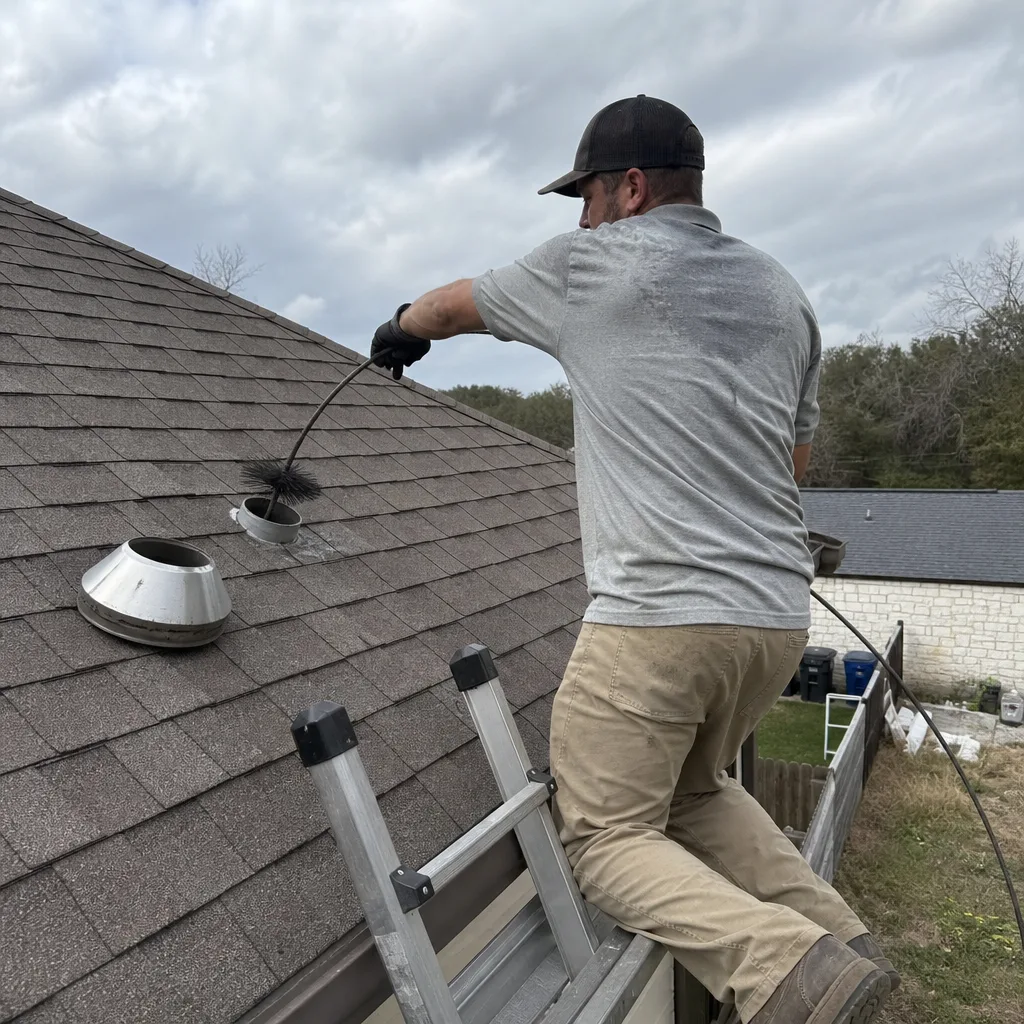
For a typical 2,200 square foot home with a single HVAC system, professional whole-system cleaning runs $350-$550. Larger homes, dual systems, or additional services like dryer vent cleaning or sanitizing increase the total. Call (830) 549-6847 for a written estimate specific to your home - estimates are free and delivered before any work begins.
The $79-$129 coupon model relies on arriving at your home and upselling to a much higher final invoice once the technician is present. The initial price covers only a superficial vacuum at registers, not powered negative-pressure extraction of the full system. Genuine professional cleaning requires truck-mounted or portable extraction equipment, powered agitation tools, and significant technician time; these have real costs that cannot be absorbed at coupon prices. Always ask for a written scope that specifies: equipment type, whether all duct runs are included, and what documentation you will receive.
Require dated, location-identified photographs of the interior of each duct run before and after cleaning. The photo record should show register locations, not generic images that could come from any home. A written completion summary and, where available, airflow or static pressure measurements provide additional verification. At CleanRun, the Documented Photo Record is standard on every job, delivered to the customer as part of the job record.
For typical New Braunfels homes without special risk factors, every three to five years is reasonable. Homes with pets that shed heavily, recent construction, or occupants with respiratory sensitivities may benefit from more frequent service. The definitive answer depends on system condition, which can only be assessed through inspection. We do not recommend calendar-based cleaning without verification of need.
Yes, particularly with flex duct systems common in New Braunfels homes built after 2005. Rigid vacuum attachments can tear the polymer liner, collapse the wire helix, or dislodge boot connections. Metal duct with degraded seals is also vulnerable to damage from aggressive insertion. The first 12 inches at each register is generally safe for careful vacuuming; beyond that, the risk of damage exceeds the likely benefit.
Yes. The combination of Hill Country pollen, caliche dust from construction, and high summer humidity creates conditions that load filters and duct surfaces faster than in drier, less vegetated regions. Humidity also increases the risk of moisture accumulation in ductwork, which can support microbial growth. Homes in New Braunfels with crawl space ductwork or near the Guadalupe River floodplain face elevated moisture risk and may need more frequent inspection.
The Bottom Line
Homeowners can maintain surface cleanliness at registers and filters with standard household tools. Interior duct cleaning requires equipment that does not exist in consumer form: powered negative-pressure extraction capable of capturing dislodged debris across the entire system before it resettles. The boundary is clear, physically defined, and not bridged by any vacuum attachment or rental tool. For New Braunfels homes, where construction dust, pollen, and humidity create genuine accumulation pressure, professional cleaning every three to five years with documented verification is the approach that produces measurable, accountable results. The cost difference between DIY attempts and genuine professional service is narrower than coupon marketing suggests, and the gap in verifiable output is vast.
Written by Tomas Reyes, Owner at CleanRun Air Duct Cleaning New Braunfels, serving New Braunfels since 2013.