
Last updated September 23, 2026
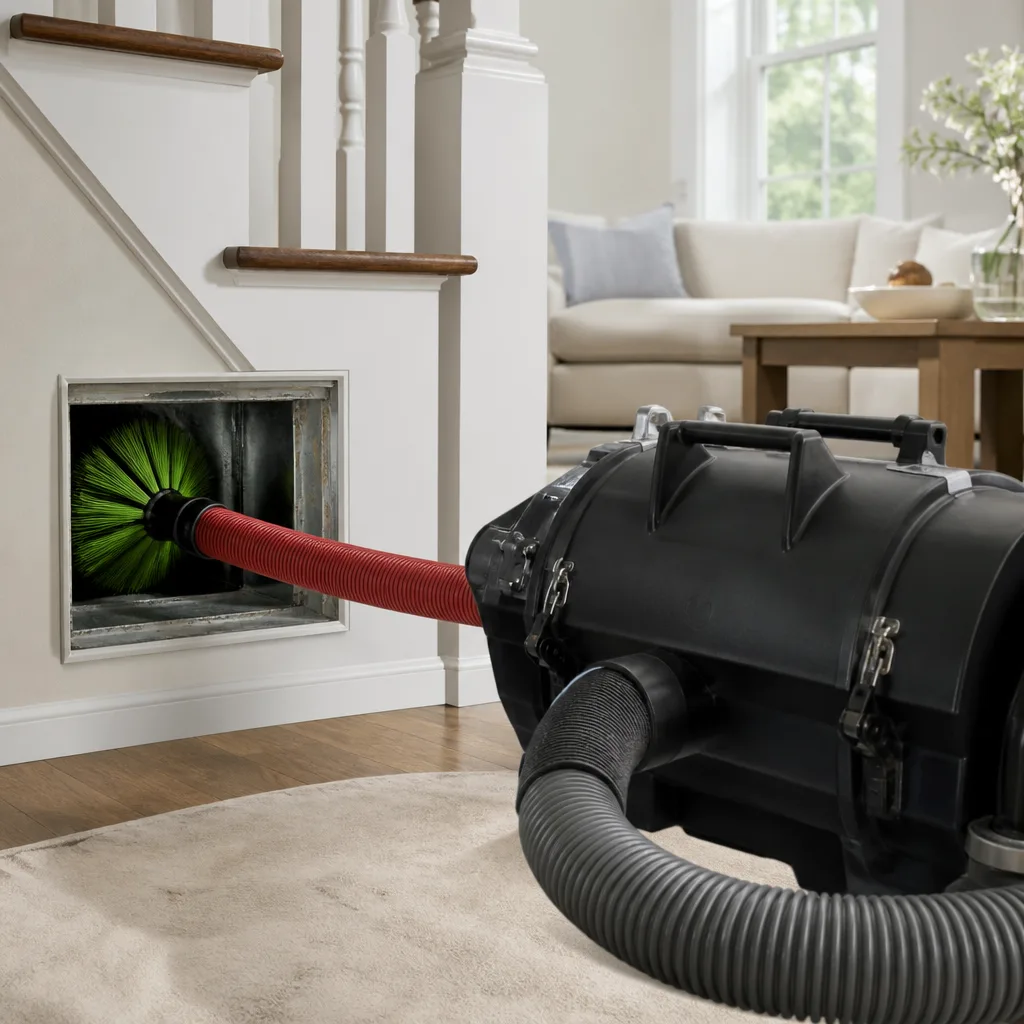
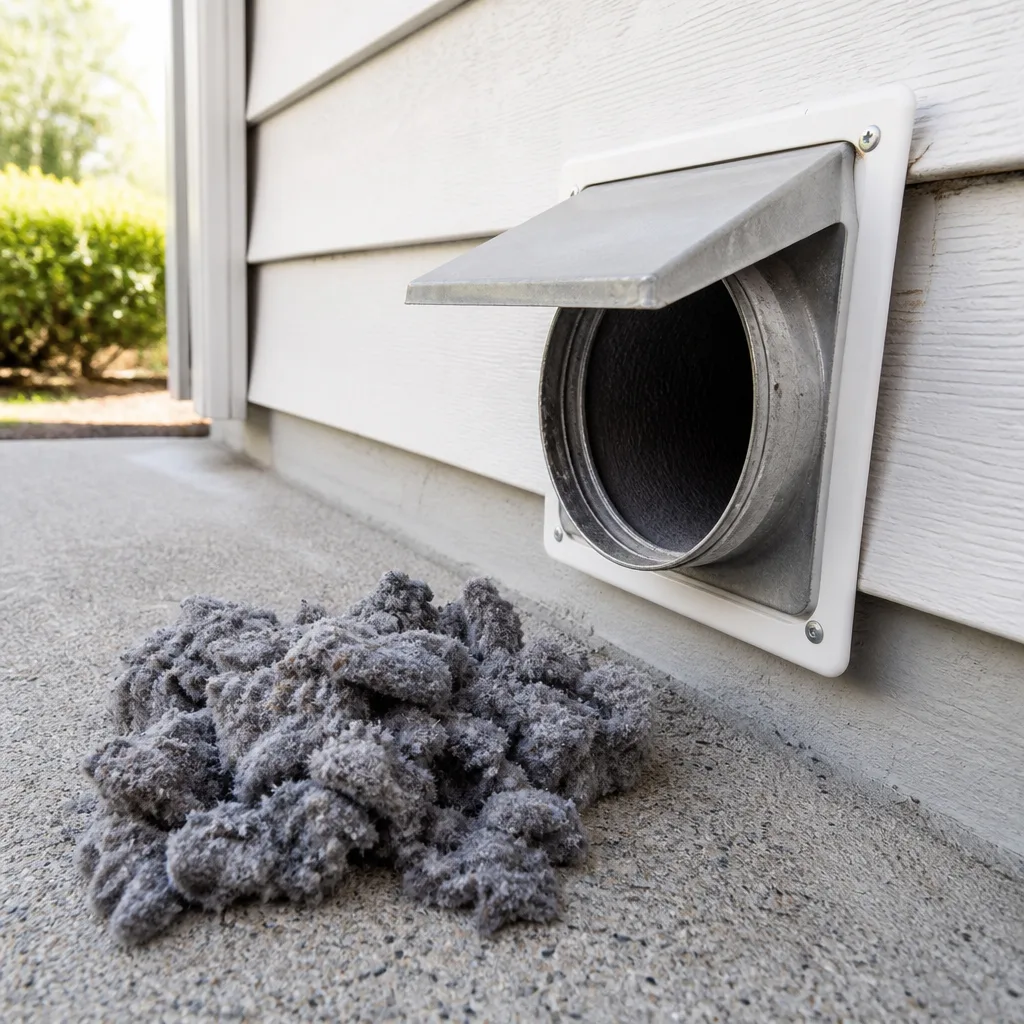
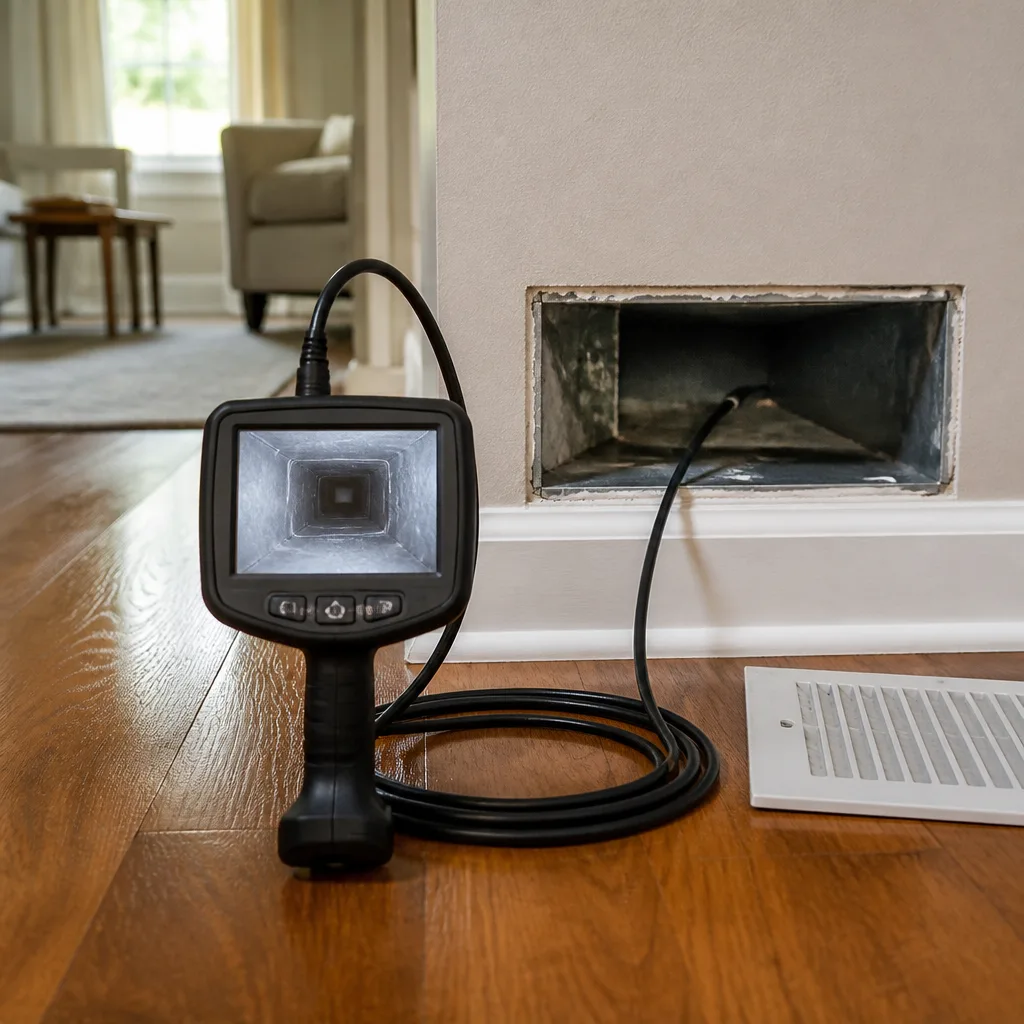
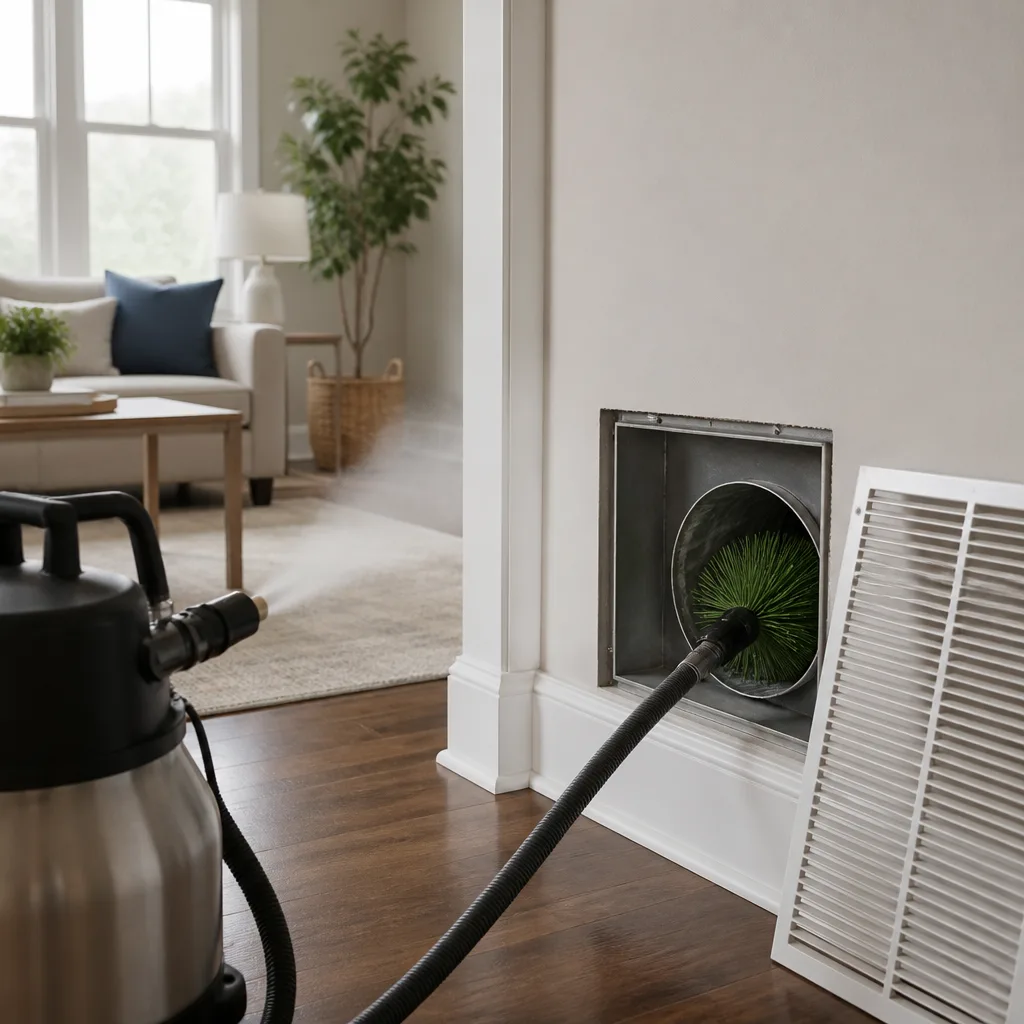
Whole-system duct and dryer vent check with before-and-after photos - you see exactly what came out of your vents
That "$99 whole-house special" is a bait ad - the real number appears once they are in your hallway, or the "clean" is a shop-vac at the register. We photograph the inside of your ducts before and after instead.
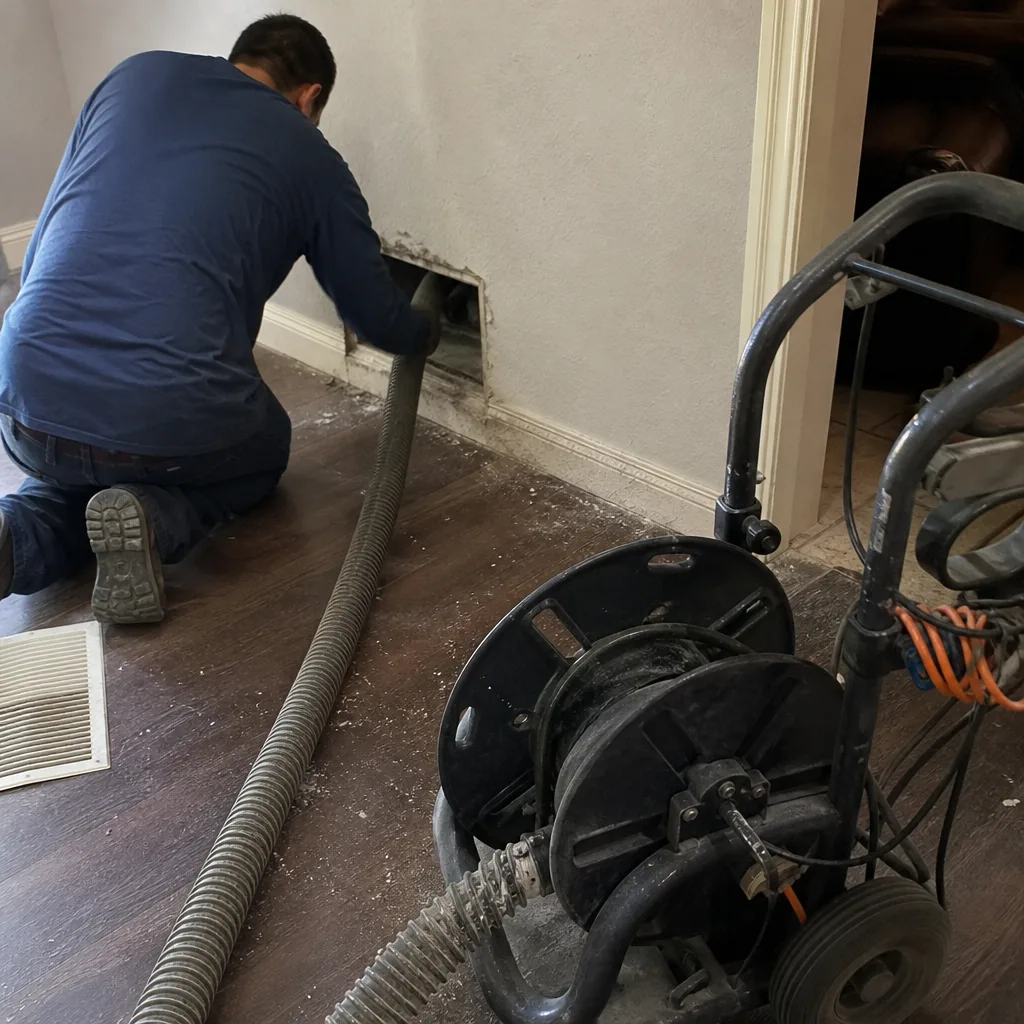 Before
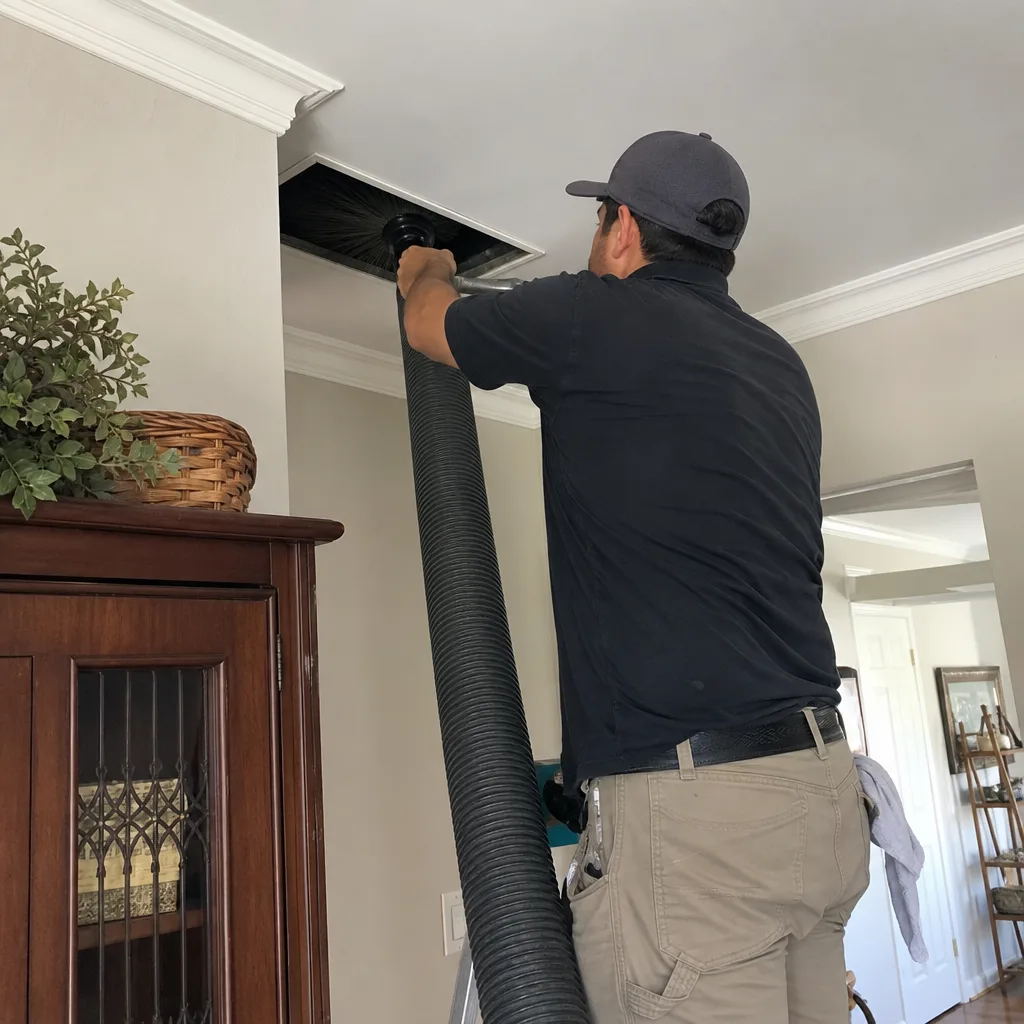 After
After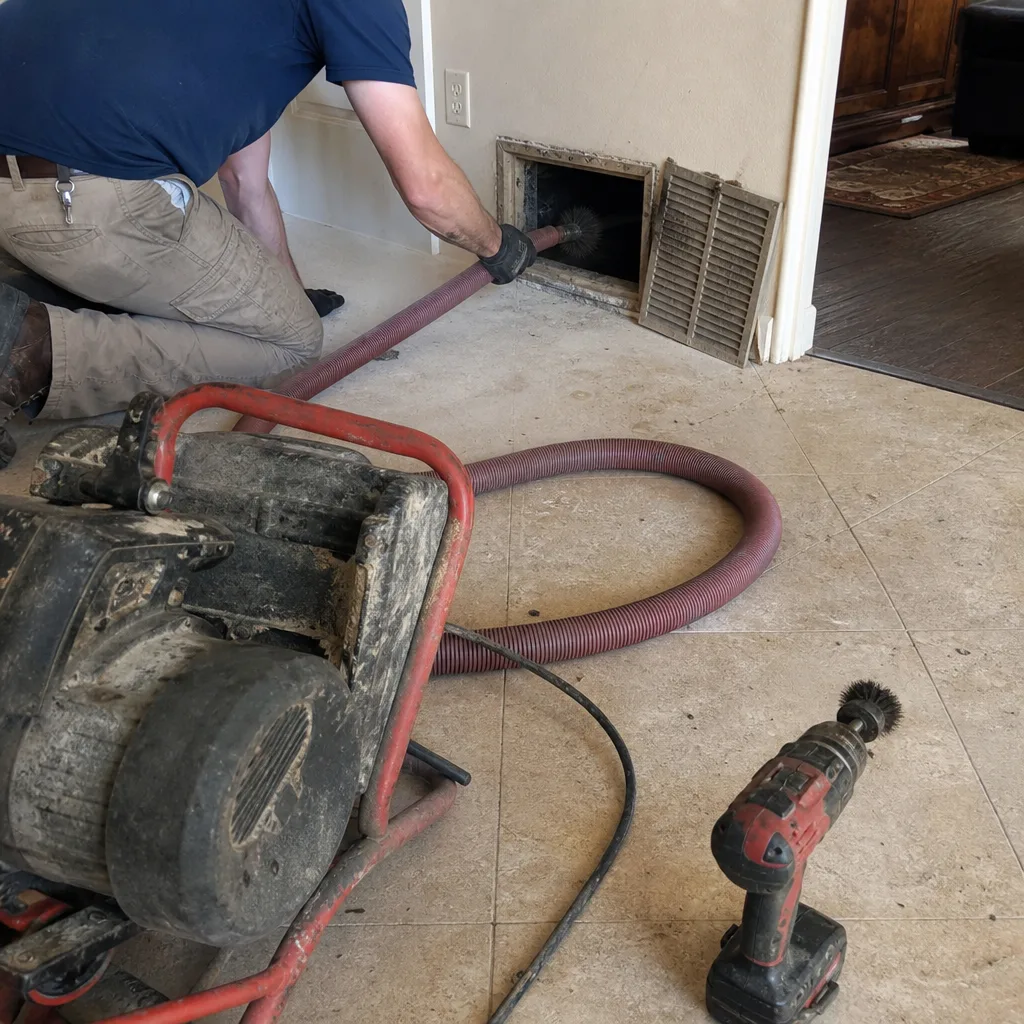 Before
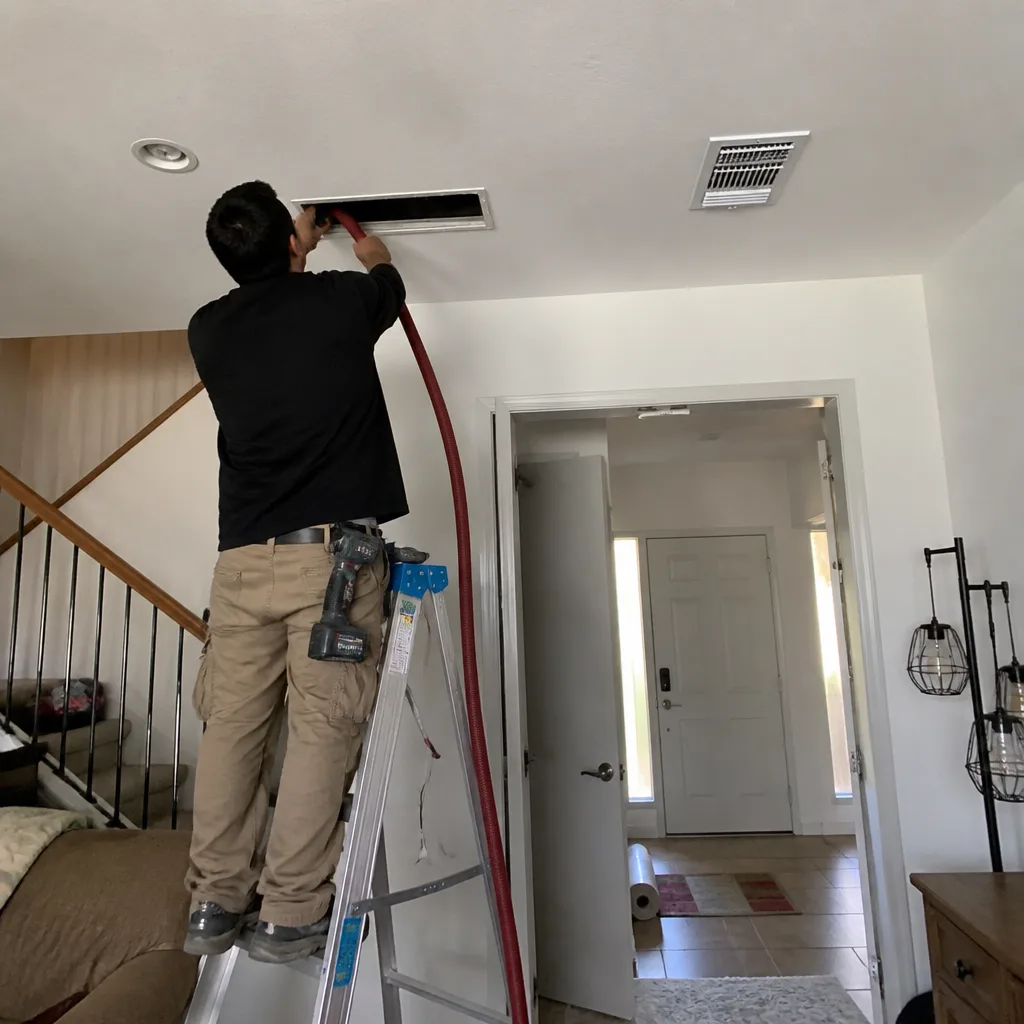 After
After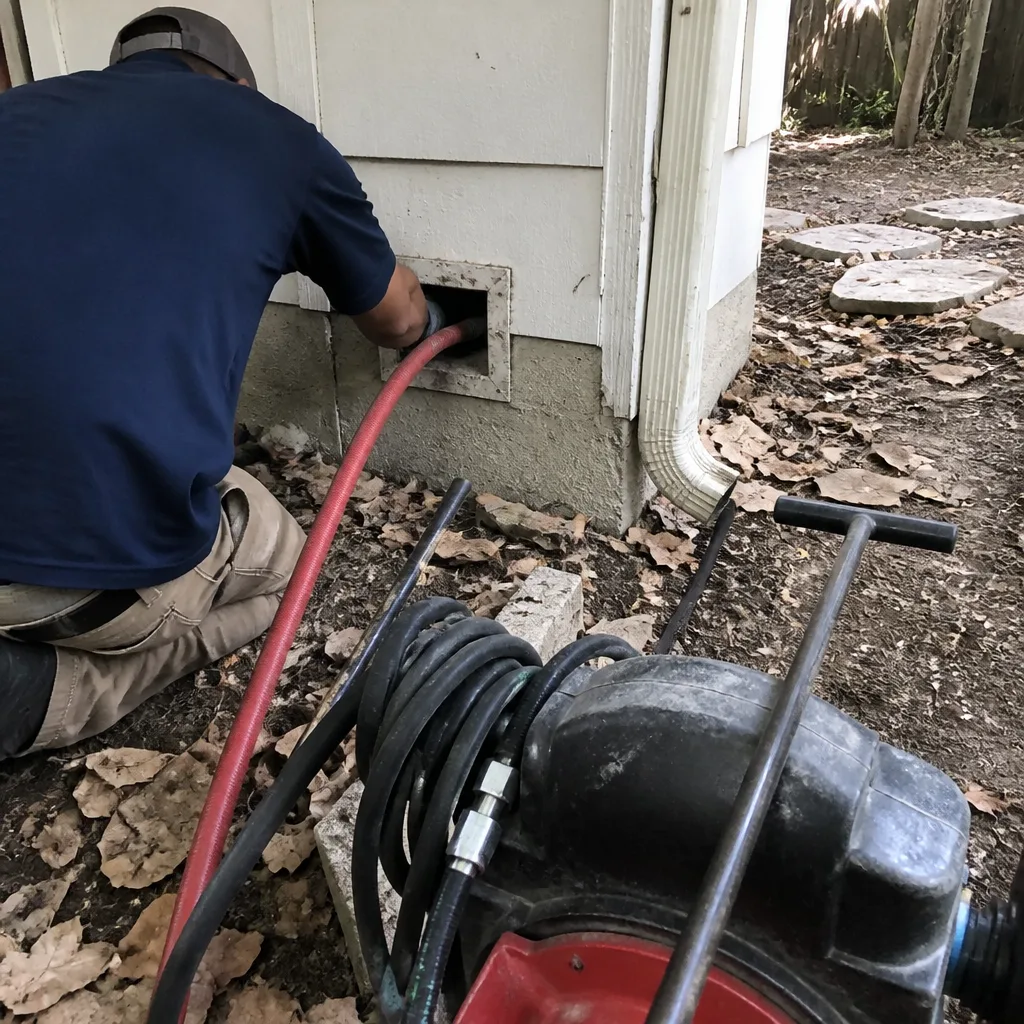 Before
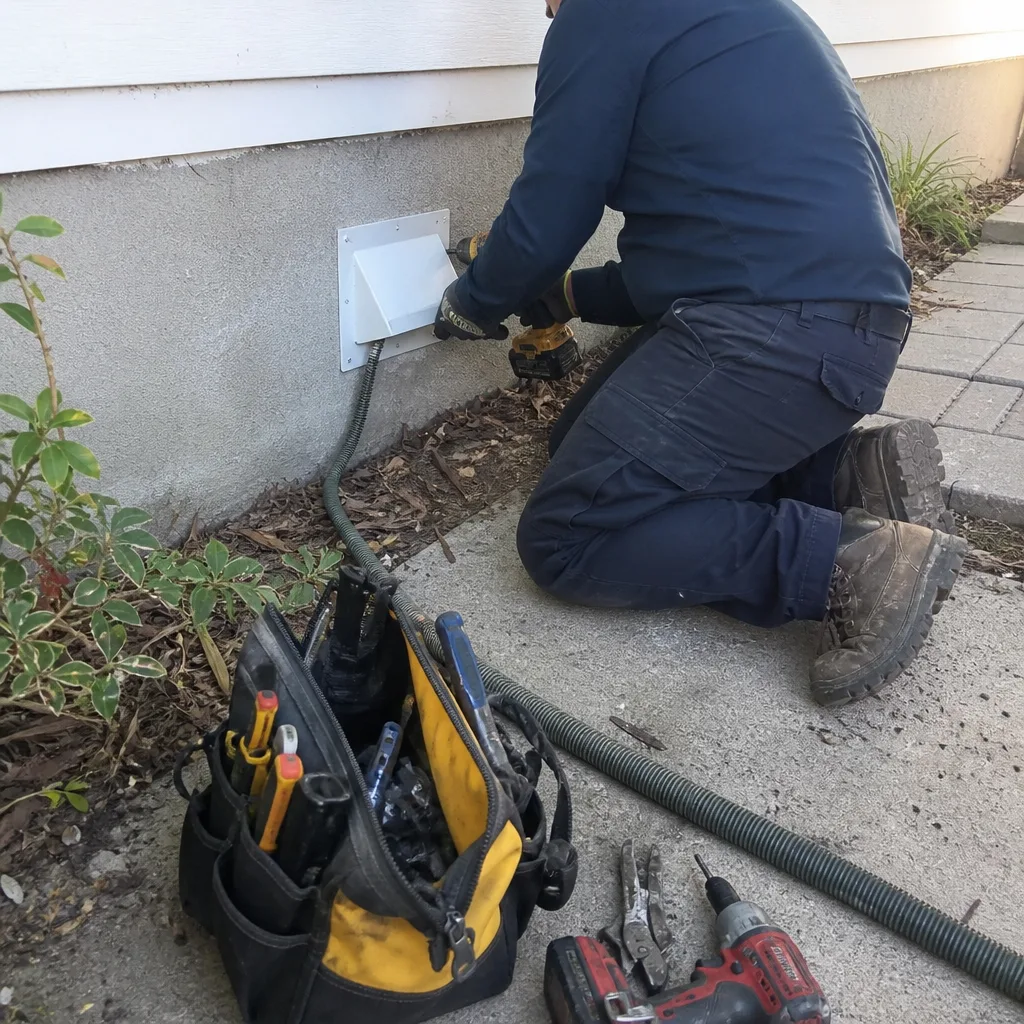 After
AfterSeasonal Air Duct Cleaning Care for New Braunfels: Year-Round Homeowner’s Guide
New Braunfels averages over 220 days per year where the high temperature exceeds 80°F. A duct system in that city accumulates debris, humidity, and biological load on a schedule that has nothing to do with the four-season model most maintenance guides assume. What follows is a maintenance calendar built around the actual demand cycle of a Hill Country home: pre-cooling preparation before the March heat buildup, humidity management through August, cedar pollen recovery in late winter, and the specific inspection points that tell you whether your ducts need attention before they become a problem.
Quick Answer
The optimal air duct cleaning schedule for New Braunfels homes centers on a March pre-cooling cleaning, a late-August humidity assessment, and a post-cedar season filter and register inspection in late February. Most homes need professional duct cleaning every 3-5 years, though 1990s builds with pets may need service every 2-3 years, while newer tight-construction homes with no animals can stretch to 5-7 years. The critical factor is not the calendar month but what the system is about to do: six months of continuous cooling starting in April, which circulates everything currently inside the ductwork through every room, every day.
Table of Contents
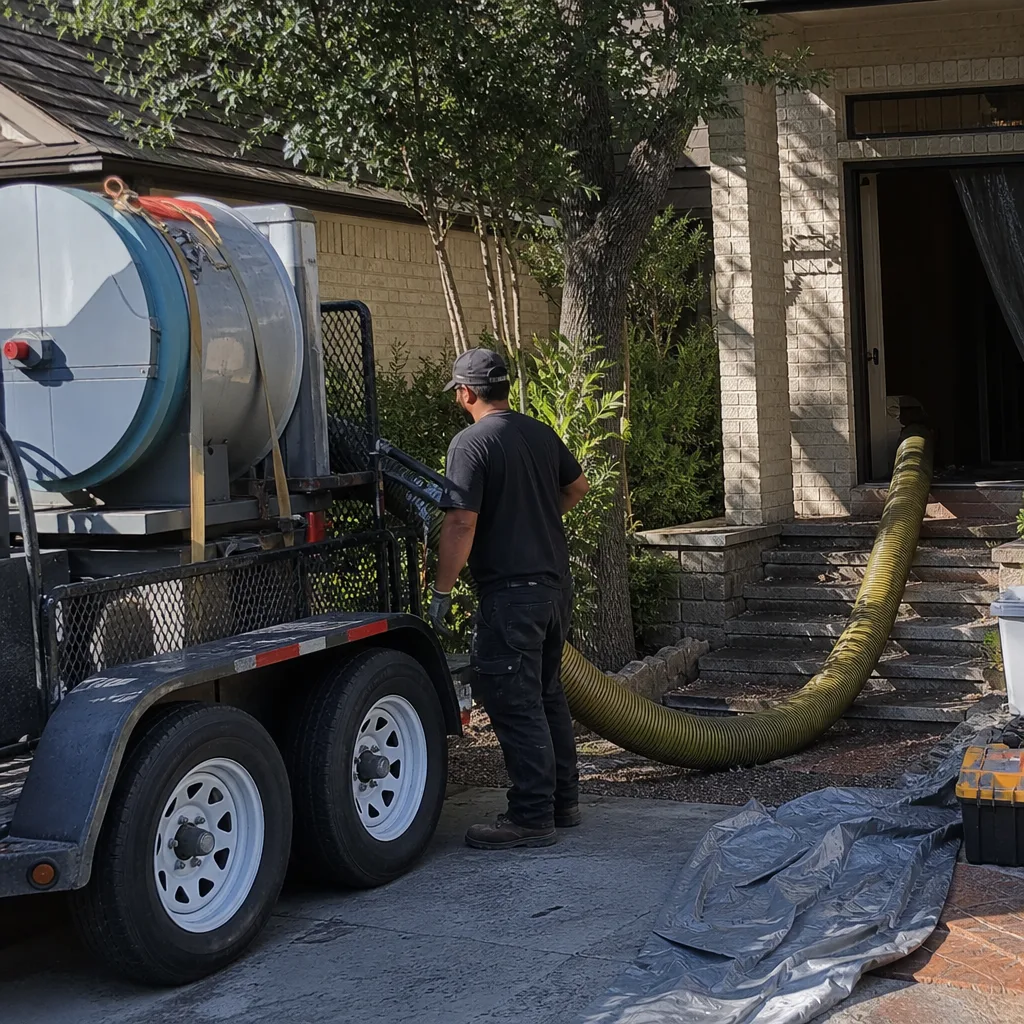
- Why March Is the Highest-Value Cleaning Window in New Braunfels
- What New Braunfels Humidity Does Inside Your Ductwork
- Post-Cedar Season: The Late February Filter and Register Inspection
- Realistic Cleaning Intervals: Home Age, Pets, and Occupancy
- A Month-by-Month Duct System Checklist for Hill Country Homes
- Equipment and Installation Red Flags Specific to the New Braunfels Market
- Common Mistakes to Avoid
- When to Call a Professional
- Frequently Asked Questions
BeforeAfterWhy March Is the Highest-Value Cleaning Window in New Braunfels
Every March in New Braunfels, something predictable happens. The daytime high crosses 75°F, homeowners switch from heating to cooling, and the HVAC system that sat quiet for three months begins running 10-14 hours per day. By May, it’s running 16-20 hours daily. Anything inside those ducts, pollen that settled in January, dust from December fireplace use, pet dander accumulated during winter when windows stayed closed, gets circulated continuously through June, July, August, and September.
We’ve documented this pattern across thousands of air duct cleaning jobs in New Braunfels. The photo records from March cleanings consistently show 2-4 inches of debris buildup at the plenum (the main distribution box where heated or cooled air enters the duct network), particularly in homes with flex duct installed before 2010. By October, that same debris has been compressed and redistributed throughout the system by six months of constant airflow. The March cleaning removes it before the compression cycle begins.
The economics are straightforward. A March cleaning costs the same as an October cleaning, but the March service protects indoor air quality through the entire cooling season. The October service only protects the brief heating season, when the system runs perhaps 4-6 hours daily and New Braunfels homeowners typically keep windows open during daytime hours anyway.
Specific checkpoints for a March pre-cooling inspection:
- Plenum debris depth. Remove the air handler access panel and photograph the plenum interior. Debris exceeding 1 inch at the first elbow indicates the system will recirculate particulate continuously through summer.
- Register face staining. Dark rings around supply register openings suggest previous moisture events and potential biological activity in the duct run behind the register.
- Return air grille filtration bypass. Check whether the filter fits tightly in its housing. Gaps of even 1/4 inch allow unfiltered air to enter the system, and in New Braunfels, that air carries March oak pollen and pre-season mold spores from the Hill Country.
- Condensate line flow test. Pour a quart of water into the condensate pan and verify it drains freely. A blocked line in March becomes an overflow event in July, when humidity peaks and condensate volume triples.
Homes in older New Braunfels neighborhoods, Gruene, and the original Comal County subdivisions built before 2000, typically show heavier March debris loads due to original duct sizing for smaller equipment and more air changes per hour. Newer construction in Veramendi and the Meyer Ranch area, with tighter building envelopes and larger ducts, often shows lighter loads but more concentrated debris at the registers due to lower overall airflow velocity.
What New Braunfels Humidity Does Inside Your Ductwork
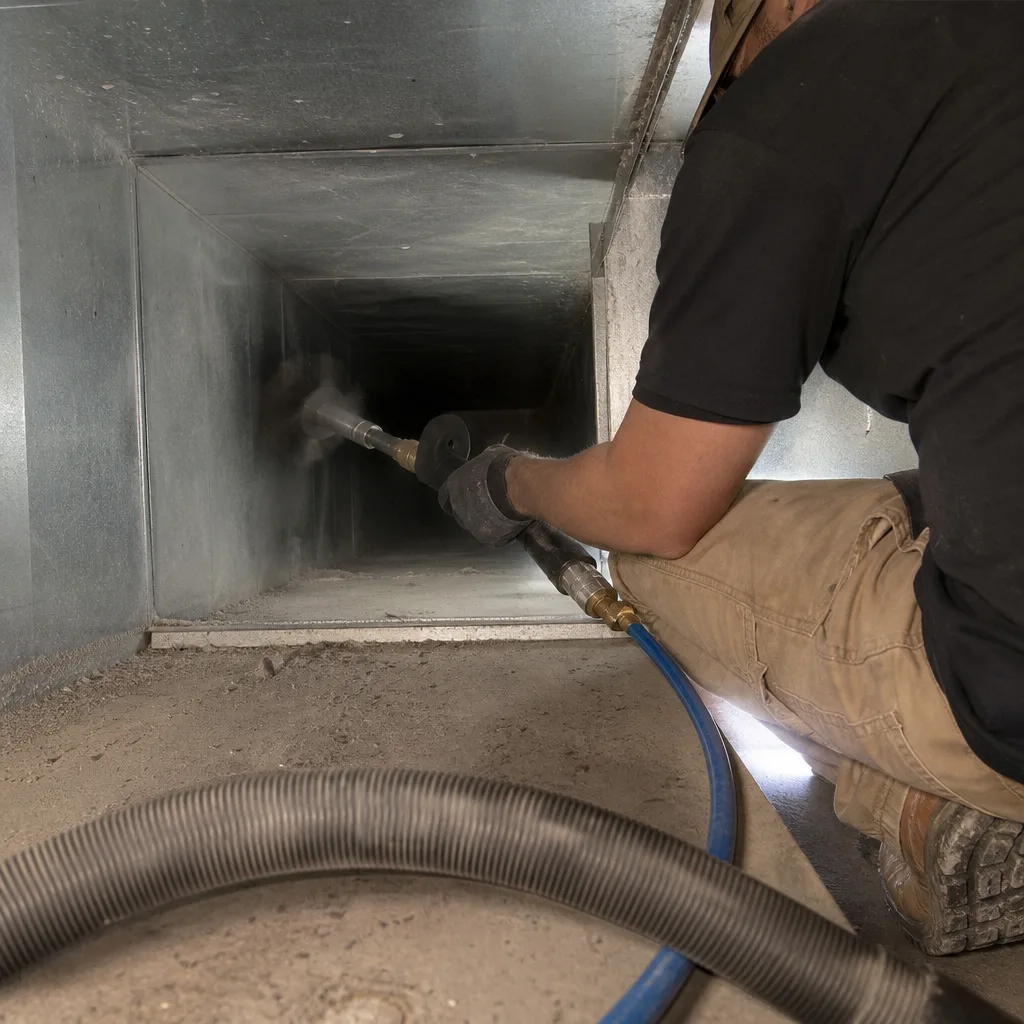
New Braunfels sits at the edge of the Texas Hill Country, where summer relative humidity regularly reaches 70-85% and the cooling season extends from April through October. This combination creates a specific ductwork failure mode that doesn’t occur in drier climates: condensation forming on the exterior of cold supply ducts, particularly in attics and crawl spaces, followed by moisture wicking into the interior duct liner through microscopic gaps in the flex duct jacket.
The mechanism works like this. During August afternoons, attic temperatures in New Braunfels reach 140-160°F. The supply ducts inside those attics carry 55°F air. The temperature differential creates condensation on the duct exterior. Standard flex duct has a fiberglass insulation layer between the inner liner and the outer vapor jacket. When the outer jacket has any puncture, seam separation, or tape failure, exterior moisture migrates inward. The inner liner, now damp on its exterior surface, supports mold growth that releases spores into the airstream.
Homeowners detect this problem before they see it. The characteristic signal is a persistent musty odor when the system first cycles on, particularly in the morning after overnight humidity peaks. By the time staining appears on ceiling registers or drywall, the interior liner contamination has typically spread 6-10 feet back from the register opening.
What we look for during August humidity assessments:
- Odor mapping. We cycle each zone independently and document which registers produce the musty onset smell. This identifies the affected duct runs without dismantling anything.
- Thermal imaging of duct exteriors. Cold spots on duct exteriors indicate insulation gaps where condensation risk is highest. We photograph these for the documented record.
- Register face moisture testing. A simple humidity probe at the register face, measured 30 seconds after startup, reveals whether the duct run behind it has elevated moisture content.
- Plenum interior RH measurement. Relative humidity above 65% inside the plenum, measured during system operation, indicates the evaporator coil is not adequately dehumidifying, which overloads the entire duct system with moisture.
The solution depends on severity. Early-stage moisture, detected by odor alone, may respond to targeted duct sealing with mastic and mechanical fastening, plus a whole-home dehumidification assessment. Advanced cases with visible liner contamination require replacement of the affected duct runs, not cleaning, because fiberglass duct liner cannot be effectively decontaminated once mold has colonized the fibers. CleanRun Air Duct Cleaning New Braunfels home documents the extent with before-and-after photography and provides a written scope with pricing before any work begins.
Equipment selection matters for humidity management. We specify Aprilaire whole-home dehumidifiers for New Braunfels installations where the existing HVAC system cannot maintain indoor relative humidity below 60% during peak summer. These units integrate with the central duct system and operate independently of cooling cycles, addressing the moisture load without overcooling the house.
Post-Cedar Season: The Late February Filter and Register Inspection
Mountain cedar pollen season in Central Texas runs from December through February, with peak concentrations typically in mid-January. New Braunfels sits directly in the cedar distribution zone, and pollen counts during peak weeks regularly exceed 10,000 grains per cubic meter. For comparison, a “high” pollen day in most of the country is 1,000 grains.
Cedar pollen has specific properties that make it a duct system problem. The grains are 19-22 micrometers in diameter, small enough to pass through standard fiberglass filters rated below MERV 11. They are also highly lipid-rich, meaning they adhere to duct surfaces rather than remaining airborne. Once attached, they form a sticky base layer that traps subsequent dust and debris, accelerating buildup throughout the system.
The late February inspection, conducted after pollen counts drop below 500 grains, serves two purposes. First, it identifies how much cedar pollen entered the system despite filtration. Second, it catches the pollen before spring oak and grass pollens begin in March, compounding the load.
- Filter post-mortem. Remove the February filter and hold it to light. Cedar pollen shows as a yellow-green film on the upstream face. If the film extends to the filter edges or shows breakthrough on the downstream side, the filter was undersized, poorly fitted, or overloaded.
- Register face wipe test. Using a white microfiber cloth, wipe the interior surface of a supply register. Cedar pollen residue shows as yellow-green staining. Heavy staining indicates the register and the first 3-5 feet of duct behind it need attention.
- Return air path inspection. Check the return air grille, the return duct boot (the sheet metal transition from grille to duct), and the filter housing for pollen accumulation. The return path is the entry point; contamination here affects the entire system.
- Blower wheel visual check. Through the air handler access panel, inspect the blower wheel blades. Cedar pollen adheres to leading edges and imbalances the wheel, reducing airflow and increasing energy consumption. Even 1/16 inch of buildup on blower blades can reduce system efficiency by 10-15%.
Homes near the Guadalupe River corridor and in the more established oak-cedar mixed neighborhoods of New Braunfels, particularly around Landa Park and the Original Town area, typically show heavier cedar pollen loads than homes in newer, cleared subdivisions. The inspection findings determine whether the system needs full duct cleaning before the March pre-cooling window or whether targeted register and blower service will suffice.
Realistic Cleaning Intervals: Home Age, Pets, and Occupancy
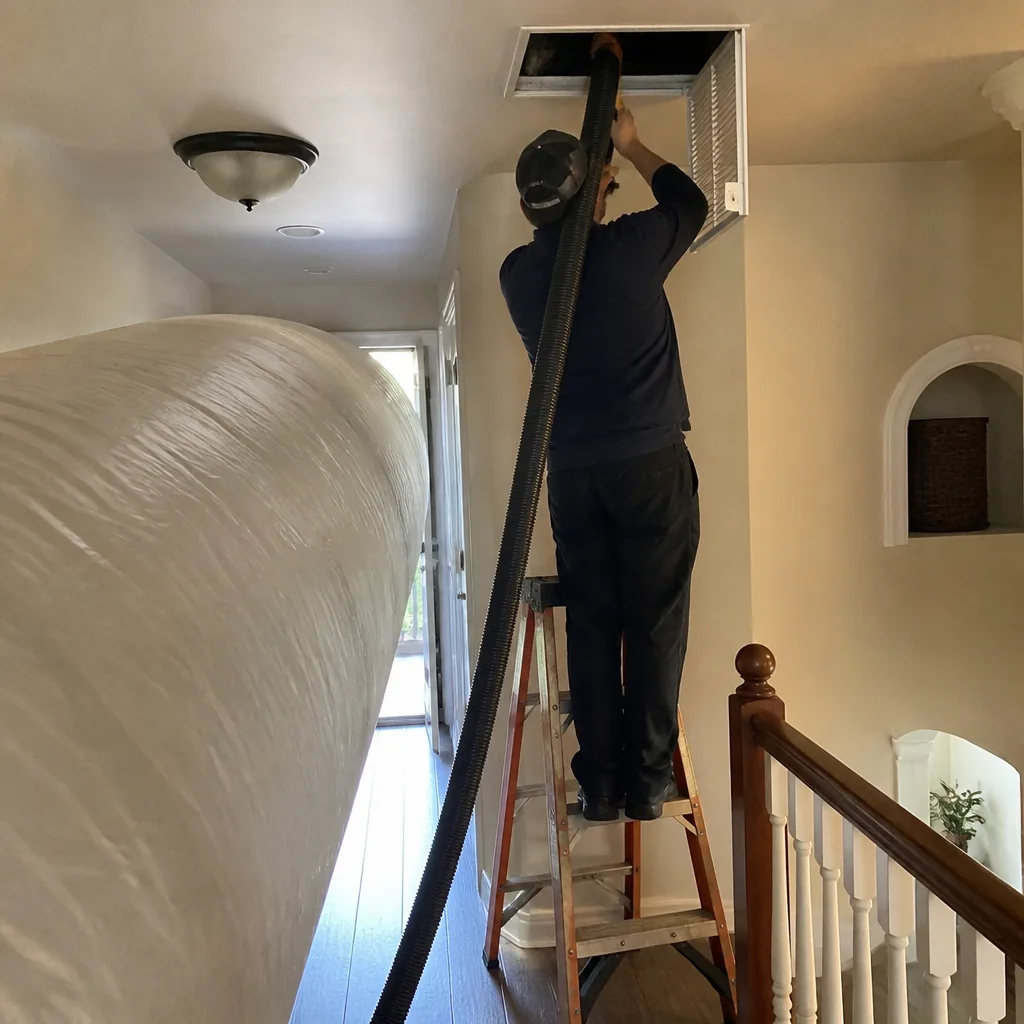
The industry standard recommendation of “every 3-5 years” is not wrong, but it’s not precise enough for New Braunfels homes. The actual interval depends on four factors that vary dramatically across the local housing stock.
Home age and construction type. Homes built before 1995 in New Braunfels typically have metal ductwork with fiberglass liner, or early flex duct with lower-grade vapor barriers. These systems accumulate debris faster and are more vulnerable to humidity damage. Homes built 2015-2025, particularly in developments with ENERGY STAR certification, have tighter duct sealing and better filtration integration, which extends intervals but also means any contamination that does enter stays concentrated rather than dissipating.
Pet presence and type. One short-haired cat produces minimal duct load. Two large dogs with seasonal shedding produce enough dander and hair to visibly coat return air grilles within 18 months. The critical variable is not just pet presence but whether pets have unrestricted access to return air locations, floor-level registers where hair collects before reaching the filter.
Occupancy density and lifestyle. A home with two adults working outside the house accumulates duct debris slowly. The same home with two adults, two children, and a stay-at-home parent, with cooking, crafting, and indoor activity generating particulate, accumulates faster. Smoking indoors, even occasional, changes the interval entirely; tobacco tar residue binds debris to duct surfaces and requires specialized cleaning chemistry.
Adjacent land use. Homes near active construction, agricultural operations, or the limestone quarry operations west of New Braunfels experience higher particulate loads from exterior air infiltration. The 2022-2024 building boom in Comal County put many existing homes adjacent to active construction zones.
| Home Profile | Recommended Interval | Key Indicator to Watch |
|---|---|---|
| Pre-1995 build, any pets | Every 2-3 years | Visible debris at registers within 12 months of cleaning |
| Pre-1995 build, no pets | Every 3-4 years | Musty odor at startup, particularly after rain |
| 1995-2015 build, pets | Every 3-4 years | Filter replacement frequency increasing |
| 1995-2015 build, no pets | Every 4-5 years | Reduced airflow at distant registers |
| 2015-2025 build, pets | Every 4-5 years | Allergen symptoms correlating with system runtime |
| 2015-2025 build, no pets | Every 5-7 years | Post-construction residual debris from builder’s ductwork |
These intervals assume standard 1-inch fiberglass filters changed every 60-90 days. Upgrading to pleated MERV 11-13 filters, or adding a whole-home media air cleaner such as a Honeywell F100 or Aprilaire 2410, extends the upper end of each range by 1-2 years. The equipment investment is typically recovered through extended cleaning intervals and reduced HVAC filter service calls.
Our documented photo records from 52,000+ homes confirm these patterns. The most common interval error we see in New Braunfels is waiting too long in pre-2000 homes, where duct degradation accelerates faster than debris accumulation, and cleaning too frequently in tight new construction, where the real issue is usually filtration upgrade rather than duct contamination.
A Month-by-Month Duct System Checklist for Hill Country Homes
This Air Duct Cleaning Maintenance Checklist for New Braunfels Homeowners replaces the generic spring/fall maintenance model with the actual New Braunfels climate cycle. Each task takes 15-30 minutes; the professional inspections noted should be scheduled with a provider who delivers written pricing and documented photo records.
January: Cedar Peak Monitoring
Replace filter with MERV 11 pleated minimum, even if the previous filter appears clean. Cedar pollen is smaller than visible debris. Check daily pollen counts through local reporting; when counts exceed 5,000 grains, consider adding a portable HEPA unit in the primary bedroom as temporary relief. Schedule late February post-cedar inspection.
February: Post-Cedar Inspection
Complete the four-step register and filter inspection detailed above. If pollen breakthrough is heavy, schedule duct cleaning before March heat buildup. This is also the optimal window for dryer vent cleaning in New Braunfels; lint accumulation peaks after winter heavy-fabric drying, and the exterior vent termination is accessible before spring vegetation growth.
March: Pre-Cooling Service Window
Highest-value professional cleaning month. Schedule our Air Duct Cleaning services if interval indicates, or targeted service if February inspection was clear. Verify condensate line drainage, check refrigerant charge, and confirm blower wheel cleanliness. The goal is a clean system before the 220+ day cooling season begins.
April-May: Early Cooling Observation
Monitor for odors at startup, temperature stratification between rooms (indicating duct leakage or blockage), and unusual runtime. New Braunfels homes with west-facing ducts in unconditioned attics often show first signs of summer stress in May, when afternoon attic temperatures first exceed 130°F.
June-August: Humidity Management
Check indoor relative humidity weekly with a calibrated hygrometer. Target 50-55% maximum. If the HVAC system cannot maintain this, the duct system is being overloaded with moisture. Schedule August humidity assessment as detailed above. Replace filters monthly during peak cooling; the system is running continuously and loading filters faster.
September: Post-Peak Assessment
After the first week below 90°F, inspect the outdoor condenser and the accessible ductwork in the attic for signs of a difficult summer: condensate stains, tape failures, insulation displacement. These indicate where the system struggled and where winter preparation should focus.
October-November: Brief Heating Transition
Replace filter, test heating operation, and verify carbon monoxide detector function. In New Braunfels, this is a low-priority duct period; the heating season is brief and mild. Use this window for any deferred maintenance that didn’t fit the summer schedule.
December: Winter Infiltration Check
With the house closed for cold snaps, note any new odors, dust patterns, or allergy symptoms. These indicate exterior air infiltration through duct leaks, which becomes critical when the system switches to heating and the stack effect draws attic or crawl space air into leaks in the return path. Seal accessible leaks with mastic or schedule professional duct sealing.
Equipment and Installation Red Flags Specific to the New Braunfels Market
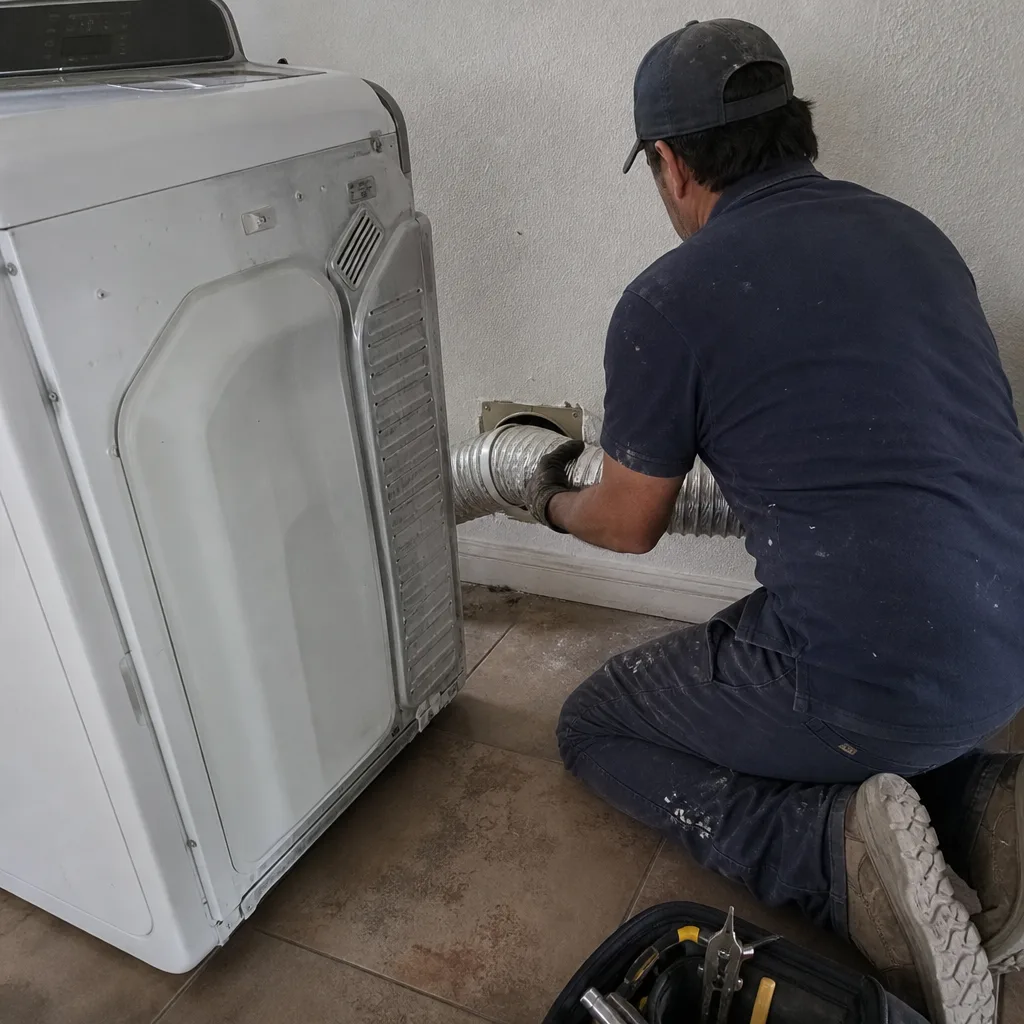
After twelve years of documented inspections in Comal County, we’ve identified recurring installation and equipment issues that predict duct problems before they become visible contamination.
Oversized cooling equipment. New Braunfels builders in the 2005-2015 period frequently installed 3.5-ton systems where 2.5 tons would suffice, using the “bigger is better” rule of thumb. Oversized equipment short-cycles, running 8-10 minutes then shutting off, which prevents adequate dehumidification and leaves moisture in the duct system. The symptom is a cold, clammy house; the duct consequence is accelerated biological growth. Proper load calculation using Manual J, and equipment selection using Manual S, prevents this. We refer homeowners to HVAC contractors who perform these calculations when replacement is needed.
Flex duct resting on attic insulation. In the attic truss systems common in New Braunfels subdivisions, flex duct is often laid directly on blown fiberglass insulation. This blocks the vapor jacket’s ability to shed condensation, creates a thermal bridge, and compresses the duct, reducing airflow. Proper support with straps at 4-foot intervals, maintaining clearance from insulation, is standard in our HVAC cleaning and repair specifications.
Missing or failed duct sealant at plenum connections. The plenum-to-furnace and plenum-to-duct connections are the highest-pressure points in the system. Builder-grade installations often use foil tape alone, which fails in 3-5 years in New Braunfels attic heat. We specify mastic plus mechanical fastening at these joints, verified with a smoke pencil test for leakage.
Inadequate return air pathways. Many New Braunfels homes, particularly ranch-style 1990s-2000s builds, have a single central return with doors that close tightly to bedrooms. This creates pressure imbalances that draw unconditioned air through wall cavities and around duct penetrations, bypassing filtration entirely. Adding jumper ducts or transfer grilles, or upgrading to a return in each bedroom, solves the pressure problem and reduces duct contamination.
Evaporator coil access panels never removed since installation. We document this in approximately 30% of first-time service calls. The panel screws are stripped, rusted, or covered with tape, and the coil has never been inspected or cleaned. A dirty coil reduces dehumidification capacity, overloads the duct system with moisture, and can become a contamination source itself. Panel removal, coil photography, and cleaning or replacement as needed is standard in our pre-cooling service.
Common Mistakes to Avoid
- Waiting for visible dust at registers. By the time debris is visible at supply registers, contamination has typically spread throughout the system and compressed into layers that require aggressive cleaning. The correct trigger is interval-based scheduling plus odor or airflow changes, not visible dust.
- Using the cheapest filter that fits the housing. Fiberglass “bug screens” (MERV 1-4) protect equipment from large debris but allow virtually all respirable particulate into the duct system. The incremental cost of MERV 11 pleated filters, $4-$6 per filter versus $1-$2, is recovered many times over in extended cleaning intervals and reduced HVAC wear.
- Ignoring musty odors as “just how the house smells.” In New Braunfels humidity, musty startup odors indicate active moisture and probable biological growth in the duct system. This is not aesthetic; it’s a signal of ongoing spore release into occupied space. Address the moisture source before cleaning, or the problem recurs within one season.
- Scheduling cleaning in October as “fall maintenance.” The New Braunfels cooling season runs April-October. An October cleaning removes debris after it has already been circulated for six months, and before a brief, mild heating season when the system runs minimally. The value per dollar is lowest in October.
- Accepting per-vent pricing or phone estimates without inspection. Duct systems vary in length, accessibility, and contamination level. A phone quote based on “number of vents” cannot account for these variables and creates incentive for upselling once the technician arrives. Written pricing after physical inspection, with scope defined before work begins, is the only reliable approach.
- Neglecting the dryer vent. Dryer vent blockage reduces dryer efficiency and creates fire risk, but it also pressurizes the laundry room and adjacent spaces, forcing lint and moisture into wall cavities and potentially into return air pathways. Annual dryer vent cleaning is standard for homes with duct systems.
- Assuming new construction means clean ducts. Construction debris, drywall dust, and insulation scraps in new home ductwork are documented problems. The builder’s “duct cleaning” is typically a shop vacuum at the registers, not negative-pressure extraction through the full system. A post-construction professional cleaning, with photo documentation, establishes a clean baseline.
When to Call a Professional
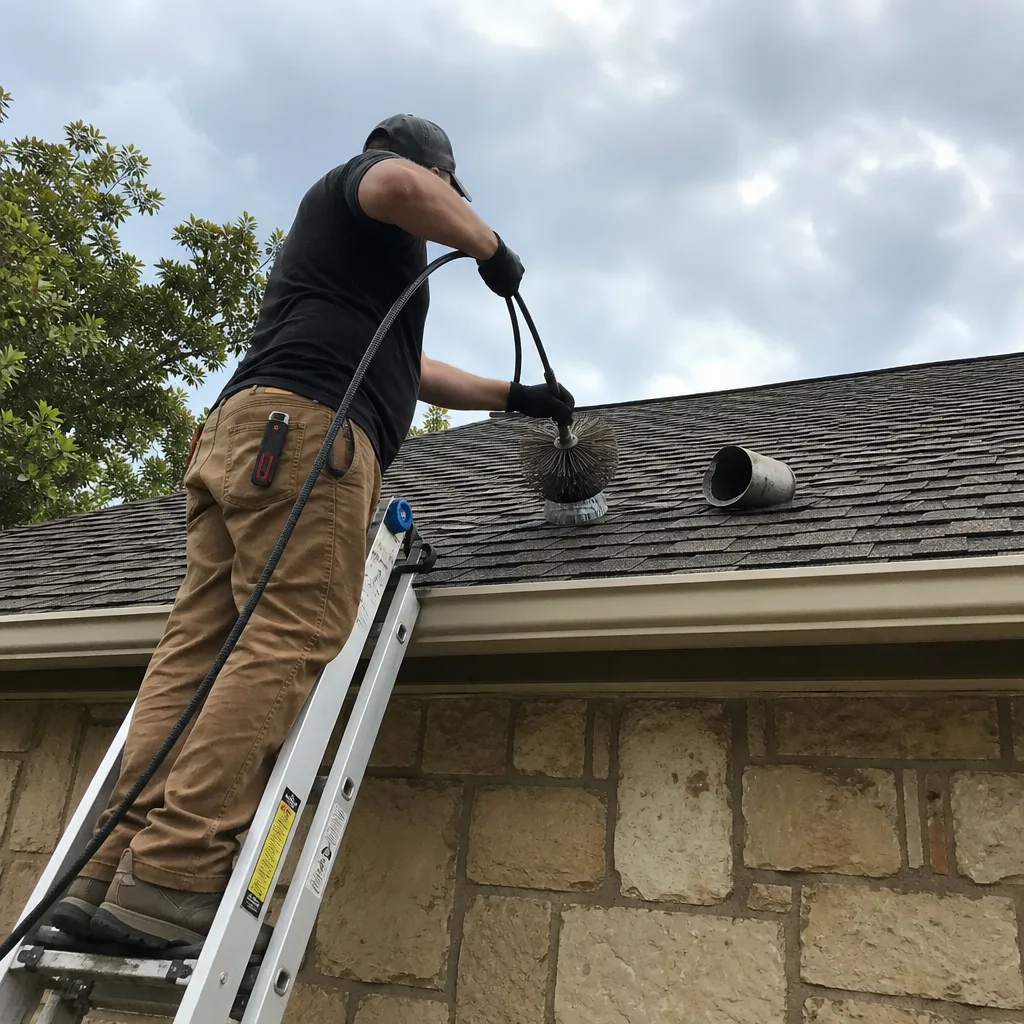
Call for professional duct assessment when you detect musty odors at system startup, visible moisture at registers, temperature differences exceeding 3°F between rooms, or filter replacement frequency increasing without explanation. These symptoms indicate duct system problems that homeowner maintenance cannot resolve.
CleanRun Air Duct Cleaning New Braunfels offers free estimates in New Braunfels, and you can explore more guides & resources on our site. Every estimate includes a written price before any work begins, under Haven Standard Clause 1, and every completed job includes a Documented Photo Record of every duct run. We also provide a Free Second Opinion on any written estimate from another provider. Call (830) 549-6847 to schedule.
Frequently Asked Questions
Whole-system air duct cleaning for a typical New Braunfels home ranges from $450 to $850, depending on system size, accessibility, and contamination level-see our Air Duct Cleaning Cost Breakdown: The New Braunfels Homeowner’s Reference for 2026 for detailed pricing factors. Larger homes with multiple zones, extensive flex duct in attics, or heavy debris requiring agitation and contact vacuuming fall at the higher end. CleanRun delivers a written price after physical inspection, before any work begins, with no per-vent add-ons or post-arrival upselling. Call (830) 549-6847 for an exact quote; estimates are free.
Low quotes typically reflect limited scope: register vacuuming without negative-pressure extraction, no plenum or blower service, no photo documentation, and equipment that does not meet NADCA or industry standards. The $79-$149 coupon price usually covers 30 minutes of surface cleaning, not the 3-4 hours required for thorough system service. Ask specifically what equipment will be used (Rotobrush, Nikro, and Abatement Technologies are recognized professional brands), whether every duct run will be photographed, and whether the price is guaranteed in writing before work starts.
Demand a documented photo record showing the interior of every duct run before and after service, with timestamps. CleanRun includes this as a standard deliverable on every job, a practice held since 2013. Without photographic evidence, you have only the technician’s word that the system was cleaned. The photo record is your verification that the service matched the written scope and price.
Most New Braunfels homes need professional duct cleaning every 3-5 years, with the exact interval determined by home age, pet presence, occupancy, and filtration quality. Pre-1995 homes with pets may need service every 2-3 years; tight new construction with upgraded filtration can extend to 5-7 years. The critical factor is not calendar time but system condition and upcoming demand; a March cleaning before six months of continuous cooling provides more value than an October cleaning before minimal heating use.
Homeowners can and should maintain filters, registers, and visible return air grilles. However, negative-pressure extraction of the full duct network requires professional equipment: a vacuum source capable of maintaining 2,000-3,000 CFM at the duct opening, mechanical agitation tools to dislodge adhered debris, and containment to prevent household contamination during the process. Attempting DIY cleaning with household vacuums risks damaging flex duct, dislodging debris without removing it, and creating airborne contamination. For the plenum, blower wheel, and interior duct runs, professional service is the appropriate choice.
Humidity itself does not increase debris accumulation, but it transforms the consequences of that debris. Moisture plus organic material in ductwork supports mold growth that dry climates do not experience. New Braunfels homes with humidity-related duct issues need more frequent inspection and may need dehumidification upgrades or duct sealing rather than more frequent cleaning. The correct response to humidity is moisture control first, then cleaning if contamination has already occurred.
The Bottom Line
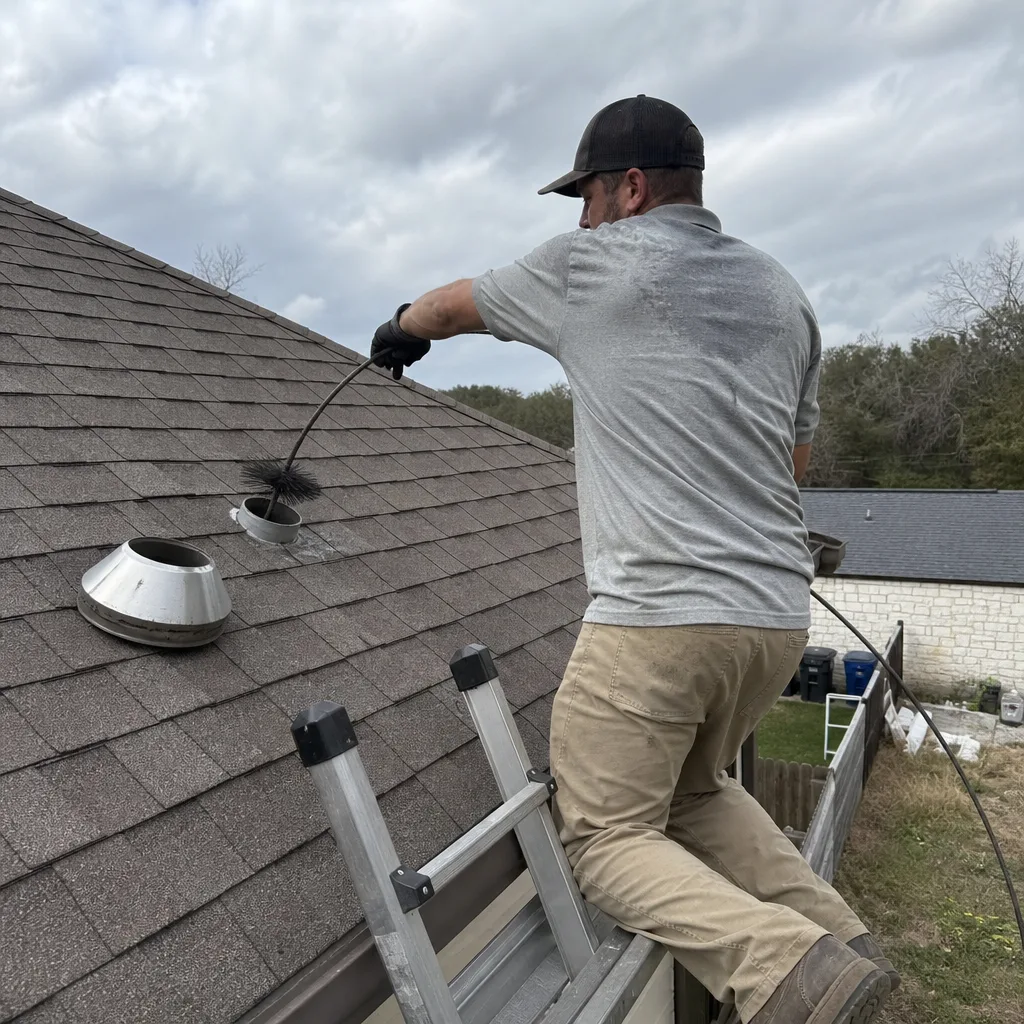
New Braunfels homes operate on a climate calendar that ignores the traditional four-season model. The duct maintenance schedule that protects indoor air quality and system efficiency centers on three critical windows: March pre-cooling cleaning before 220+ days of continuous operation, late August humidity assessment before peak moisture damage, and late February post-cedar inspection before spring pollen compounds winter accumulation. Realistic intervals range from 2-3 years for older homes with pets to 5-7 years for tight new construction with upgraded filtration. The common thread is documentation: written pricing before work, photographic evidence after, and accountability through the 365-Day Done Right Promise.
Written by Tomas Reyes, Owner at CleanRun Air Duct Cleaning New Braunfels, serving New Braunfels since 2013.