
Last updated September 23, 2026
Whole-system duct and dryer vent check with before-and-after photos - you see exactly what came out of your vents
That "$99 whole-house special" is a bait ad - the real number appears once they are in your hallway, or the "clean" is a shop-vac at the register. We photograph the inside of your ducts before and after instead.
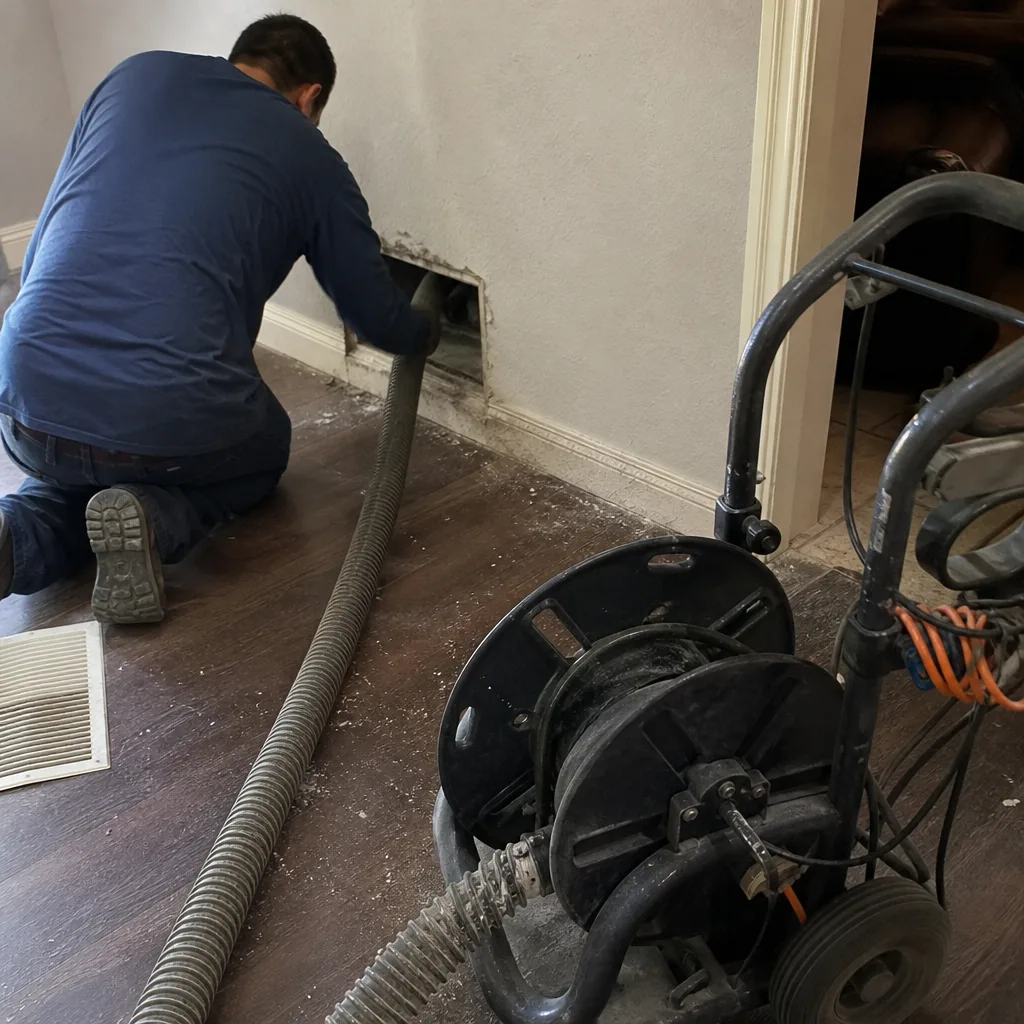 Before
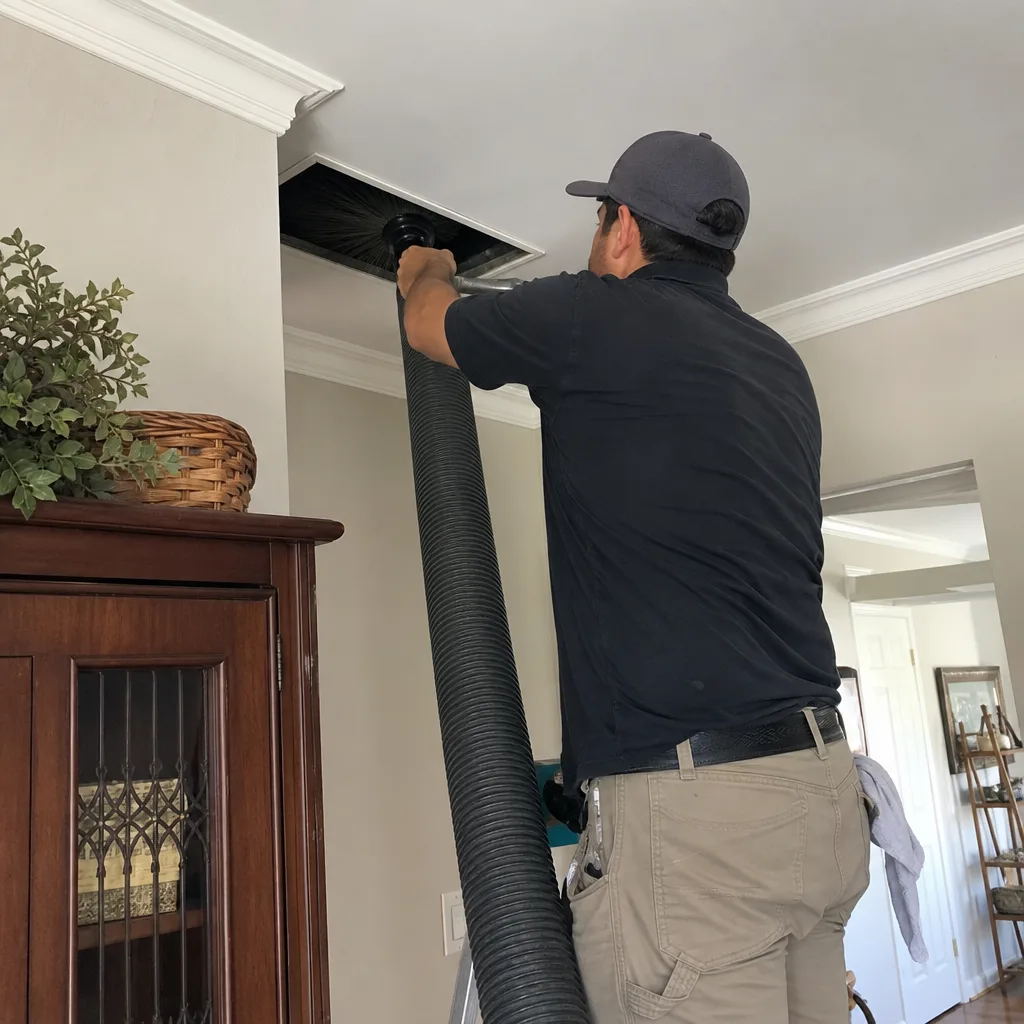 After
After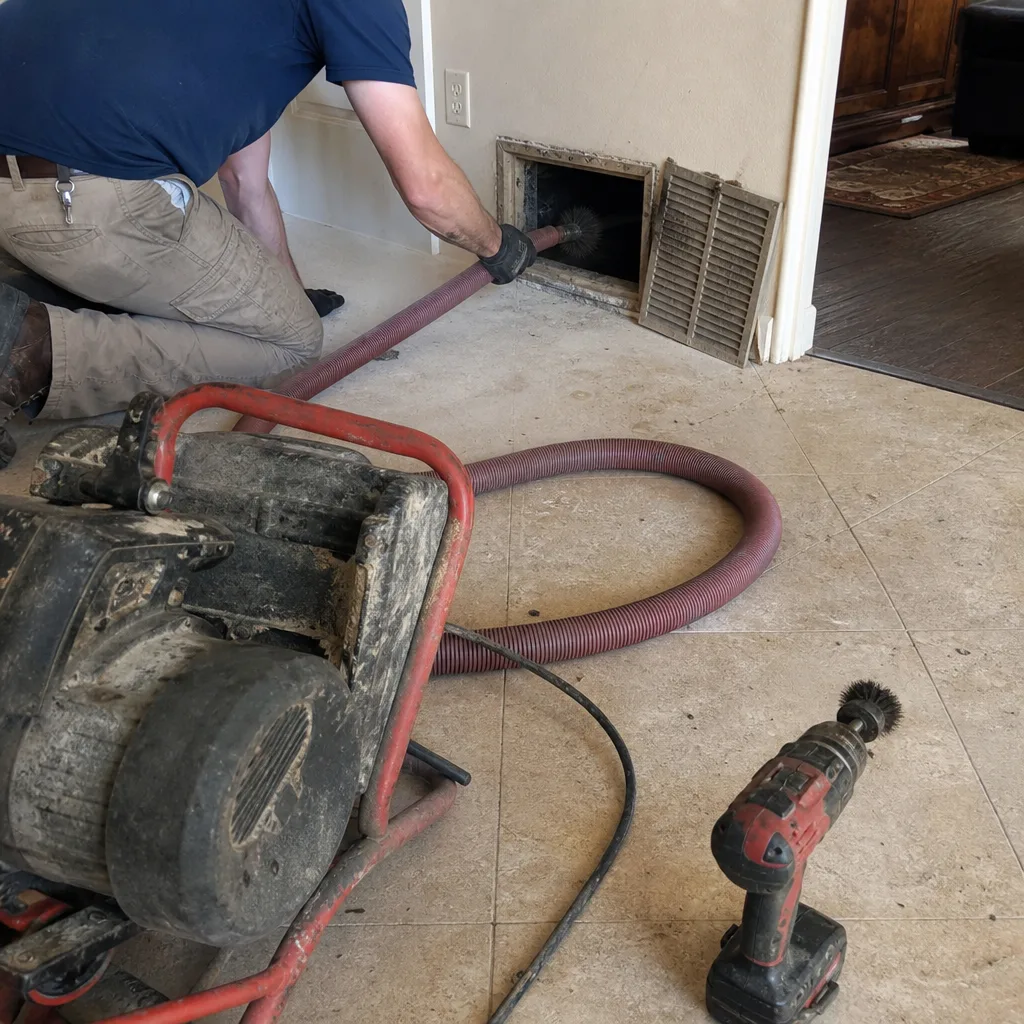 Before
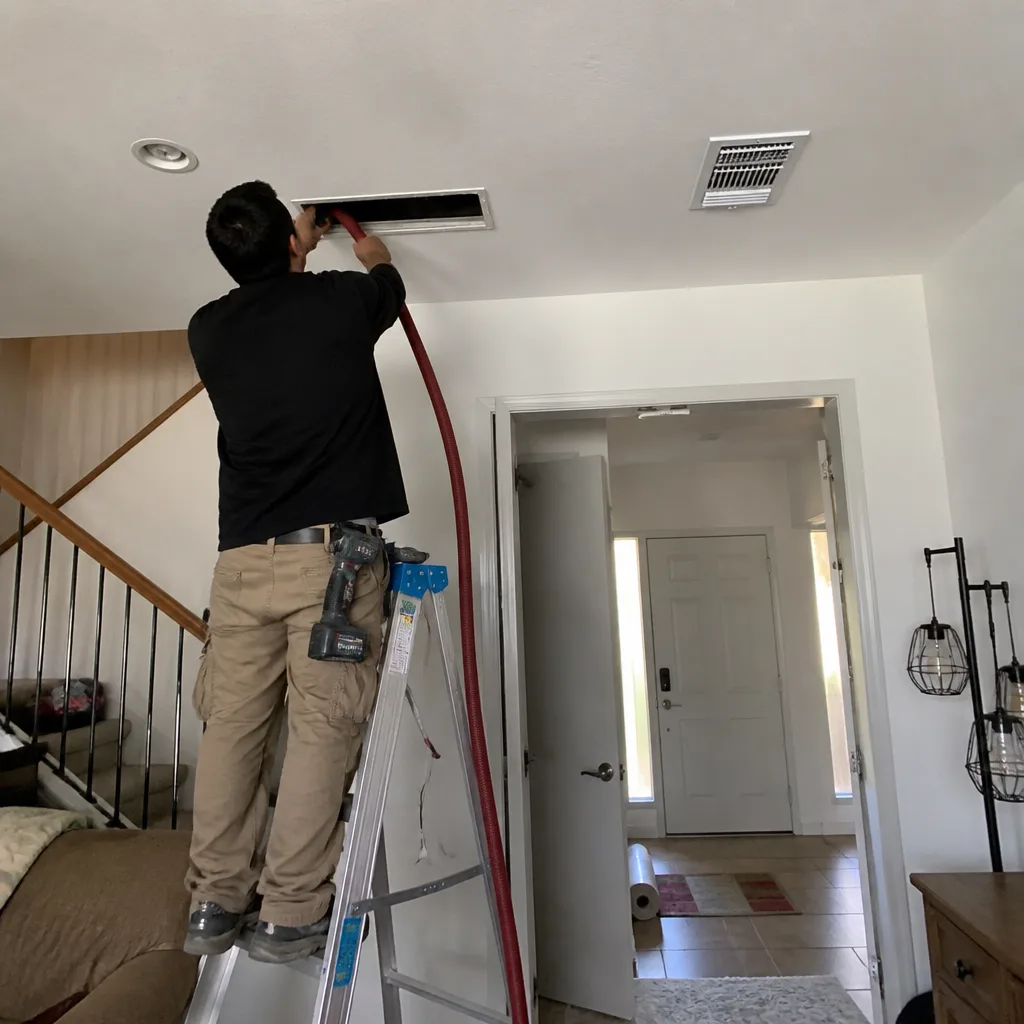 After
After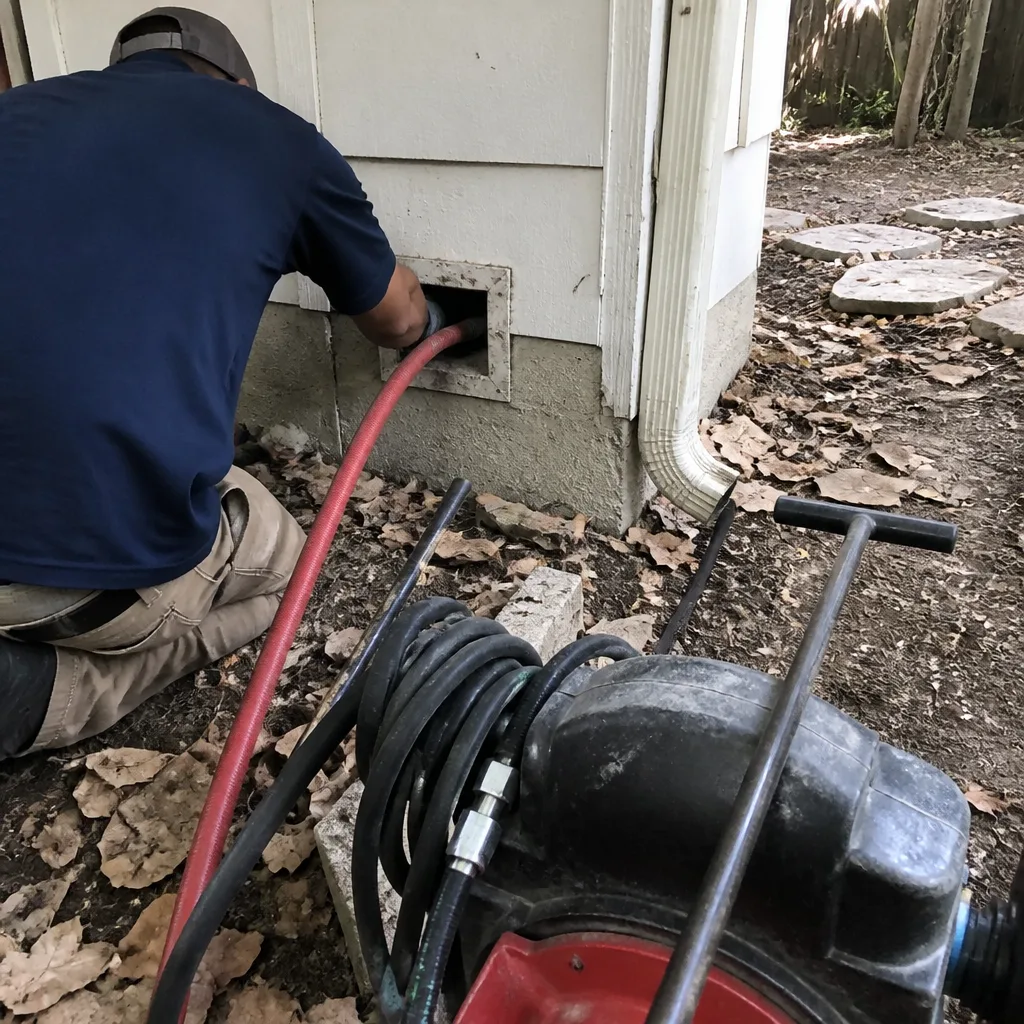 Before
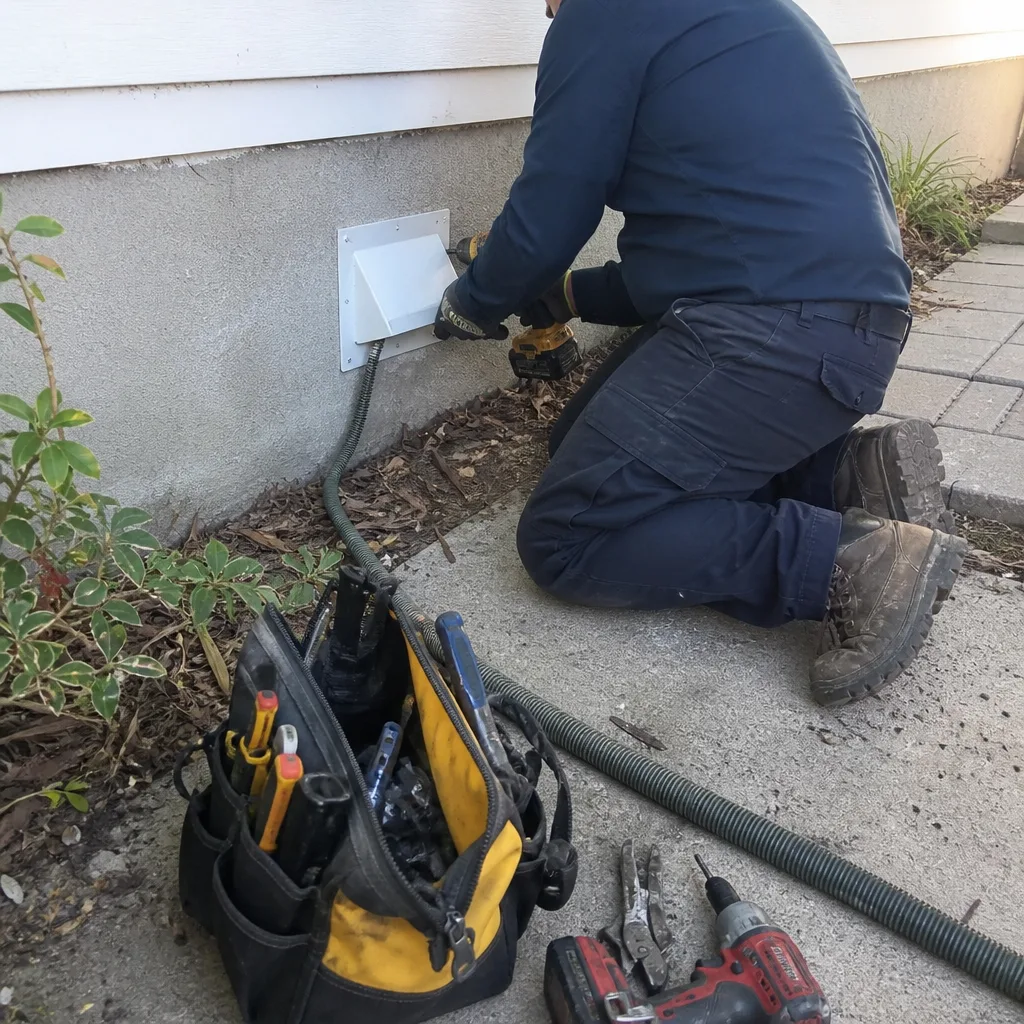 After
AfterHow to Hire a Air Duct Cleaning Contractor in New Braunfels: A Step-by-Step Guide
The Federal Trade Commission published a consumer alert about air duct cleaning bait-and-switch pricing over a decade ago. The practice is still the dominant acquisition strategy in New Braunfels today. The $79 coupon persists because most homeowners have no framework for vetting contractors before the truck arrives. This guide - alongside our Air Duct Cleaning Cost Breakdown: The New Braunfels Homeowner’s Reference for 2026 - gives you a specific, ordered set of questions and document requests that separate accountable operations from truck-and-vacuum outfits before any money changes hands. Follow these steps and you’ll know exactly what you’re paying for, what equipment will enter your home, and what proof you’ll have that the work was actually performed.
Quick Answer
To hire a contractor for our Air Duct Cleaning services in New Braunfels, request four documents before booking: a written scope of work, a line-item price with no per-vent escalation clause, proof of liability insurance, and NADCA membership or equivalent certification. Then ask two disqualifying questions: whether the quoted price is final if no additional work is found, and whether every duct run will be photographed before and after. Contractors who hesitate on any of these points are signaling a business model built on upselling, not documented service.
Table of Contents
- Why the $79 Coupon Model Still Works in New Braunfels
- The Four Documents to Request Before Booking
- How to Verify the Equipment Actually Used
- Two Questions That Expose Bait-and-Switch Operations
- Reading Reviews for Upsell Patterns
- What a Written Guarantee Must Actually Include
- New Braunfels-Specific Considerations
- Common Mistakes to Avoid
- When to Call a Professional
- Frequently Asked Questions
BeforeAfterWhy the $79 Coupon Model Still Works in New Braunfels
The $79 air duct cleaning coupon is not a loss leader. It’s a pricing structure designed to convert on-site through manufactured urgency. Here’s how the math actually works: the coupon covers a brief visit with a portable vacuum or shop vac run at a few registers. Once inside, the technician identifies “additional problems” - mold, excessive debris, blocked returns - each with a substantial upcharge. The final invoice typically ranges from $400 to $1,200, with the homeowner too embarrassed or time-pressured to refuse.
This model survives because ductwork is invisible. You cannot see inside your plenum (the main distribution box, usually near your air handler) without specialized equipment. You have no baseline for what “clean” looks like. And the health claims - allergies, efficiency, dust reduction - are emotionally potent even when exaggerated.
In New Braunfels specifically, rapid home construction from 2015 to 2025 has created a market where many homeowners are first-time duct cleaning buyers. Developments like Meyer Ranch, River Chase, and Vintage Oaks attracted buyers from outside Texas who may not recognize that our caliche-heavy soil and extended dry seasons produce fine dust that accumulates differently than in humid climates. Local contractors who understand this can explain it. Those who lead with a coupon price cannot.
The FTC alert identified specific red flags: claims of EPA endorsement (the EPA does not certify duct cleaners), threats of imminent health hazards, and pressure to decide immediately. All three remain common in the New Braunfels market. The alert also noted that no research has demonstrated duct cleaning prevents health problems - a fact honest contractors acknowledge while explaining the legitimate, narrower benefits: restored airflow, reduced particulate circulation, and documentation of system condition.
The Four Documents to Request Before Booking
Accountable contractors operate with documentation. Request these four items before scheduling any work. A legitimate operation will provide them without hesitation. A bait-and-switch operation will deflect, delay, or disappear.
1. Written Scope of Work
This document specifies exactly which components will be cleaned: supply duct runs (the branches carrying conditioned air to rooms), return duct runs (the branches drawing air back), the plenum, registers (the visible grilles in each room), and the air handler cabinet. It should also state what will not be done, such as coil cleaning or sanitizing, if those are separate services. Vague language like “complete system cleaning” without component breakdown is a warning sign. At CleanRun, every scope is itemized under Haven Standard Clause 1: Written Price Before Work Starts.
2. Line-Item Price with No Per-Vent Escalation
The price must be a flat rate per system, not a base rate “per vent” that grows as vents are counted on arrival. Per-vent pricing is the standard mechanism for on-site inflation. A legitimate contractor prices by system complexity and square footage, then confirms the register count during initial inspection without changing the total. The written price should include:
- Total cost for all listed components
- Any additional services (sanitizing, sealant application, repairs) as separately priced options, not bundled assumptions
- A statement that the price is final if no undisclosed conditions are found
In the New Braunfels market, whole-system cleaning for a typical 2,000-3,000 square foot home with one HVAC system generally ranges from $400 to $700 for thorough negative-pressure extraction with register-level agitation. Prices below this range typically indicate minimal equipment or undisclosed upselling. Prices significantly above may reflect legitimate complexity - multiple systems, crawl space access, or extensive repair needs - but should be justified in writing.
3. Proof of Liability Insurance
Request a certificate of insurance showing general liability coverage specifically for HVAC or duct cleaning work. The certificate should name the business you’re hiring, not a parent company or unrelated entity. Coverage should be at least $500,000. This is not excessive for work involving powered equipment in your attic, crawl space, and around electrical components. Haven Standard Clause 3: Verified Crews requires background-checked, uniformed technicians - the insurance certificate is the financial backbone of that verification.
4. NADCA Membership or Equivalent Certification
The National Air Duct Cleaners Association (NADCA) sets equipment and procedure standards, including the Assessment, Cleaning, and Restoration (ACR) standard. Membership indicates the contractor has access to industry training and commits to published protocols. Equivalent certifications include those from the Indoor Air Quality Association (IAQA) or manufacturer-specific training from equipment brands like Rotobrush, Nikro, or Abatement Technologies. Ask specifically: “What training have your technicians completed on the equipment they will use in my home?”
Document retention matters. Keep these four items together. If a dispute arises, your written scope and price are enforceable; a phone quote is not.
How to Verify the Equipment Actually Used
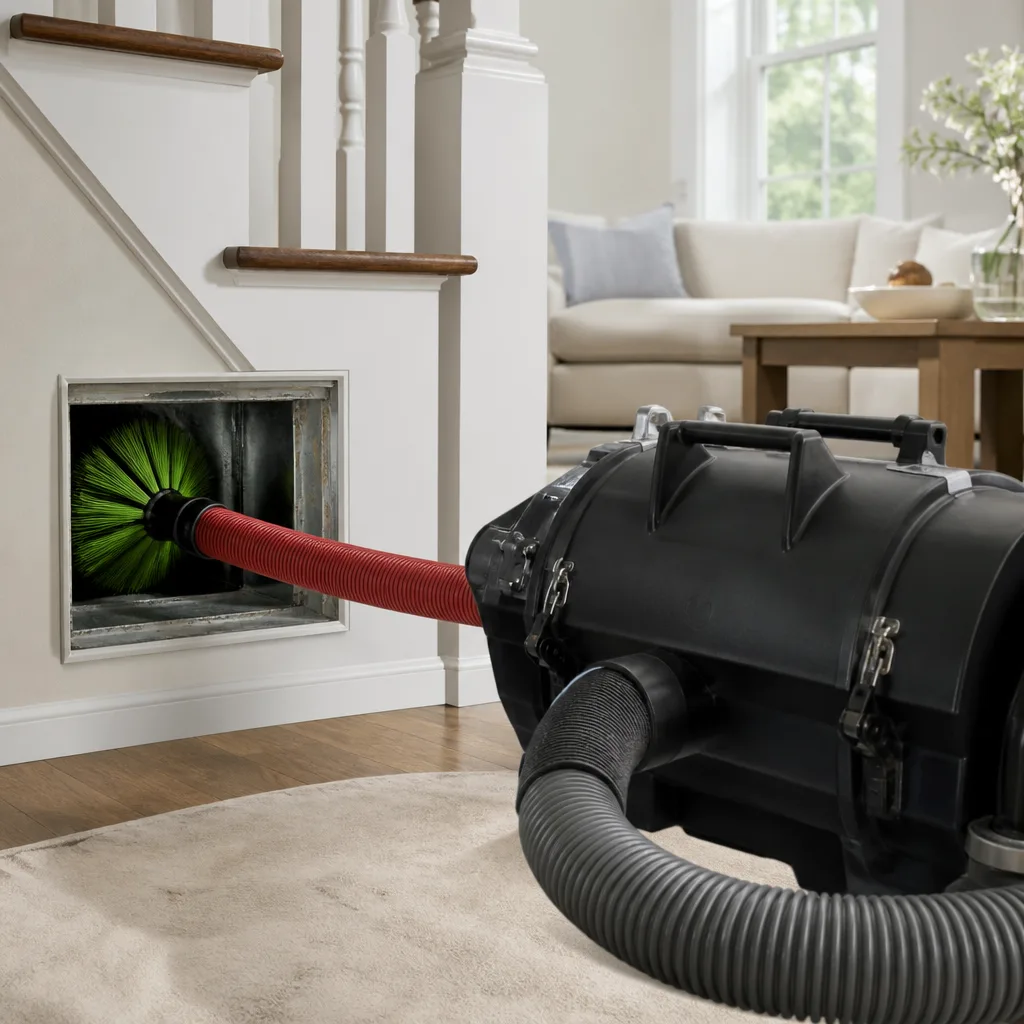
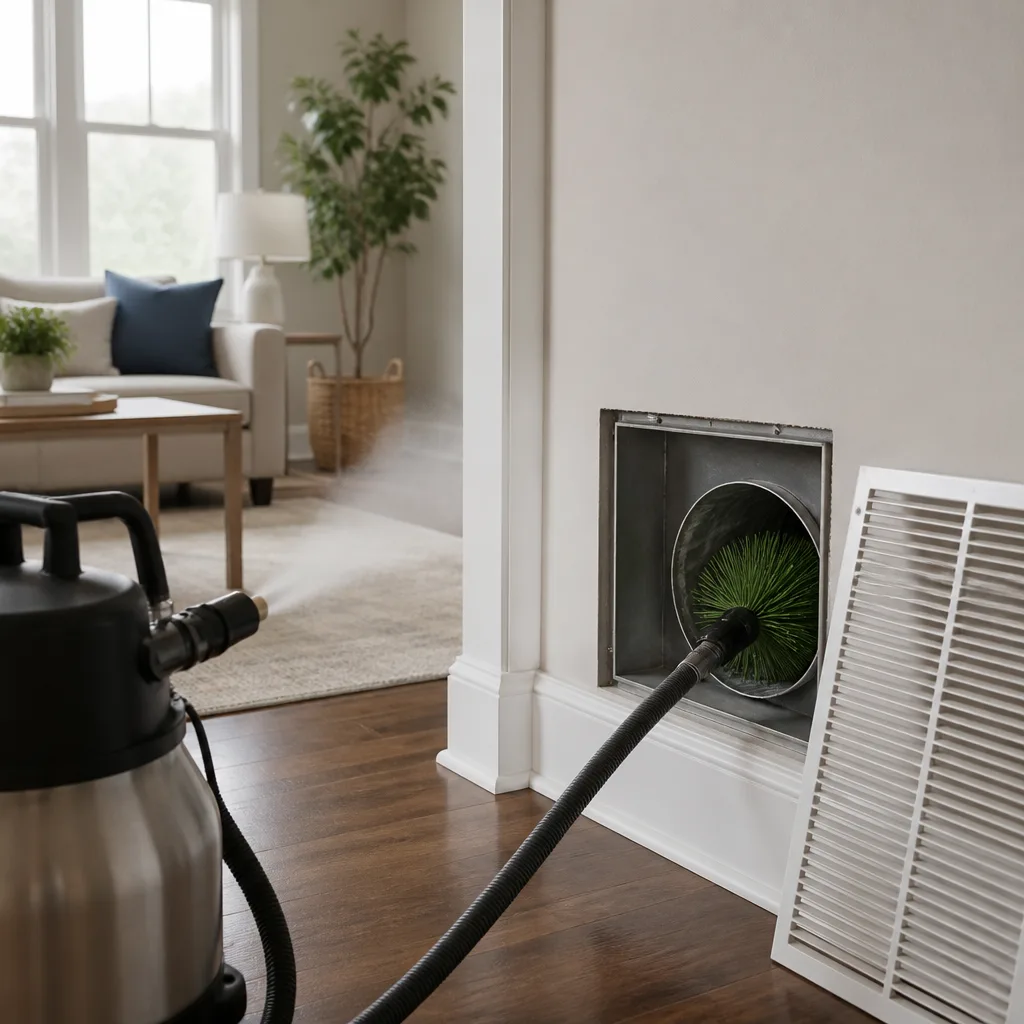
“Negative air pressure” or “negative-pressure extraction” is the industry term for connecting a powered vacuum collection unit to your duct system, creating suction throughout the network while agitation tools dislodge debris. This requires equipment substantially different from a portable shop vacuum or carpet-cleaning extractor modified for ducts.
Here’s what legitimate negative-pressure equipment looks like:
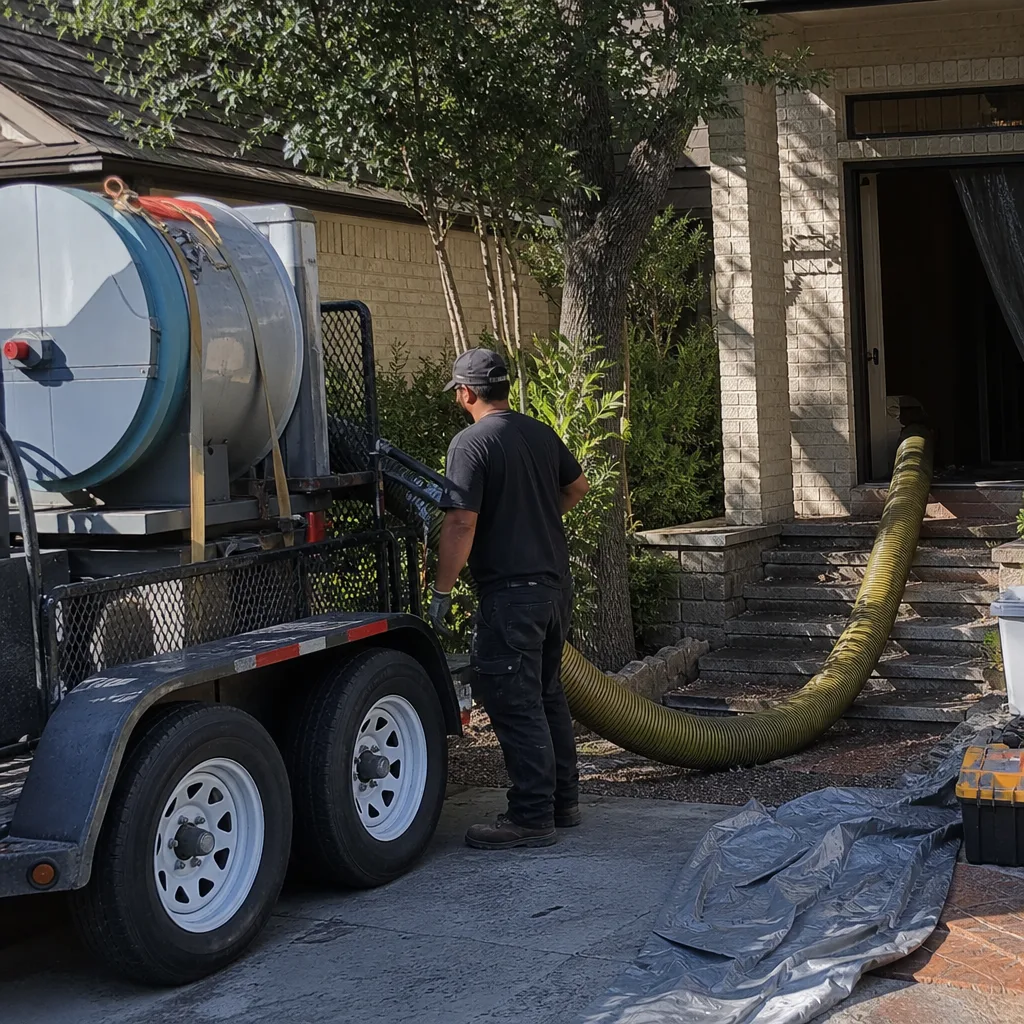
- A gas-powered or high-electric vacuum unit, typically mounted on a trailer or large van, producing 5,000+ CFM (cubic feet per minute) of suction
- A collection hose connected to your main trunk line, usually through a temporary access point cut into the plenum or a large duct run
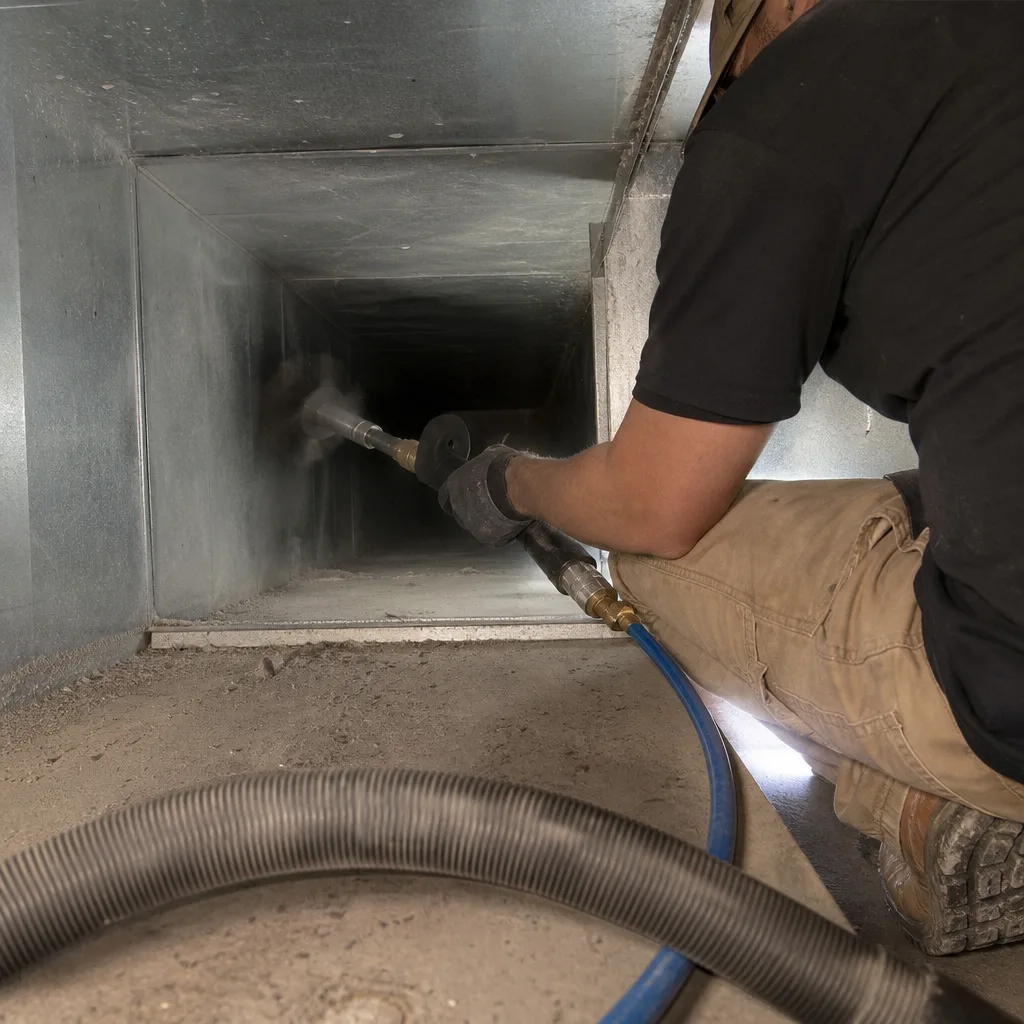
- Agitation tools - rotary brushes, air whips, or compressed-air skipper balls - inserted at each register to dislodge debris while the vacuum maintains system-wide suction
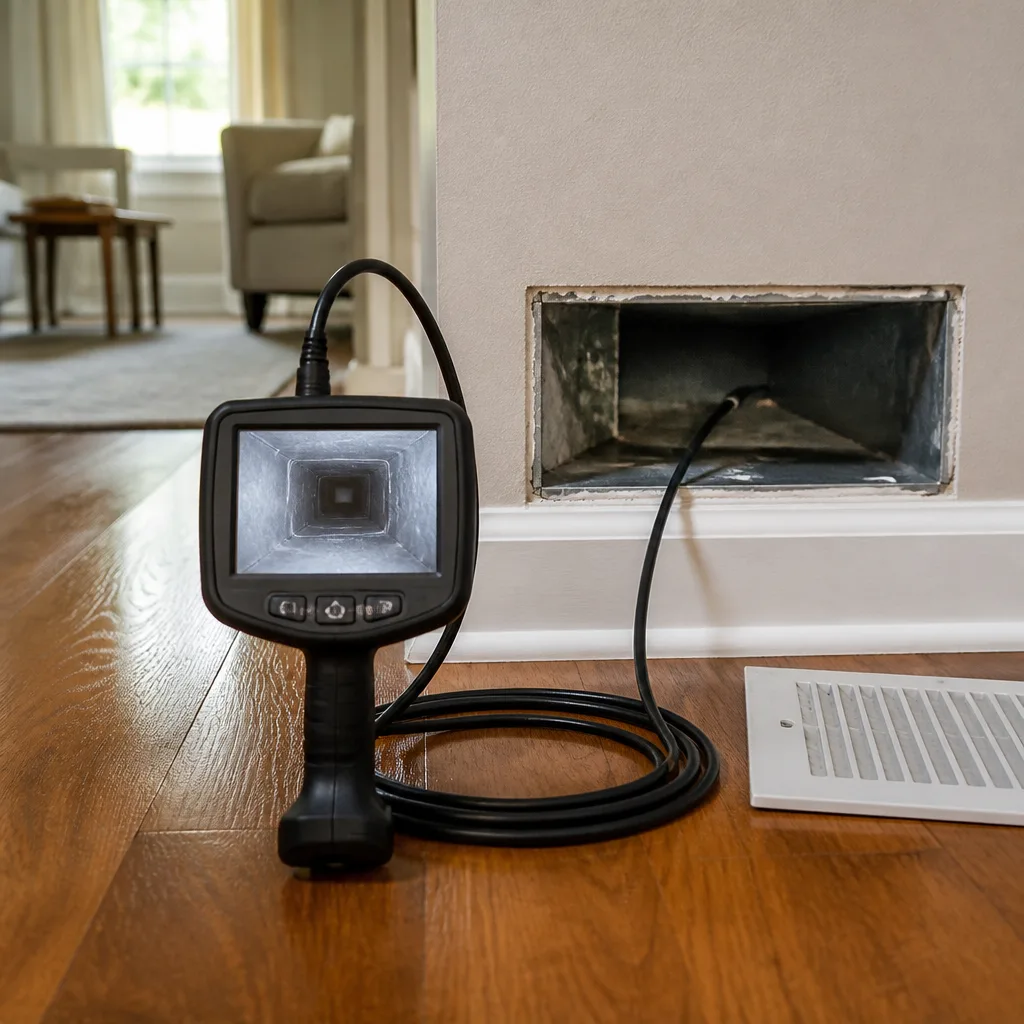
- Inspection cameras or borescope equipment to verify conditions before and after cleaning
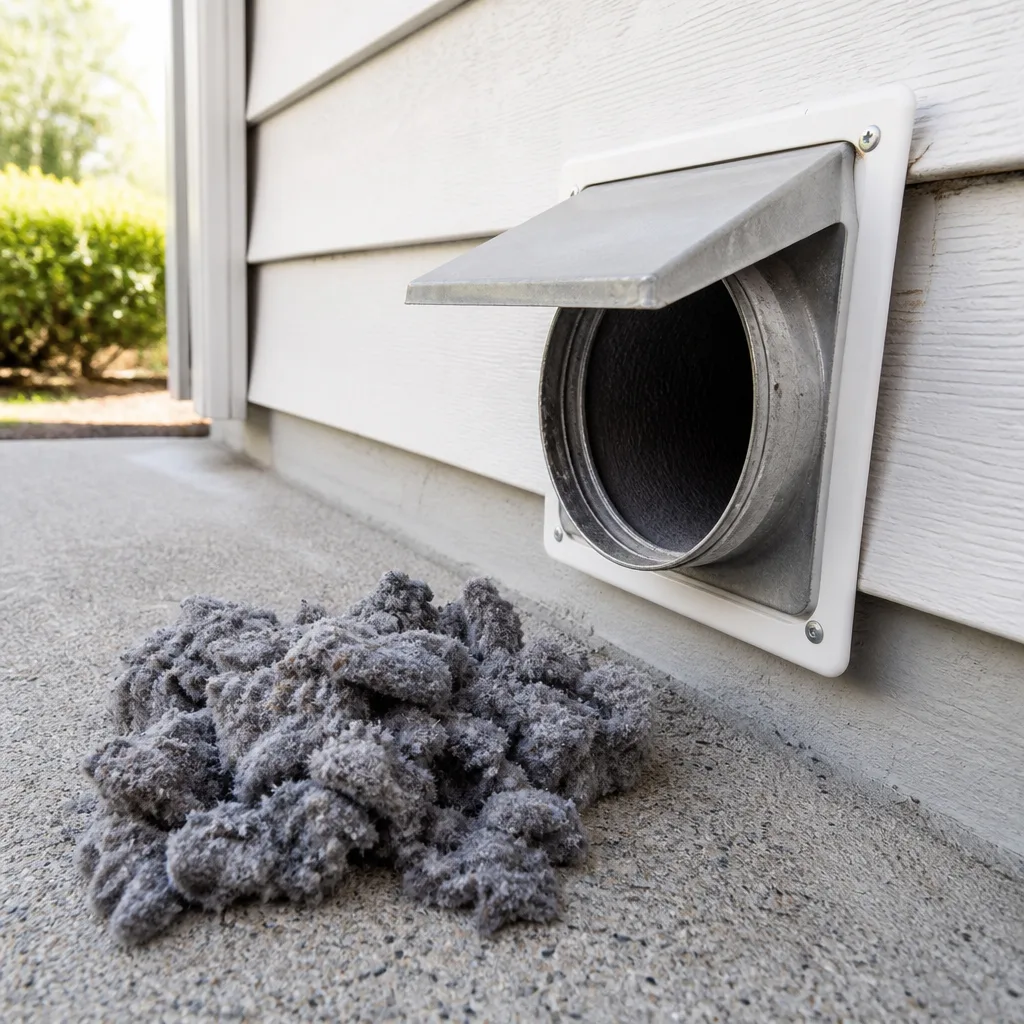
Portable electric units, shop vacuums, or carpet extractors with duct attachments cannot maintain negative pressure across an entire residential system. They may clean the first few feet of each run, leaving the majority untouched. Yet these are the tools typically deployed for coupon-priced jobs.
Ask your contractor specifically: “Will you be using a truck-mounted or trailer-mounted negative pressure unit, or a portable electric machine?” Then ask: “What brand and model?” Legitimate contractors name their equipment without hesitation. At CleanRun, our roster includes Rotobrush, Nikro, and Abatement Technologies units - brands customers can look up independently to verify specifications. If a contractor responds with “commercial-grade equipment” or “professional tools” without naming manufacturers, they are obscuring what will actually enter your home.
Request a photo of the equipment before booking, or view it on their website. The vacuum unit should be visible in vehicle-mounted configuration, not a handheld or rolling cart unit.
Two Questions That Expose Bait-and-Switch Operations
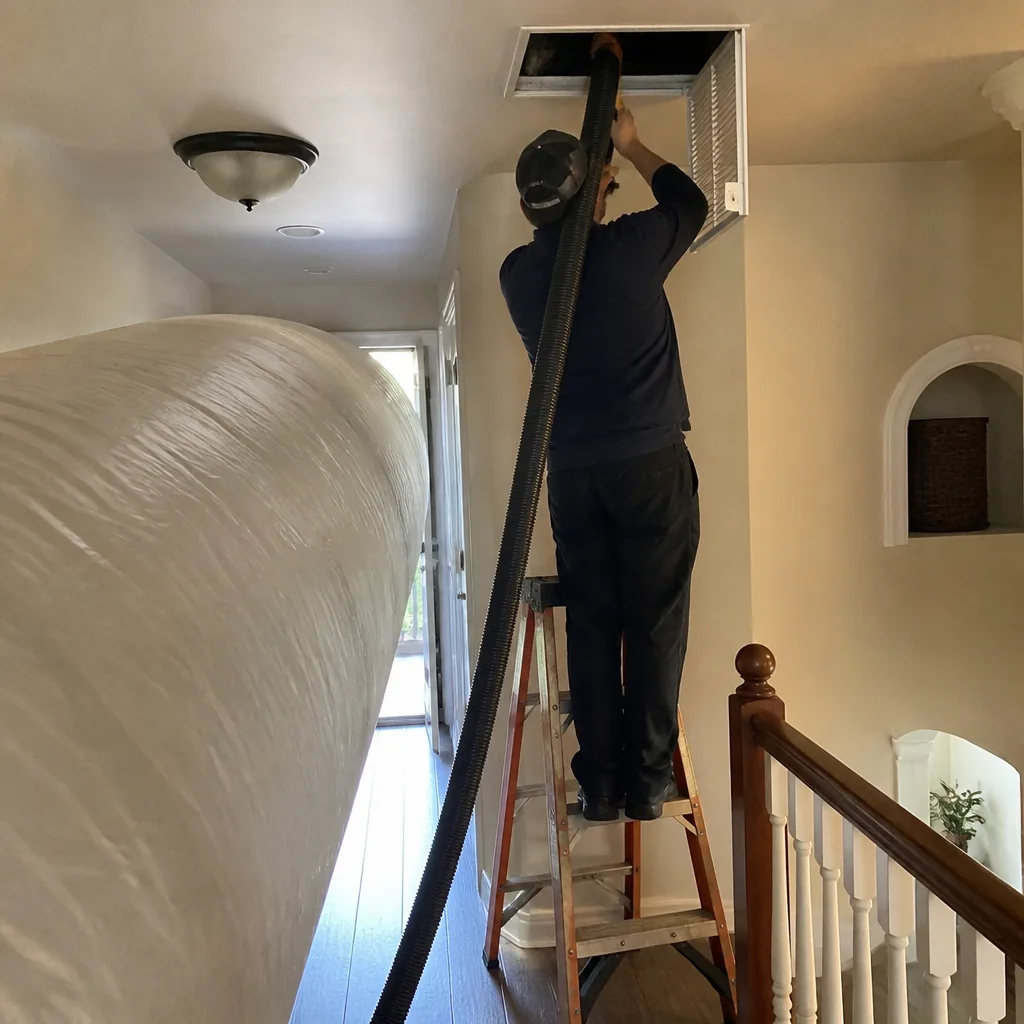
These two questions, asked in sequence, will eliminate most problematic contractors before you schedule. Ask them after receiving the four documents above. The responses will tell you everything about the business model you’re dealing with.
Question 1: “Is your quoted price the final price if no additional work is found?”
A legitimate contractor answers yes, with the single caveat that undisclosed conditions - collapsed ductwork, pest infestation, or hazardous materials - might require a revised scope and price, with your explicit approval before any additional work begins. The key phrase is “with your explicit approval.” This means a second written document, signed by you, before work proceeds.
A bait-and-switch contractor will answer with hedging: “The price covers standard cleaning, but we won’t know what we find until we’re inside.” This is technically true but functionally meaningless. Every system has variability. The difference is whether variability becomes a sales opportunity or a documented condition report with optional additional services priced separately. At CleanRun, Haven Standard Clause 1 requires a written price before work starts - every job, no exceptions. If conditions change, work stops, the homeowner is shown photographic evidence, and a revised scope with price is presented for separate approval.
Question 2: “Will you photograph the interior of every duct run before we agree on scope, and again after cleaning?”
This question combines two tests. First, it verifies whether the contractor has inspection equipment capable of documenting conditions. Second, it tests whether they are willing to be held accountable for results.
A contractor with borescope or camera equipment will answer yes immediately. A contractor without it, or with it but unwilling to use it for documentation, will deflect: “Our technicians can tell you what they found,” or “We clean every run thoroughly, so photos aren’t necessary.” The latter response is a refusal of accountability. You are being asked to trust, not verify.
The photo record should be delivered to you as part of the job documentation, not held on a technician’s phone. At CleanRun, the Documented Photo Record is included on every visit - inside every run, before and after - and delivered as a standard deliverable, not an upsell. We’ve held this practice since our first job in 2013, across 52,000+ homes served.
These two questions work because they attack the business model directly. Bait-and-switch operations depend on information asymmetry: they know what’s in your ducts, you don’t, and they monetize that gap. Documentation and price finality eliminate the gap entirely.
Reading Reviews for Upsell Patterns
Online reviews contain patterns that reveal business models. Learn to read for specific language that indicates systematic upselling rather than isolated incidents.
Red Flag Phrases Appearing Across Multiple Reviews
Search reviews for these specific terms appearing repeatedly:
- “Found mold” - Legitimate mold concerns in ducts are rare and require laboratory confirmation, not visual identification by a cleaning technician. Repeated mentions suggest mold is being used as a universal upsell trigger.
- “Needed sanitizer” - Sanitizing is a separate service with specific EPA-registered products. If reviewers consistently report being told they “needed” it after the technician arrived, this indicates a scripted upsell, not individualized assessment.
- “Technician said it would cost more” - This phrase, especially when the final price is multiples of the quoted price, is the signature of on-site escalation.
- “More expensive than expected” without specifics - Vague price disappointment without detail often reflects homeowners who accepted upsells under pressure and later regretted it.
- “Took longer than quoted” - Time-based surprises can mask labor charges added to a flat-rate quote.
Positive Review Patterns That Actually Matter
Conversely, look for these indicators of accountable service:
- Specific price figures in reviews, especially when matching the quoted price
- Mentions of photos or videos shown during service
- References to written documentation received
- Technician names mentioned specifically, indicating identifiable, accountable staff
- Follow-up experiences under warranty or guarantee
In New Braunfels, review platforms include Google, Nextdoor, and Facebook community groups. Nextdoor is particularly useful for neighborhood-specific patterns - search for your specific development or area (Meyer Ranch, Copper Ridge, the Historic District) to find experiences from homes with similar construction eras and duct configurations.
Weight recent reviews more heavily. A contractor with 50 five-star reviews from 2018-2020 and mixed or absent reviews since may have changed ownership, equipment, or business practices.
What a Written Guarantee Must Actually Include
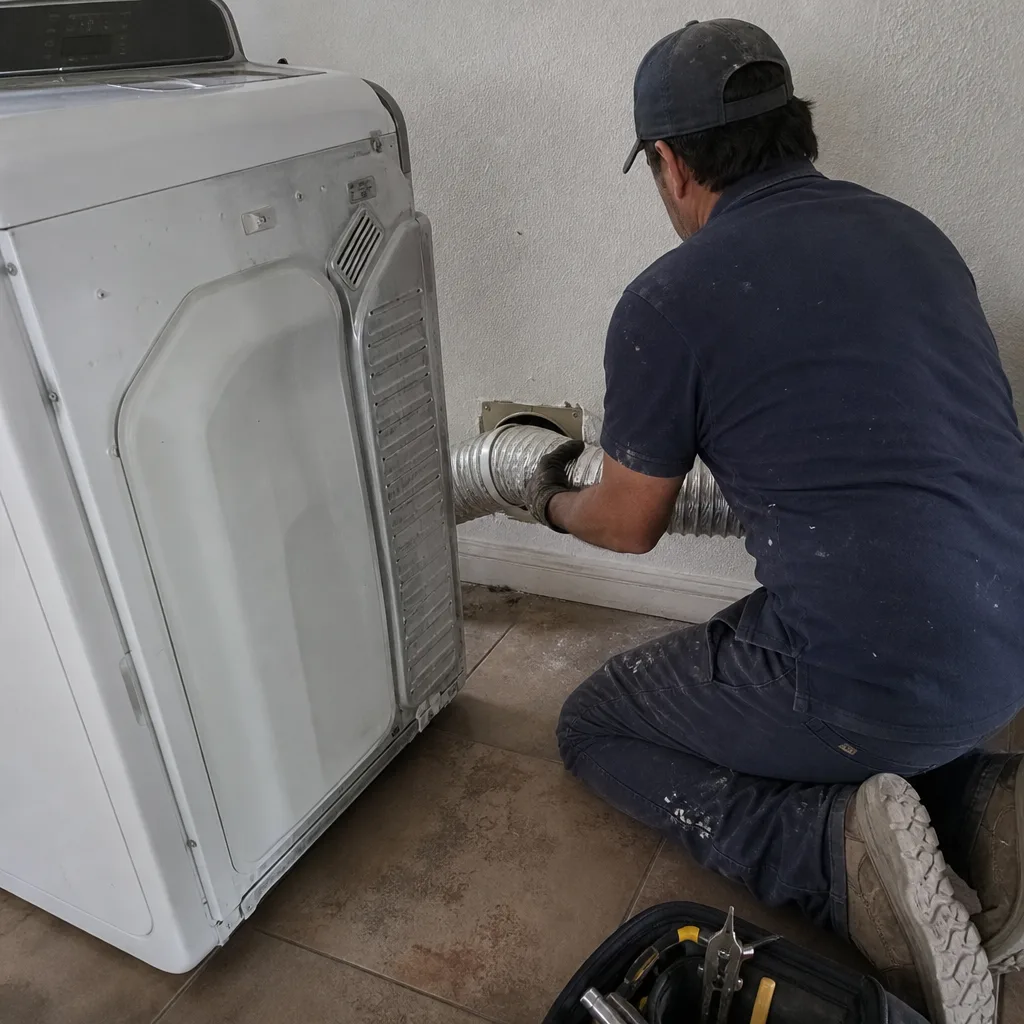
Verbal promises disappear with the service truck. A guarantee with enforceable meaning must be in writing, specific, and transferable to a specific remedy. Here’s what to look for.
The Elements of an Enforceable Guarantee
- Duration stated in days or years. “Lifetime” guarantees without definition are unenforceable. A specific period - 365 days, one year, five years - creates a clear obligation window.
- Scope of coverage defined. What exactly is guaranteed? That debris was removed? That airflow improved? That no damage occurred? Each requires different verification. The most meaningful guarantee covers workmanship: that the work was performed as specified in the written scope.
- Remedy specified. What happens if the guarantee is triggered? Re-cleaning? Refund? Repair of damage? The remedy must be as specific as the coverage. “We’ll make it right” is a sentiment, not a contract term.
- Process for claiming. Who do you contact? What documentation must you provide? Is there a time limit for reporting? Without process, the guarantee is theoretical.
- Business identification matching your contract. The guarantee must name the same entity that performed the work, with the same address and contact information. Guarantees issued by “authorized dealers” or third-party warranty companies may be difficult to enforce.
At CleanRun, the 365-Day Done Right Promise is backed in writing on every job: if the work is not right, we make it right. The specific remedy - return visit, re-cleaning, or refund depending on the issue - is noted on the job documentation alongside the photo record and written scope. This is not a policy subject to manager approval; it is a clause in the service agreement you receive.
Be wary of guarantees that require you to prove the negative - that is, to demonstrate the ducts are “still dirty” without baseline documentation. A guarantee paired with before-and-after photos is verifiable. A guarantee without documentation places an impossible burden on the customer.
New Braunfels-Specific Considerations
Local conditions in New Braunfels affect both duct cleaning needs and contractor selection. Understanding these factors helps you evaluate whether a contractor’s assessment is grounded in local experience or generic sales scripting.
Climate and Construction Era
New Braunfels sits at the edge of the Texas Hill Country, with caliche-rich soils and extended dry periods from May through October. Fine caliche dust infiltrates homes through construction gaps, window seals, and return air pathways. Homes built during the 2015-2025 construction boom, particularly in developments with rapid build schedules, often have ductwork with more seams and joints than older construction - more potential leakage points, more accumulation at joints and elbows.
In our experience across New Braunfels neighborhoods, the camera regularly shows 2-4 inch debris build-up at the first elbow in return runs of homes built 2018-2022. This is not exceptional; it’s typical for construction-era dust that was never fully cleared before occupancy. A contractor who expresses surprise at this accumulation, or who treats it as evidence of neglect, is demonstrating unfamiliarity with local conditions.
Hard Water and HVAC Components
New Braunfels draws from the Edwards and Trinity aquifers, with moderately hard to very hard water depending on exact location. This affects humidifier pads, evaporator coils, and condensate lines - components adjacent to but distinct from ductwork. A contractor who conflates coil cleaning with duct cleaning, or who uses hard water scale as justification for duct sanitizing, is either confused or deliberately obscuring service boundaries.
Local Permit and Code Context
Duct cleaning itself does not require permits in Comal County or Guadalupe County. However, duct modification, sealing with certain materials, or installation of UV sanitizing systems may trigger permit requirements depending on jurisdiction. A contractor performing work beyond cleaning should know whether your home falls under New Braunfels city jurisdiction, Comal County ETJ, or Guadalupe County ETJ, and should obtain permits when required. Ask directly: “Will this work require permits, and who obtains them?”
Neighborhood-Specific Equipment Access
Some New Braunfels developments - particularly those with narrow streets, gated access, or HOA restrictions - present logistical challenges for trailer-mounted vacuum equipment. A contractor familiar with local neighborhoods will ask about access before quoting, not discover it on arrival. Mention your specific development when requesting the four documents; the response will reveal local experience.
Common Mistakes to Avoid
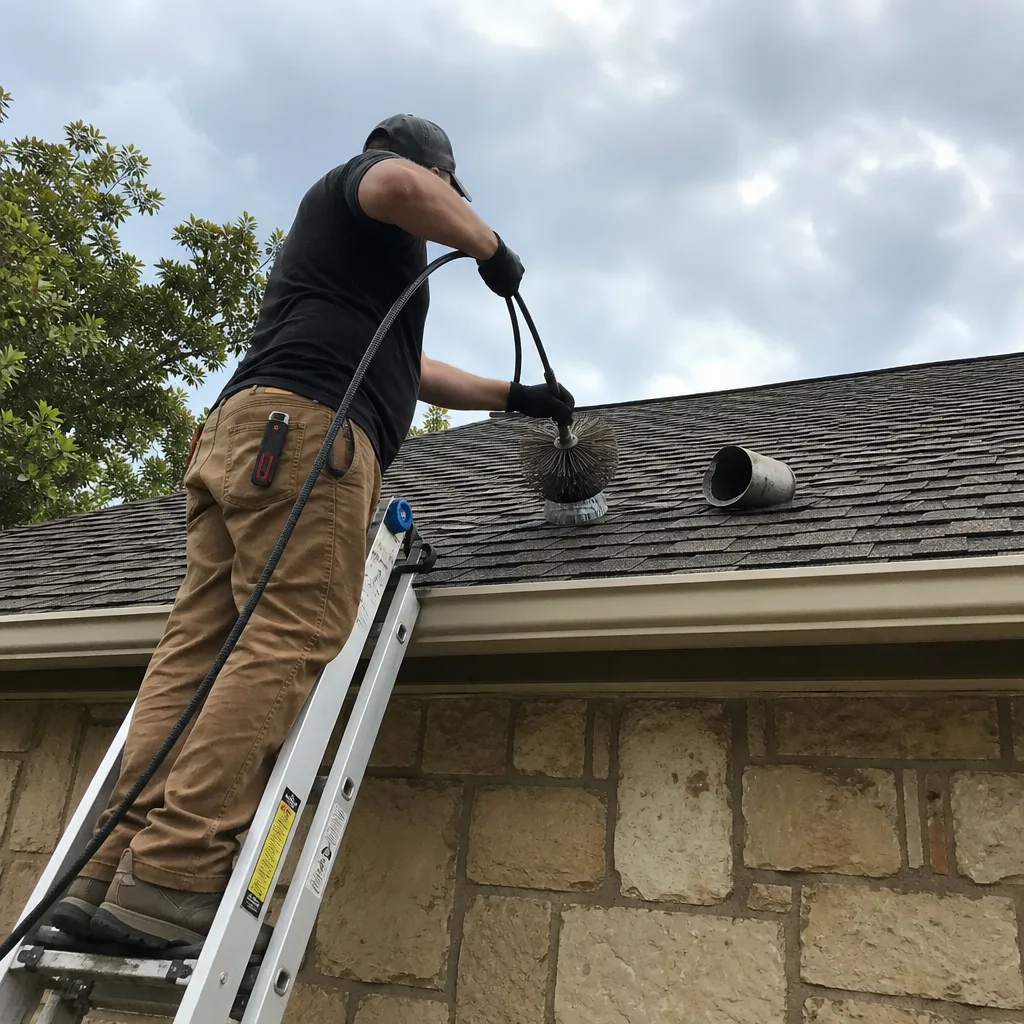
- Booking based on coupon price without requesting documentation. The $79 coupon is designed to bypass your evaluation process. Requesting documents before scheduling is the single most effective filter.
- Accepting verbal scope adjustments on arrival. Any change to the work described in your written scope requires a second written document. Technicians who present “what we found” as justification for immediate additional charges are executing a sales script, not reporting conditions.
- Assuming all “negative pressure” claims are equal. Ask for equipment specifics. A portable HEPA vacuum is not a trailer-mounted collection unit, regardless of marketing language.
- Neglecting to verify insurance specifically for duct cleaning. General contractor insurance may not cover HVAC-specific work. The certificate should name duct cleaning or HVAC services in the description.
- Ignoring review patterns in favor of average star rating. A 4.2-star average with specific, detailed reviews is more informative than a 4.9 average with generic praise. Read the negative reviews for upsell language.
- Accepting “mold” diagnoses without laboratory confirmation. Visual mold identification in ducts is unreliable. EPA guidance states that duct cleaning has never been shown to prevent health problems; claims of urgent mold remediation should be verified by independent testing.
- Failing to retain your documentation. The written scope, price, photo record, and guarantee are your enforceable records. File them with your home maintenance documents, not in an email inbox you’ll never search.
When to Call a Professional
Schedule professional duct cleaning when you observe reduced airflow at multiple registers, visible dust emission when the system cycles, or debris accumulation visible at register openings; see more guides & resources for maintenance timing. Also consider cleaning after major renovations, before occupancy of a newly purchased home, or if pets have produced significant dander accumulation over years without service.
Avoid “emergency” duct cleaning solicitations - door-to-door sales, telemarketing calls, or postcards warning of imminent health hazards. These are consistently associated with bait-and-switch operations. Legitimate duct cleaning is scheduled maintenance, not urgent intervention.
CleanRun Air Duct Cleaning New Braunfels offers free estimates in New Braunfels. Every estimate includes a written price before work starts, documented photo record of every duct run, and the 365-Day Done Right Promise backed in writing. Call (830) 549-6847 to schedule.
Frequently Asked Questions
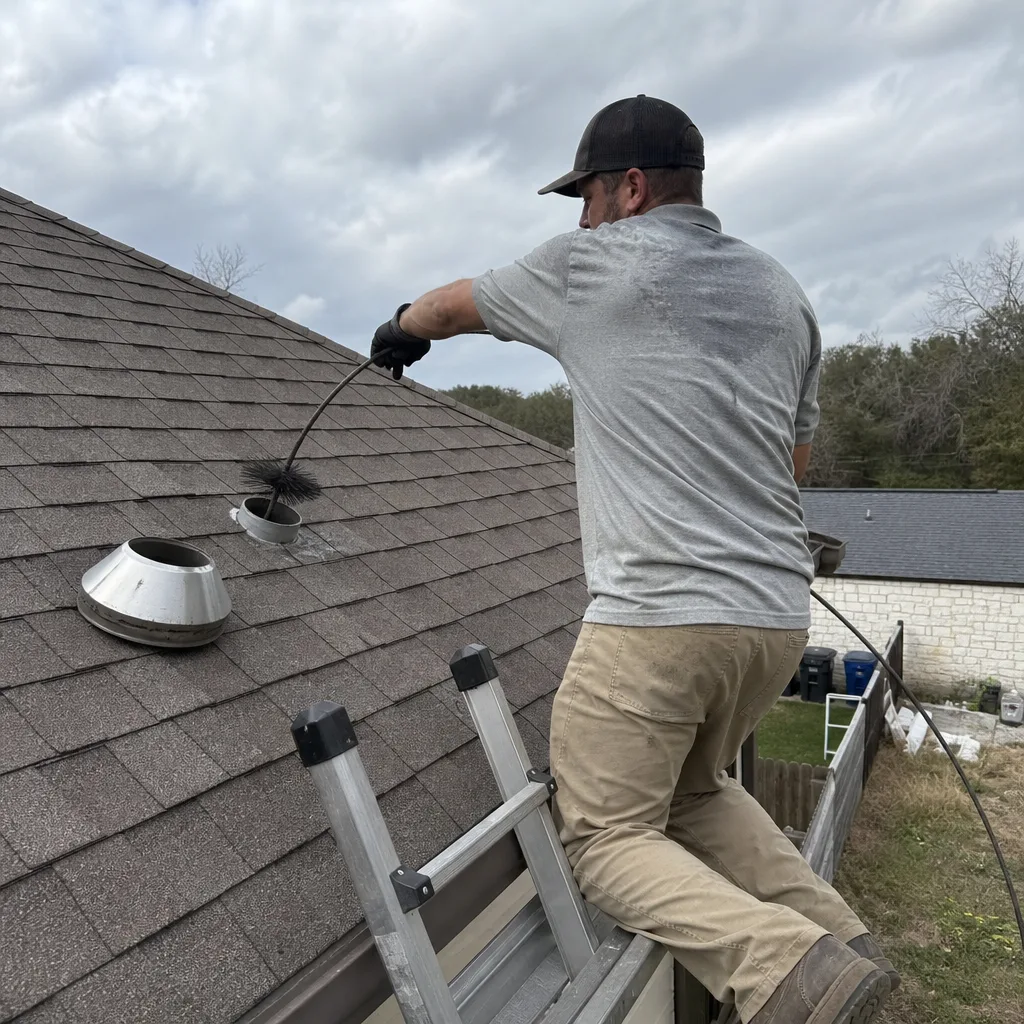
Whole-system air duct cleaning in New Braunfels typically ranges from $400 to $700 for a single HVAC system in a 2,000-3,000 square foot home, using truck-mounted negative-pressure extraction with register-level agitation. Prices below $300 generally indicate portable equipment or undisclosed upselling; prices above $800 should reflect specific complexity such as multiple systems, crawl space access, or documented repair needs. Call (830) 549-6847 for a written estimate with no per-vent escalation.
The price gap reflects different service models, not different levels of the same service. Low quotes typically use portable electric vacuums or shop vacuums, clean only accessible register areas, and rely on on-site upselling for revenue. Higher quotes from accountable contractors include truck-mounted negative-pressure equipment, full-system agitation, and documented before-and-after verification. The cheaper quote often costs more by completion. Request equipment specifications and a written scope to compare accurately.
Require photographic documentation of the interior of every duct run, before and after cleaning, delivered as part of your job record. Visual inspection at registers only shows the first few inches. A borescope or inspection camera reveals conditions at elbows, junctions, and the plenum - where accumulation is typically heaviest. At CleanRun, the Documented Photo Record is standard on every visit, not an optional add-on.
For most New Braunfels homes, every 3-5 years is sufficient under normal occupancy and with standard filtration. Homes with multiple pets, recent construction, or residents with severe allergies may benefit from more frequent service. The NADCA recommends cleaning “as needed” based on visible contamination or system performance, not on a fixed calendar schedule. A contractor who insists on annual cleaning without specific justification is selling frequency, not service.
Negative-pressure extraction connects a high-volume vacuum to your main duct trunk, creating suction throughout the system while agitation tools dislodge debris at each register. Truck-mounted or trailer-mounted units produce 5,000+ CFM, sufficient to maintain suction across an entire residential system. Portable electric units cannot achieve this airflow and clean only limited sections. The equipment type determines whether your full duct network is cleaned or only the accessible portions.
Yes. CleanRun provides a Free Second Opinion on any written estimate - bring a competitor’s quote and we will put our own number next to it in writing, with line-item scope breakdown. This service exists because written estimates vary widely in what they include, and homeowners deserve comparable documentation. Call (830) 549-6847 to schedule.
The Bottom Line
Hiring an air duct cleaning contractor in New Braunfels requires the same documentation discipline you’d apply to any major home service. Request four documents before booking: written scope, line-item flat price, proof of insurance, and certification verification. Ask two disqualifying questions about price finality and photographic documentation. Read reviews for upsell language patterns, not just star averages. And insist on a written guarantee with specific duration, scope, and remedy. Contractors who build their business on accountability will welcome this process. Those who don’t will find reasons to avoid it. The difference is visible in the documentation they provide before the truck ever leaves their shop.
Written by Tomas Reyes, Owner at CleanRun Air Duct Cleaning New Braunfels, serving New Braunfels since 2013.