
Last updated September 23, 2026
Whole-system duct and dryer vent check with before-and-after photos - you see exactly what came out of your vents
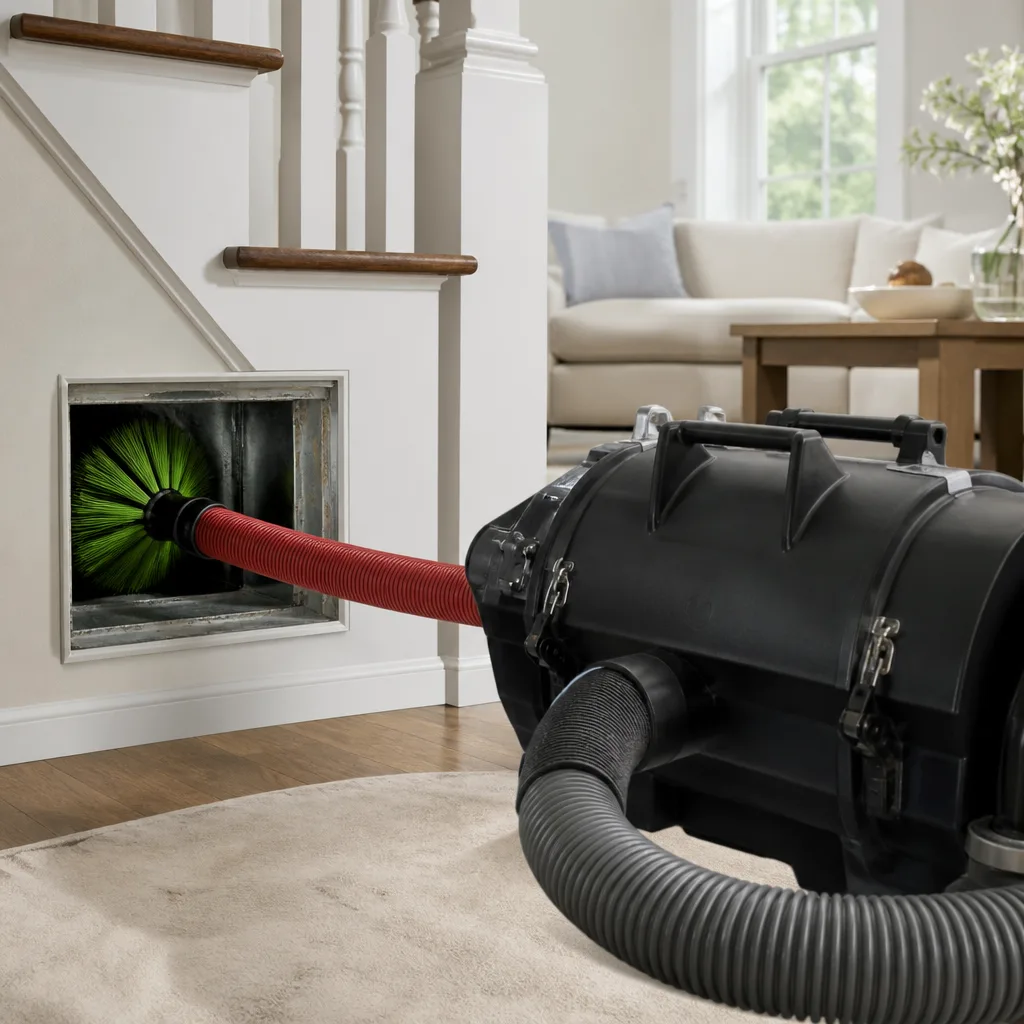
That "$99 whole-house special" is a bait ad - the real number appears once they are in your hallway, or the "clean" is a shop-vac at the register. We photograph the inside of your ducts before and after instead.
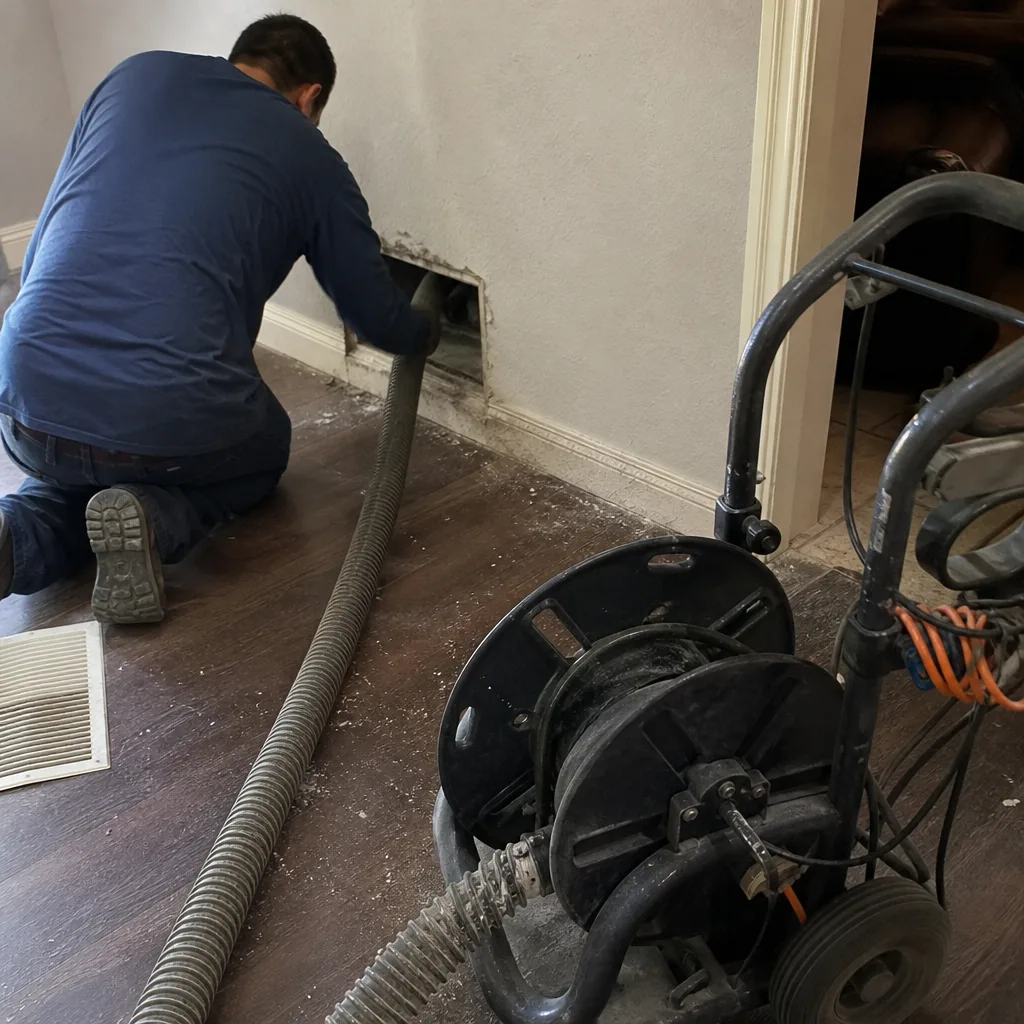 Before
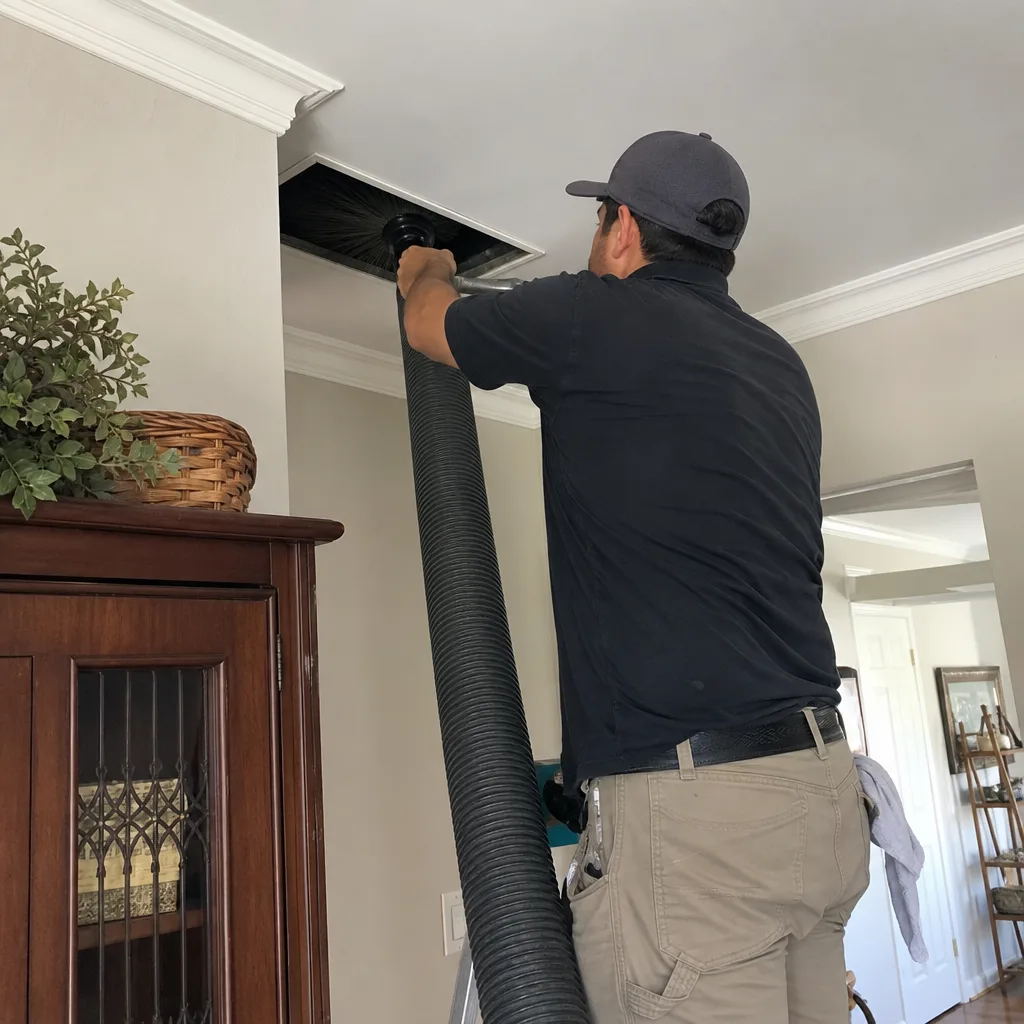 After
After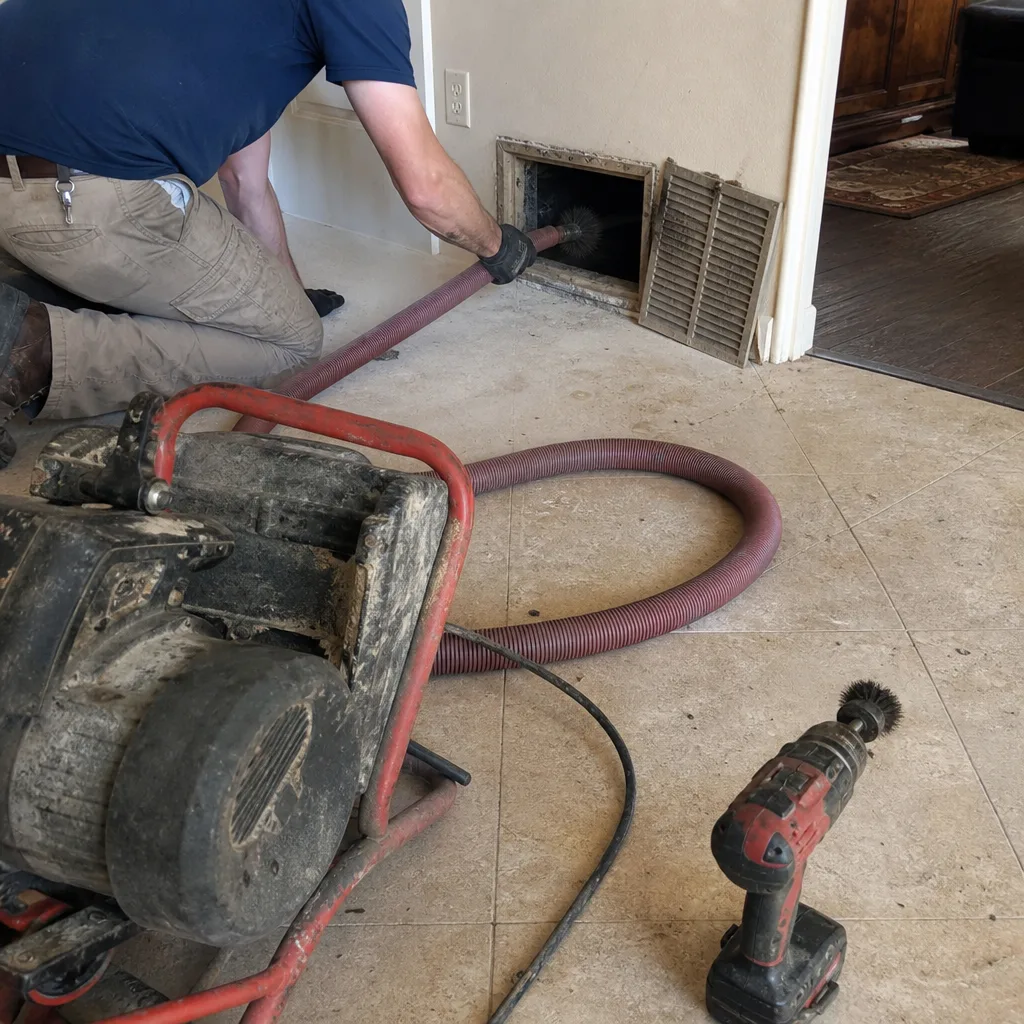 Before
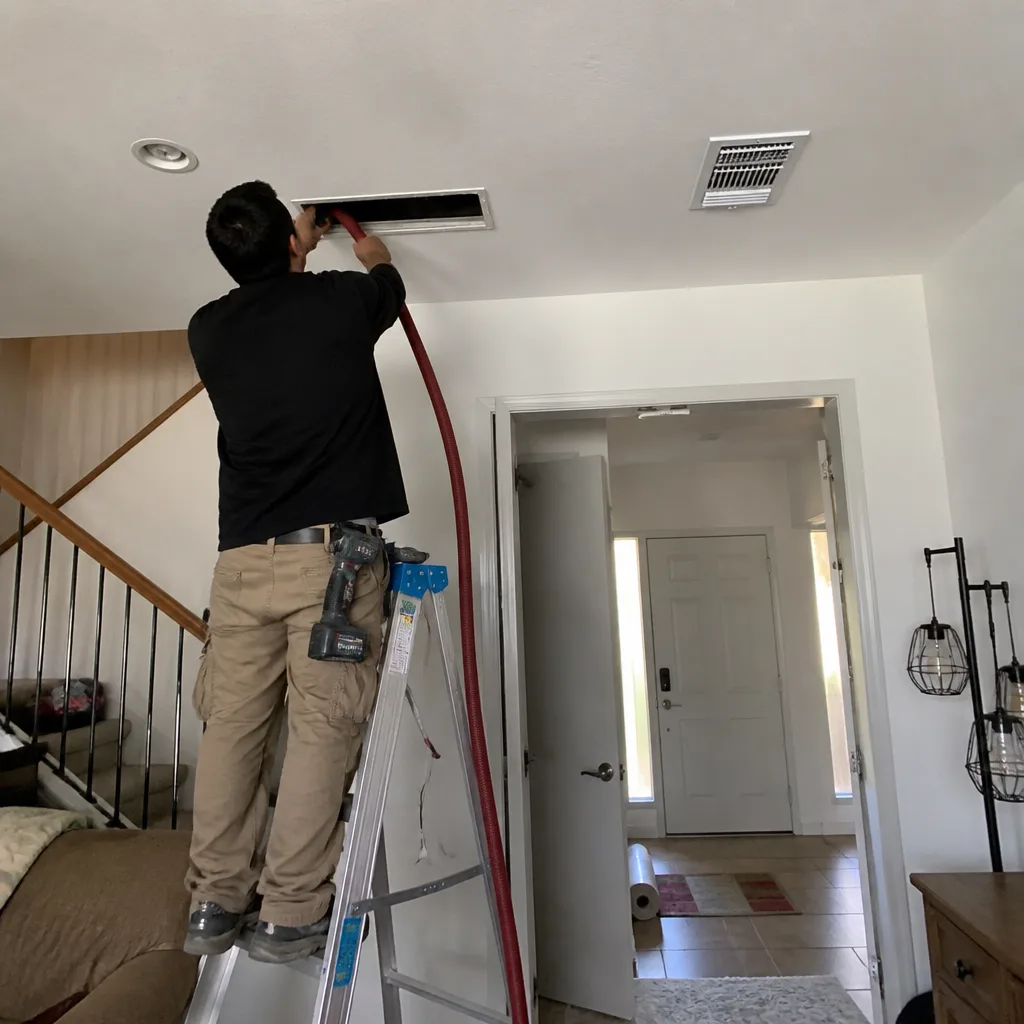 After
After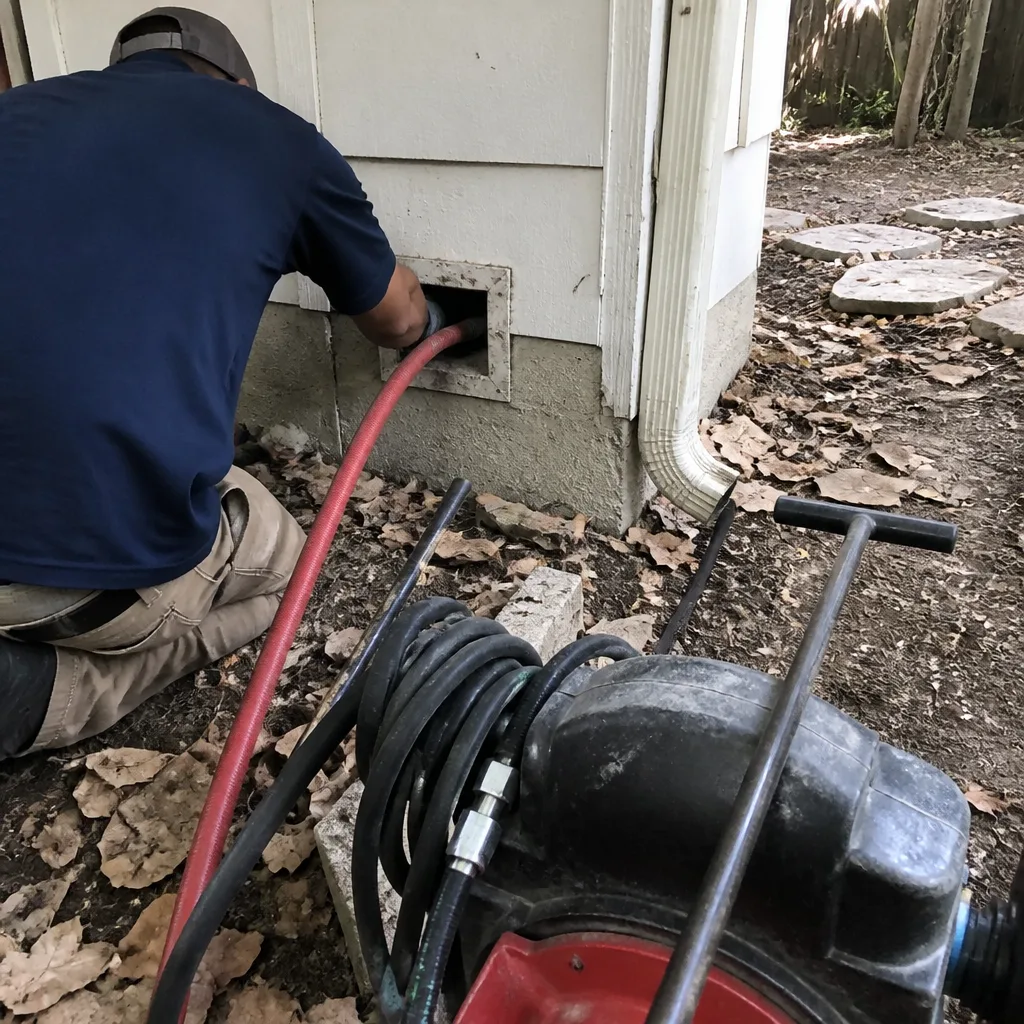 Before
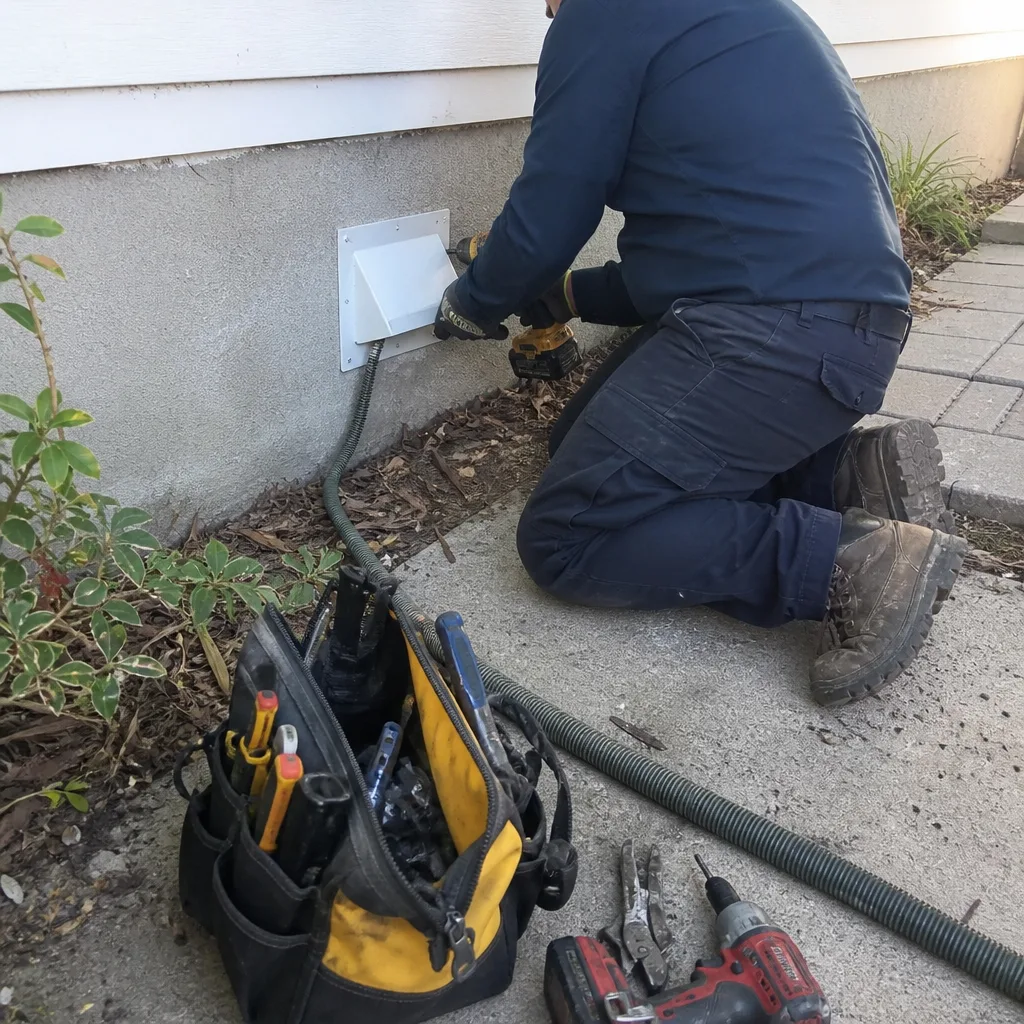 After
AfterAir Duct Cleaning Warning Signs: A New Braunfels Homeowner’s Reference Guide
A technician quoted one New Braunfels homeowner $4,200 for a new air handler. The actual problem was a collapsed flex duct run restricting return airflow so severely the unit was short-cycling. The duct repair cost $340. We’ve seen this story repeat across Comal County since 2013, because most duct system warning signs are misread as HVAC equipment problems. Homeowners replace compressors, coils, and thermostats when the failure point is the ductwork feeding them. This guide-along with our The Complete Guide to Air Duct Cleaning in New Braunfels-teaches you to distinguish between the two before you call the wrong contractor, spend the wrong money, and still breathe the same dirty air.
Quick Answer
The most reliable warning signs your New Braunfels home needs Air Duct Cleaning or repair include: uneven room temperatures exceeding 3-4°F between zones, visible dust discharge at registers within hours of cleaning them, and system run times that don’t match thermostat setpoints. Musty odors at startup indicate moisture in duct liner; burning smells suggest debris near the heat exchanger; chemical odors point to deteriorating duct board. These symptoms require different solutions, and treating them all as “dirty ducts” wastes money.
Table of Contents
- Uneven Temperatures: The 3-4°F Rule
- Visible Dust Discharge at Registers
- The Smell Taxonomy: What Each Odor Means
- System Run Times That Don’t Match the Setpoint
- Warning Signs in Pre-2000 New Braunfels Homes
- Cleaning vs. Repair: Knowing Which You Need
- What a Documented Photo Record Actually Reveals
- Common Mistakes to Avoid
- When to Call a Professional
- Frequently Asked Questions
BeforeAfterUneven Temperatures: The 3-4°F Rule
Grab a thermometer and check three rooms at the same time of day, with your system running for at least 20 minutes. If the spread exceeds 3-4°F, your duct system is likely the culprit, not your HVAC unit.
Here’s why this happens. A properly designed duct system distributes conditioned air through a network of supply and return runs, balancing pressure and volume across all rooms. When a duct run is partially blocked by debris, crushed by attic traffic, or disconnected at a joint, that room receives less conditioned air. The thermostat, usually in a central location, reads a blended temperature and keeps the system running. The central area reaches setpoint while the affected room lags behind.
In New Braunfels, we see this pattern frequently in homes built during the 2005-2015 construction boom, particularly in developments like River Chase, Copper Ridge, and the older sections of Vintage Oaks. Builders in that era often used flex duct for speed of installation, and attic work by subsequent HVAC technicians, cable installers, or homeowners has compressed runs without anyone noticing. A flex duct run compressed to half its diameter reduces airflow by roughly 75%, not 50%, because airflow resistance increases with the square of the velocity change.
The diagnostic mistake homeowners make is calling an HVAC contractor first. The technician arrives, measures pressures at the air handler, finds low suction, and recommends a new variable-speed blower or larger return plenum (the central chamber where return air collects before entering the unit). The real fix is often a $200-$400 duct repair to restore the crushed run to full diameter.
Before you call any contractor, do this:
- Measure temperatures in three rooms simultaneously with the same thermometer type
- Check your attic for visible duct damage if accessible safely
- Note whether the problem room has always been problematic or developed recently
- Ask any contractor you call to explain how they will distinguish duct restrictions from equipment undersizing before recommending equipment replacement
At CleanRun Air Duct Cleaning New Braunfels home, we document the temperature spread in our written scope before any work begins, under Haven Standard Clause 1. If the problem is equipment, we tell you. We’ve referred homeowners to HVAC contractors when the duct system was clean and intact. The 365-Day Done Right Promise applies to honest diagnosis, not just to work we perform.
Visible Dust Discharge at Registers
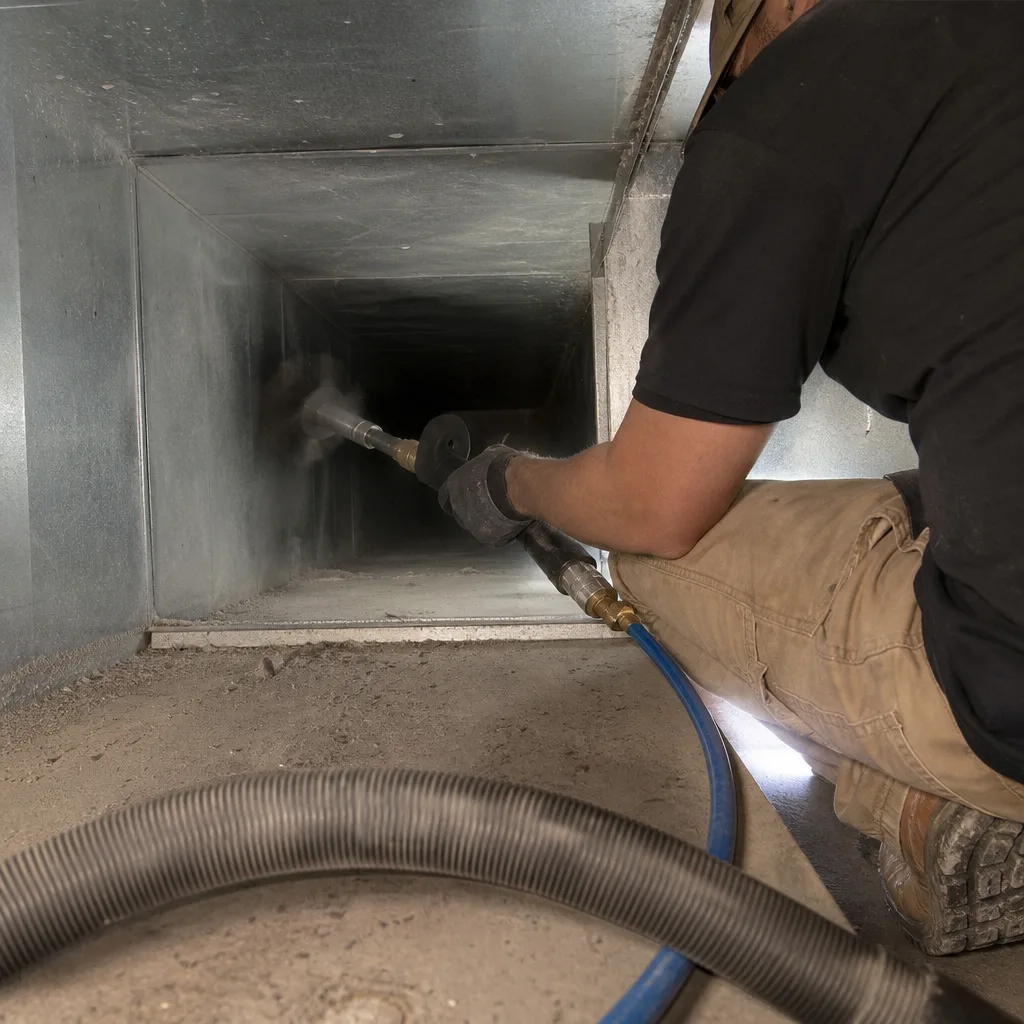
Clean your register covers thoroughly. Wait 48 hours. If you see a fresh accumulation of dust on or near the louvers, debris is actively moving through your duct system and exiting into your living space.
This sign is often dismissed as “normal Texas dust.” It isn’t. The dust load in New Braunfels is real, we live in a limestone-rich region with agricultural activity nearby and seasonal cedar pollen that coats vehicles in hours. But dust that enters through your duct system differs from ambient dust in two measurable ways. First, it accumulates in directional patterns, blown by airflow, rather than settling evenly. Second, it contains fibrous material, insulation particles, or construction debris that doesn’t match the pollen and soil composition of outdoor dust.
We’ve photographed register discharge in homes throughout New Braunfels, from the historic districts near downtown to newer construction in Meyer Ranch and Veramendi. The debris source varies:
- Recent construction or renovation: Sawdust, drywall compound, and insulation fragments enter ducts when contractors leave registers uncovered during work. This material sits in low-velocity zones, particularly at branch tee junctions where a smaller duct splits from a main trunk, then dislodges when airflow changes.
- Deteriorating duct liner: The internal insulation surface of flex duct can degrade after 15-20 years in hot attics. The fiberglass surface erodes, and particles enter the airstream. This dust is characteristically shiny under light and may cause skin irritation.
- Return leaks pulling attic air: Disconnected return ducts or poorly sealed plenum connections create negative pressure that draws attic dust directly into the system. This dust is typically darker, containing cellulose insulation or rodent debris.
The critical distinction is whether the dust accumulation is passive or active. Passive dust settles on surfaces regardless of airflow. Active dust discharge correlates with system cycles, appearing heavier shortly after startup and diminishing as the system runs. If you observe this pattern, your ducts need investigation, not just more frequent dusting.
Our Air Duct Cleaning in New Braunfels includes a Documented Photo Record of every duct run, before and after, so you can see whether the debris source was surface accumulation, liner degradation, or a return leak requiring repair. The photo record is delivered as a standard job deliverable, not an upsell.
The Smell Taxonomy: What Each Odor Means
Not all duct odors indicate the same problem. Treating them identically leads to wrong solutions and recurring complaints. Here’s what we’ve learned from 52,000+ homes, including thousands in the New Braunfels market.
Musty Odor at Startup
This appears when the blower first engages and fades within 5-10 minutes. It indicates moisture in the duct liner, typically in flex duct installed in ventilated attics where humid outdoor air contacts cooler duct surfaces. New Braunfels averages 67% annual humidity, with summer peaks above 80%, creating conditions for condensation in poorly insulated or damaged ducts.
Moisture supports microbial growth on organic debris in the duct. The smell is the metabolic byproduct, not the organism itself. Cleaning removes the debris but doesn’t address the moisture source. If the duct insulation is saturated or the vapor barrier is compromised, repair or replacement is necessary. Cleaning a moisture-damaged duct without fixing the envelope can worsen the problem by distributing spores more widely.
Burning Smell
This requires immediate attention and often indicates debris near the heat exchanger or electric resistance elements. Dust accumulation on heat exchanger surfaces can produce a brief burning odor at the first heating cycle of the season. Persistent or strong burning smells suggest a more serious condition and should trigger an HVAC safety inspection before any cleaning is performed.
We do not perform duct cleaning when a burning smell indicates potential heat exchanger damage. Haven Standard Clause 4 requires us to stop and recommend appropriate specialist evaluation. This is not a sales tactic. A cracked heat exchanger can introduce combustion gases into the duct system, and cleaning operations can disturb debris that masks the damage.
Chemical or “New Plastic” Smell
This odor in older homes, particularly those built before 2000 with duct board construction, indicates off-gassing from deteriorating resin binders in the duct board material. Duct board is a fiberglass insulation board with a foil facing, formed into rectangular ducts. Over decades in hot attics, the resin system degrades, releasing volatile organic compounds.
This smell is often misidentified as “something the HVAC company did” after a service visit, when in fact the service visit’s increased airflow simply distributed the odor more effectively. The correct response is duct replacement, not cleaning. Cleaning duct board with aggressive methods can accelerate delamination and increase fiber release.
Rotten Egg or Sulfur Smell
This is not a duct problem. Natural gas odorant is designed to be detectable at extremely low concentrations. If you smell this, evacuate and call your gas utility. Do not operate your HVAC system or any electrical switches.
System Run Times That Don’t Match the Setpoint
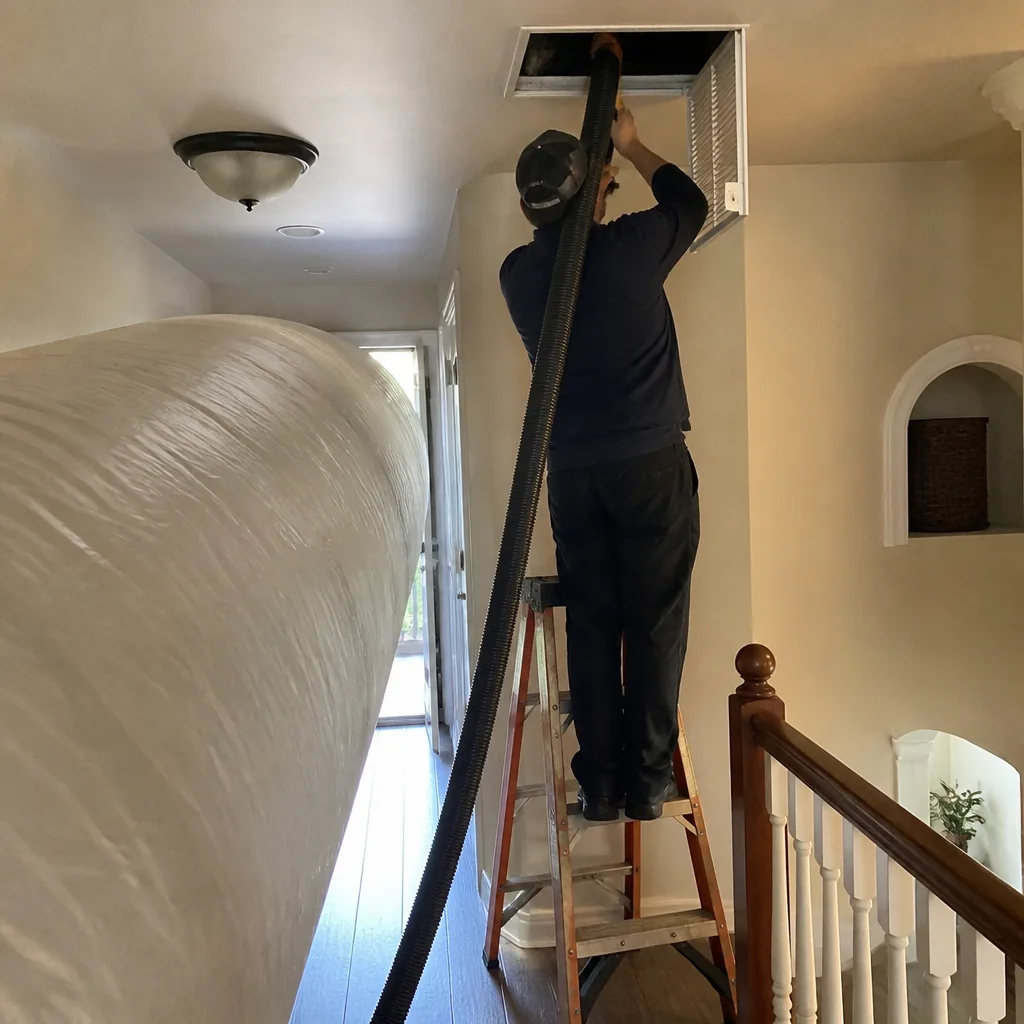
Your thermostat shows 72°F. Your system has been running 45 minutes. The house still feels warm. Most homeowners assume the equipment is undersized or failing. Often, the conditioned air isn’t reaching the spaces where the thermostat senses temperature.
Long run times with poor results indicate one of three duct system problems:
- Supply leakage: Conditioned air escapes into the attic through disconnected joints or damaged flex duct before reaching registers. The system runs continuously, cooling the attic instead of the living space. In New Braunfels, where attic temperatures exceed 130°F in summer, this waste is extreme. We’ve measured supply systems losing 30% of airflow to attic leaks.
- Return restriction: The return side pulls air from the house back to the air handler. Restricted return airflow reduces the volume of air the system can condition, extending run times. Common causes include collapsed flex return ducts, blocked return grilles (often by furniture placement), or filter restrictions from using high-MERV filters on systems not designed for them.
- Zoning imbalance: In homes with multiple stories or additions, duct design may not match the current floor plan. A second-story addition with inadequate duct capacity will never reach setpoint regardless of equipment size.
The diagnostic key is to compare equipment performance metrics against duct performance metrics. A technician should measure static pressure across the air handler, airflow at each register with a flow hood, and temperature drop across the cooling coil. If the coil temperature drop is correct (typically 18-22°F) but register airflow is low, the problem is distribution, not equipment.
We’ve documented this pattern in New Braunfels homes from the 1980s ranch-style houses near Landa Park to the 2010s two-story builds in Huntington. The solution is rarely more equipment. It’s usually duct repair, sealing, or rebalancing.
Warning Signs in Pre-2000 New Braunfels Homes
Homes built before 2000 in New Braunfels present a distinct set of duct system warning signs related to duct board construction, a material largely replaced by flex duct in newer construction.
Duct board consists of fiberglass insulation board with a structural resin binder and a foil vapor barrier, fabricated into rectangular duct sections on-site. It was popular in the 1970s through 1990s for its insulation value and quiet operation. In New Braunfels, we encounter it frequently in the established neighborhoods near Downtown, the original sections of Gruene, and along Common Street and Seguin Avenue.
The warning signs specific to aging duct board include:
- Surface deterioration: The foil facing separates from the board, exposing fiberglass. This is visible at register openings and at access panels. The separation begins at edges and joints, progressing inward.
- Delamination: The internal fiberglass layer separates from the resin surface, creating voids where debris accumulates and airflow becomes turbulent. A camera inspection shows a characteristic “pillowed” appearance where the internal surface has separated.
- Fiber shedding: Visible fiberglass particles on register louvers or in dust accumulation. These fibers are larger and more irregular than pollen or soil dust, and they don’t compress when rubbed between fingers.
- Structural sagging: Duct board trunk lines in attics can sag at supports, creating low points where condensation collects and debris accumulates. This is particularly common in New Braunfels, where summer attic temperatures accelerate resin degradation and reduce structural integrity.
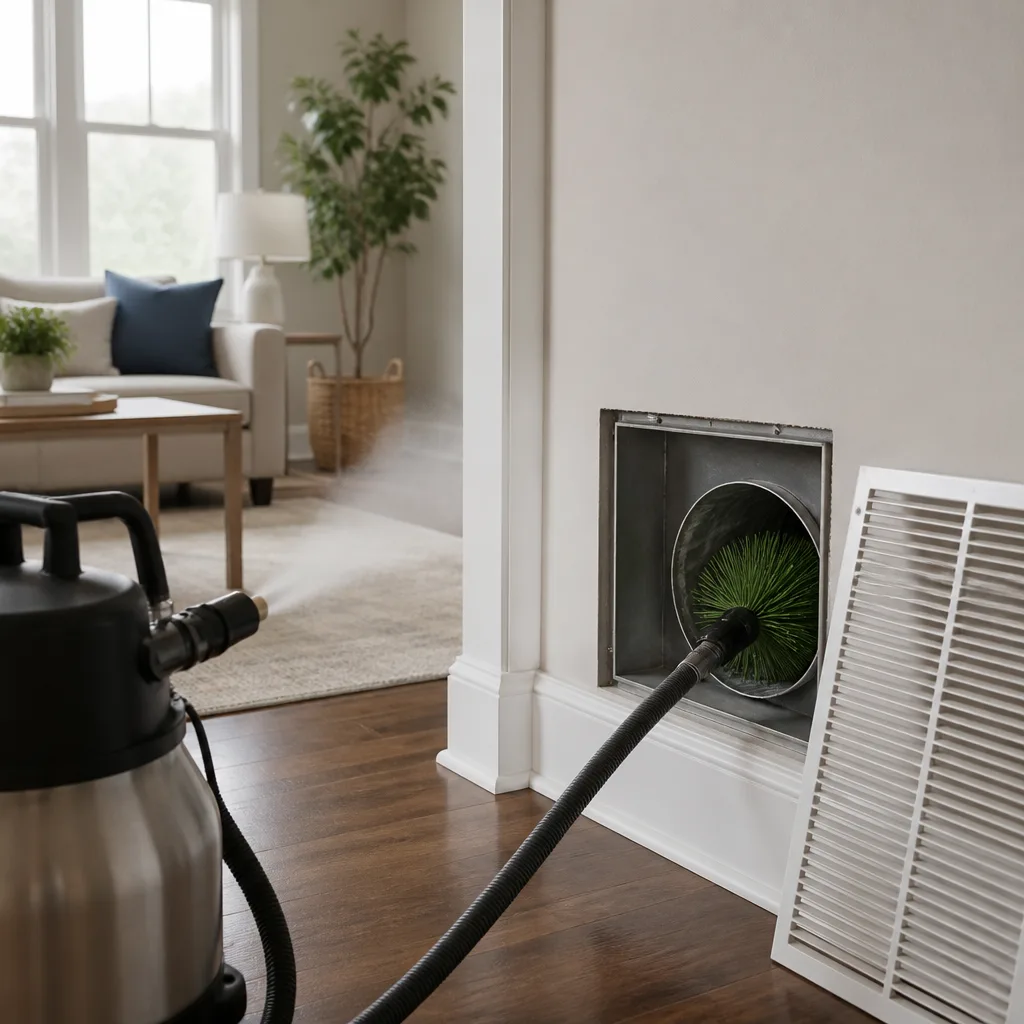
The critical point: cleaning deteriorating duct board can worsen all these conditions. Mechanical brushing or high-pressure air dislodges loose fibers and accelerates delamination. Negative-pressure extraction, the method we use with our Nikro and Rotobrush equipment, is gentler but still inappropriate for structurally compromised duct board.
When our camera inspection shows duct board deterioration, we recommend repair or replacement options, documented with photographs, before any cleaning proceeds. Haven Standard Clause 2 requires this sequence: assess, document, recommend, obtain written approval. The 365-Day Done Right Promise covers work performed, not problems created by ignoring pre-existing damage.
Cleaning vs. Repair: Knowing Which You Need
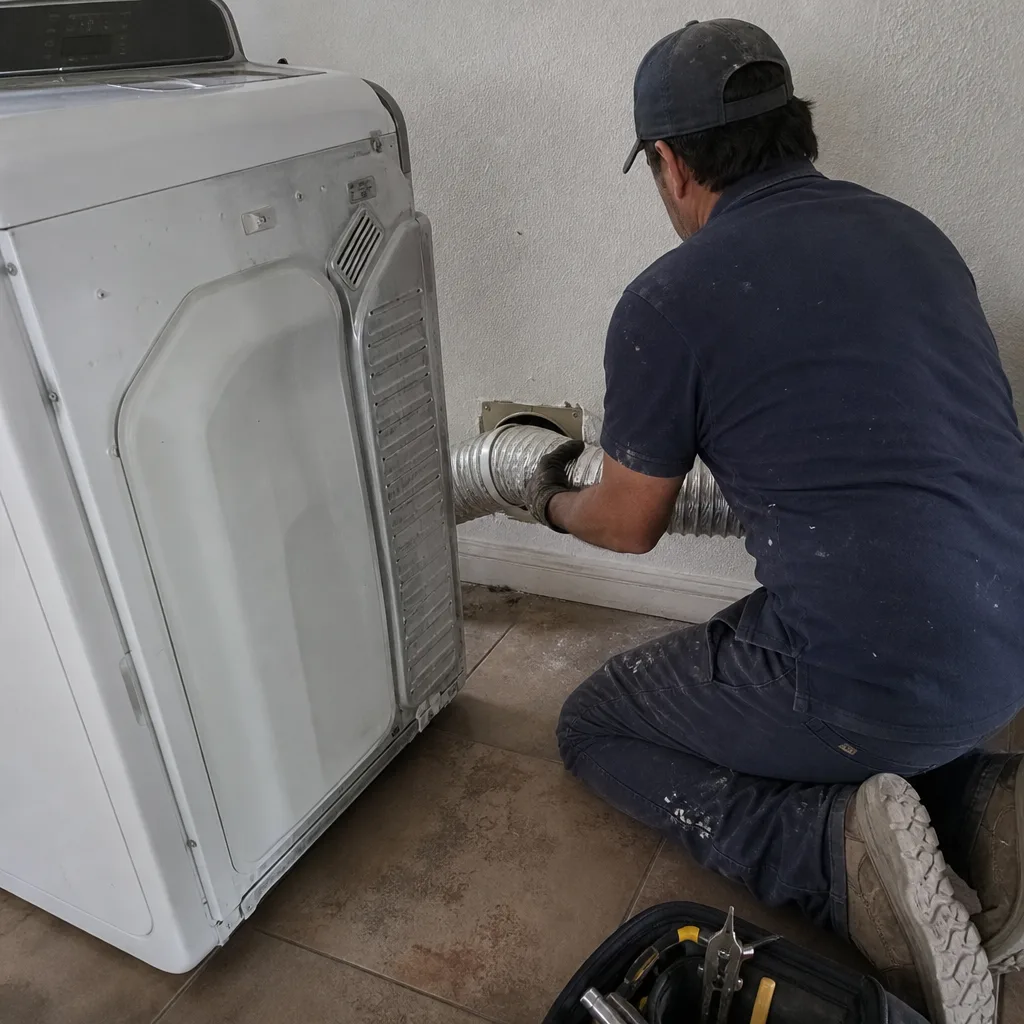
This distinction determines whether you spend $400-$800 appropriately or waste it entirely. Not every warning sign responds to cleaning. Some require repair first, and cleaning a damaged system can make it worse.
Cleaning Candidates
A duct system appropriate for cleaning has intact physical structure and debris accumulation as the primary problem. Indicators include:
- Debris visible in duct interiors but no structural damage to flex duct or duct board
- Register dust discharge from accumulated debris, not from liner degradation
- Musty odors from organic debris without moisture saturation of insulation
- Recent construction or renovation with documented debris entry
- Normal system performance with elevated particulate levels
Our HVAC Cleaning in New Braunfels addresses these conditions with negative-pressure extraction using Rotobrush and Nikro equipment, followed by a Documented Photo Record showing the condition of every duct run before and after. The written price, delivered before work begins under Haven Standard Clause 1, covers the complete system, not per-vent pricing that balloons at the door.
Repair-First Candidates
These conditions require repair or replacement before cleaning is considered:
- Crushed, disconnected, or punctured flex duct runs
- Duct board with delamination, sagging, or visible fiber shedding
- Moisture-saturated insulation or active condensation on duct exteriors
- Return leaks pulling attic air, indicated by dark debris and temperature extremes
- Disconnected plenum connections at the air handler
Cleaning a system with these problems distributes debris through compromised surfaces, wastes the cleaning investment, and may accelerate deterioration. We’ve been called to homes in New Braunfels where a previous “cleaning” of damaged ducts resulted in increased fiber release and worse air quality. The photo record from those jobs shows why: brushes and air whips dislodged material from surfaces that were already failing.
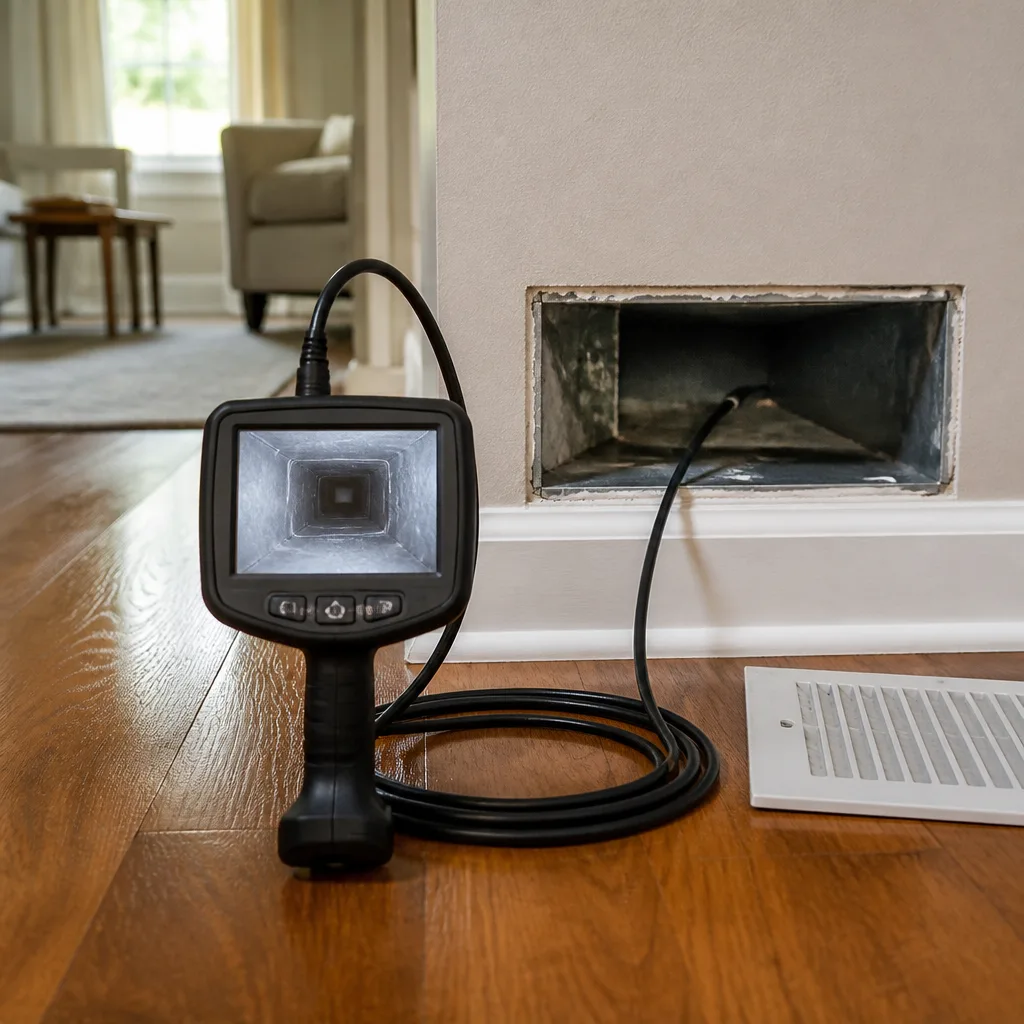
Our process begins with camera inspection of representative duct runs. If we find damage requiring repair, we stop, show you the photographs, and provide a written repair scope with pricing. You decide whether to proceed. The Free Second Opinion applies to any written estimate you’ve received, including repair quotes from other contractors.
What a Documented Photo Record Actually Reveals
Most homeowners have never seen inside their ducts. The register cover is the only visible surface, and it tells almost nothing about the system condition. A proper photo record changes this, and understanding what to look for helps you evaluate any contractor’s claims.
Here’s what our cameras show in New Braunfels homes, and what each finding means:
Layered debris on duct walls: Not surface dust but built-up material with visible stratification, indicating years of accumulation. The layers often show color variation, seasonal pollen deposits, and construction debris from original build or subsequent renovations. This is a legitimate cleaning candidate.
Debris accumulation at branch tee junctions: The point where a 6-inch flex duct branches from a main trunk is a low-velocity zone where debris settles. Significant accumulation here restricts airflow to the branch run. A photo showing a tee junction blocked more than 25% indicates measurable performance impact.
Discoloration of insulation liner: The white or gray fiberglass surface of flex duct insulation should be uniform. Dark streaks, brown staining, or shiny areas indicate moisture exposure, oil vapor from cooking, or liner degradation. Each requires different response.
Disconnected joints: A gap between duct sections, visible as a dark line or light leak, represents direct air loss. In supply ducts, this wastes conditioned air. In return ducts, it pulls unfiltered attic air into the system. Both are repair items, not cleaning targets.
Crushed or kinked flex duct: The spiral wire support of flex duct should maintain round cross-section. Flattened areas, often from attic traffic or improper support spacing, reduce airflow proportionally more than the visible deformation suggests. A duct flattened to half height has lost approximately 75% of design airflow capacity.
Our Documented Photo Record includes every duct run in your system, not a single “representative” image. You receive the complete set as a standard job deliverable. This practice, maintained since our first job in 2013, is how we demonstrate the difference between real work and vacuum noise. Equipment from Rotobrush, Nikro, Abatement Technologies, Honeywell, Aprilaire, and Guardsman performs the work; the photo record proves what was accomplished.
Common Mistakes to Avoid
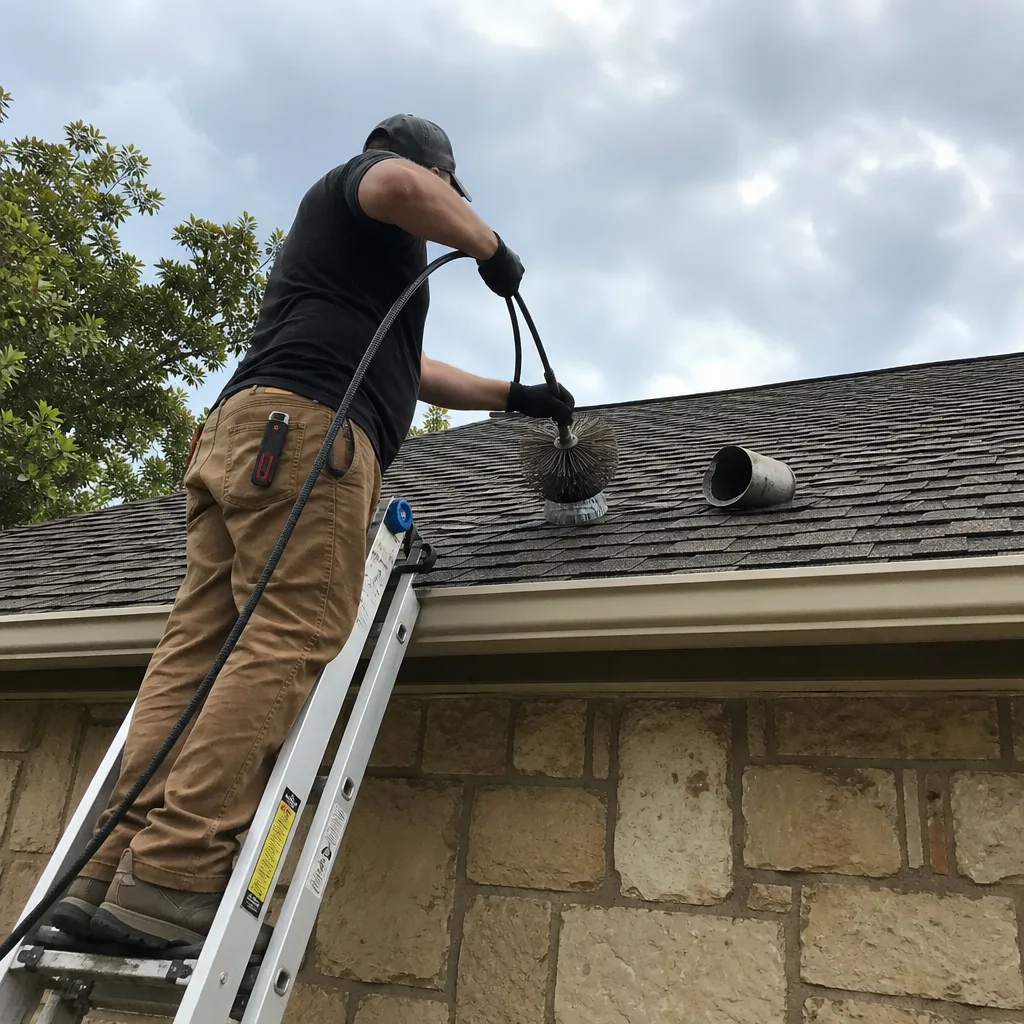
- Calling an HVAC contractor for what is clearly a duct distribution problem. Equipment replacement won’t fix crushed flex duct or disconnected returns. Get a duct-specific assessment first.
- Accepting per-vent pricing that changes at the door. The $79 coupon becomes $600 when “additional vents” and “deeper cleaning” appear. Insist on one flat price per system, agreed in writing before work starts.
- Cleaning without camera inspection in homes built before 2000. Duct board deterioration is invisible from registers. A camera saves you from paying to damage your system further.
- Ignoring seasonal patterns in New Braunfels. Musty smells that appear only in spring often correlate with humidity spikes, not year-round moisture. Document when symptoms occur to help diagnosis.
- Assuming new construction means clean ducts. We’ve found construction debris in New Braunfels homes still under builder warranty, particularly in fast-build developments where duct protection was skipped.
- Using the highest-MERV filter available. Filters above MERV 13 often restrict airflow beyond what residential duct systems can accommodate, extending run times and straining equipment.
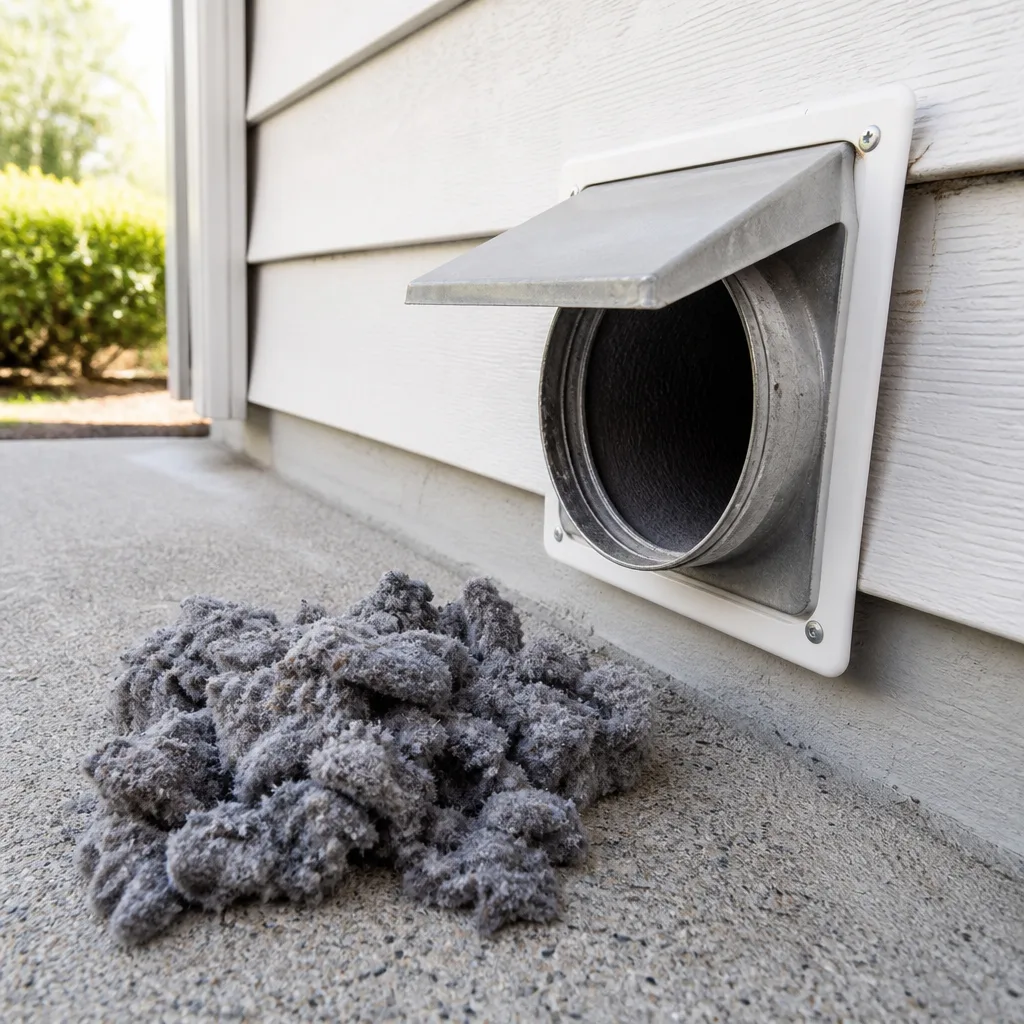
- Neglecting dryer vent maintenance while focusing on HVAC ducts. A clogged dryer vent creates back pressure that can affect laundry room return air quality and poses fire risk. Our Dryer Vent Cleaning in New Braunfels addresses this separately.
When to Call a Professional
Call for assessment when you measure temperature spreads exceeding 3-4°F between rooms, observe active dust discharge at registers, or detect any burning smell from your system. Call immediately for rotten egg or sulfur odors. Call when your system runs continuously without achieving comfort, or when symptoms persist after you’ve changed filters and verified thermostat operation.
CleanRun Air Duct Cleaning New Braunfels offers free estimates in New Braunfels. Every estimate includes camera inspection of representative duct runs, a written scope with flat pricing before any work begins, and no obligation to proceed. Call (830) 549-6847. All calls are answered by a live person. Technicians are background-checked, uniformed, and identified by name before arrival, under Haven Standard Clause 3: Verified Crews.
Frequently Asked Questions
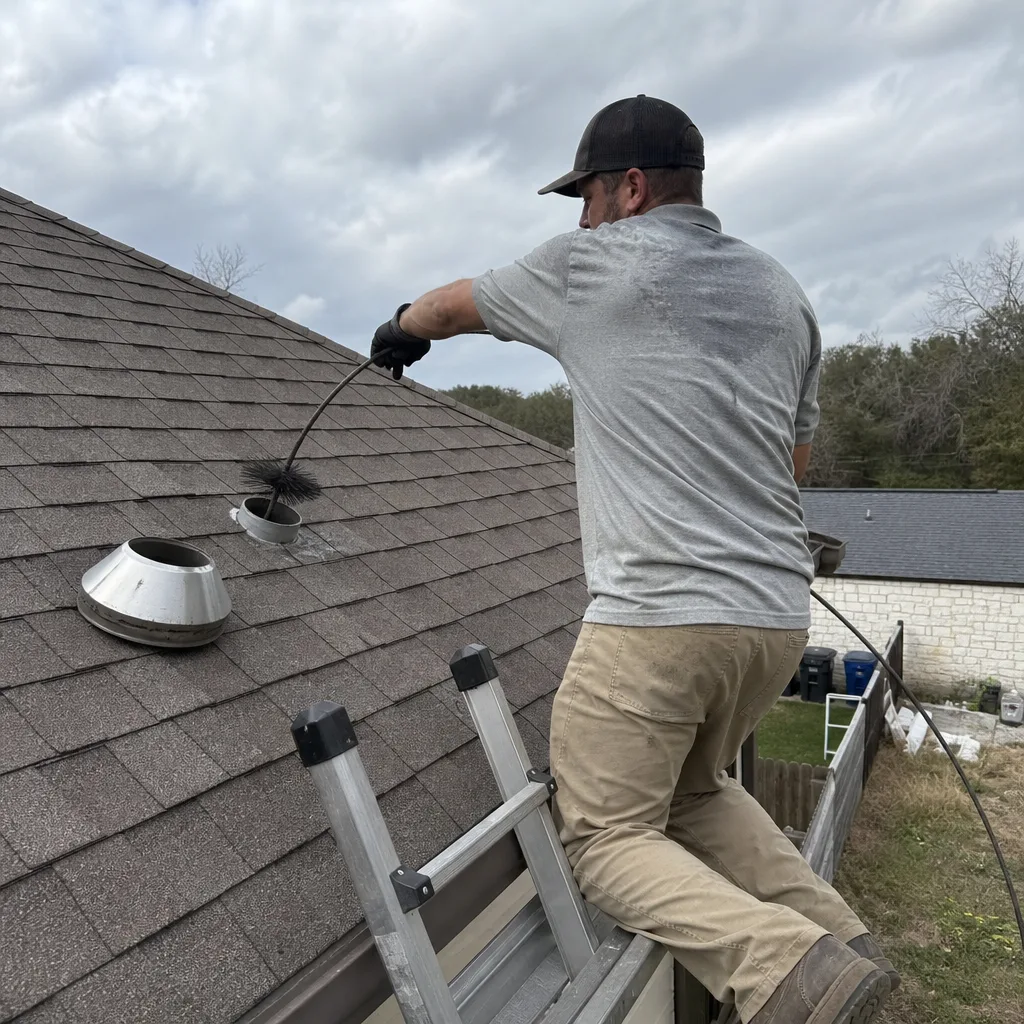
Whole-system air duct cleaning for a typical New Braunfels home ranges from $400 to $800, depending on system size, accessibility, and condition. This is a flat price per system, agreed in writing before work starts, not per-vent pricing that increases at the door. Call (830) 549-6847 for an exact quote on your home. Estimates are free.
The $79-$149 quotes typically cover a brief vacuuming of register covers and perhaps a few feet of visible ductwork, not the complete system. The “additional services” required to do actual work appear after arrival. We publish flat pricing because Haven Standard Clause 1 requires a written price before any work starts. The photo record we deliver proves what was actually cleaned.
Demand a documented photo record of every duct run, before and after, delivered as part of the standard job record. Not a single representative image, not a verbal description. Every run. This has been our practice since 2013. If a contractor cannot or will not provide this, you cannot verify what you paid for.
For most New Braunfels homes with no special conditions, every 5-7 years is appropriate. Homes with ongoing construction, recent renovations, multiple pets, or residents with respiratory sensitivity may need more frequent service. The correct interval is determined by camera inspection, not calendar alone. We’ve cleaned homes that needed service at 3 years and others where 10 years was appropriate.
Consumer-grade equipment cannot achieve negative-pressure extraction or access the full duct network. More importantly, DIY attempts on duct systems with flex duct or duct board can cause damage that requires costly repair. For the inspection and assessment itself, a professional camera and trained interpretation are necessary to distinguish cleaning candidates from repair requirements. We do not recommend DIY duct cleaning.
Yes. The combination of high humidity, limestone-derived dust, and pollen from oak, cedar, and agricultural sources creates a debris load specific to this region. Summer attic temperatures above 130°F accelerate flex duct liner aging. These factors don’t necessarily shorten cleaning intervals but do increase the importance of regular inspection, particularly for pre-2000 homes with duct board construction.
The Bottom Line
Duct system warning signs are frequently misread as equipment problems, leading to unnecessary replacement spending. The key distinctions are measurable: temperature spreads, dust discharge patterns, odor timing and character, and system run times against setpoints. Pre-2000 New Braunfels homes with duct board require particular caution, as cleaning can worsen deterioration. Always demand camera inspection, written pricing before work starts, and a documented photo record of every duct run. These aren’t premium services. They’re the minimum standard for knowing what you’re breathing and what you paid for.
Written by Tomas Reyes, Owner at CleanRun Air Duct Cleaning New Braunfels, serving New Braunfels since 2013.