
Last updated September 23, 2026
Whole-system duct and dryer vent check with before-and-after photos - you see exactly what came out of your vents
That "$99 whole-house special" is a bait ad - the real number appears once they are in your hallway, or the "clean" is a shop-vac at the register. We photograph the inside of your ducts before and after instead.
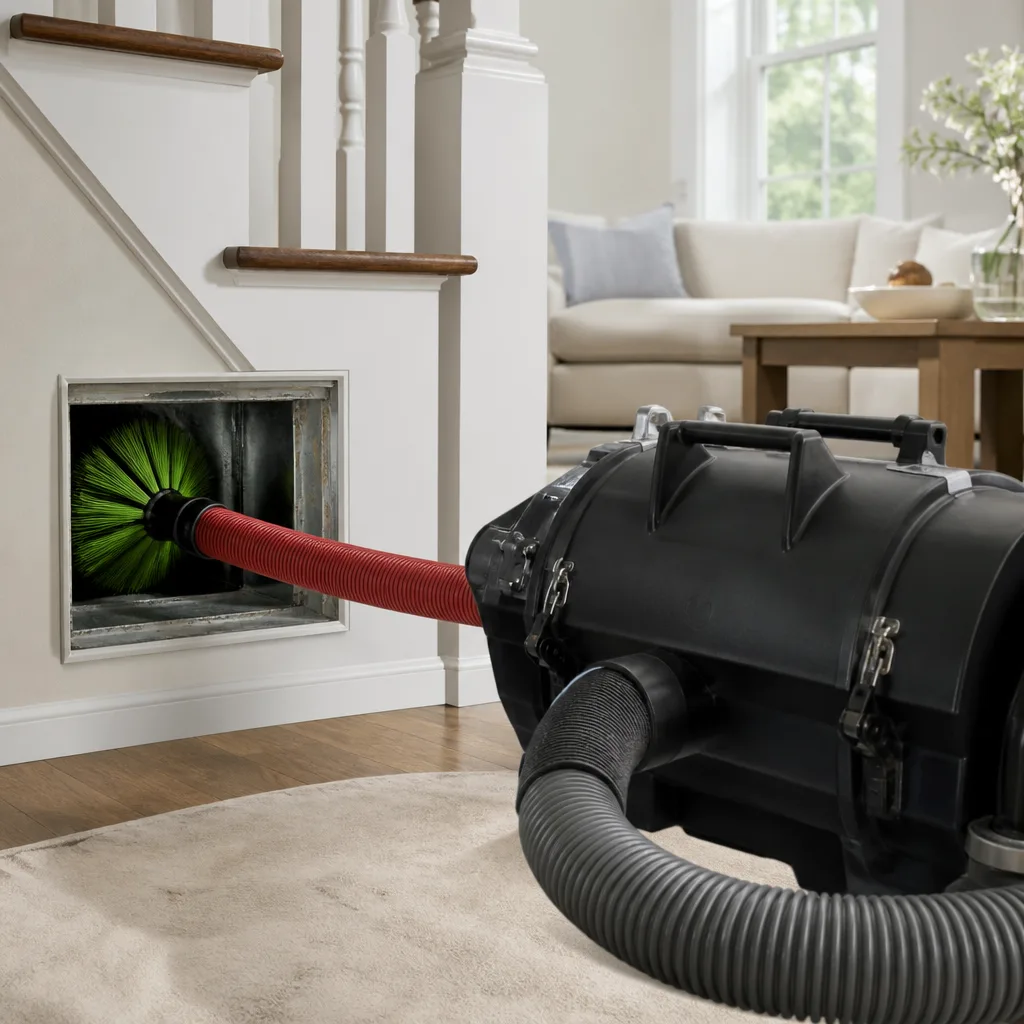
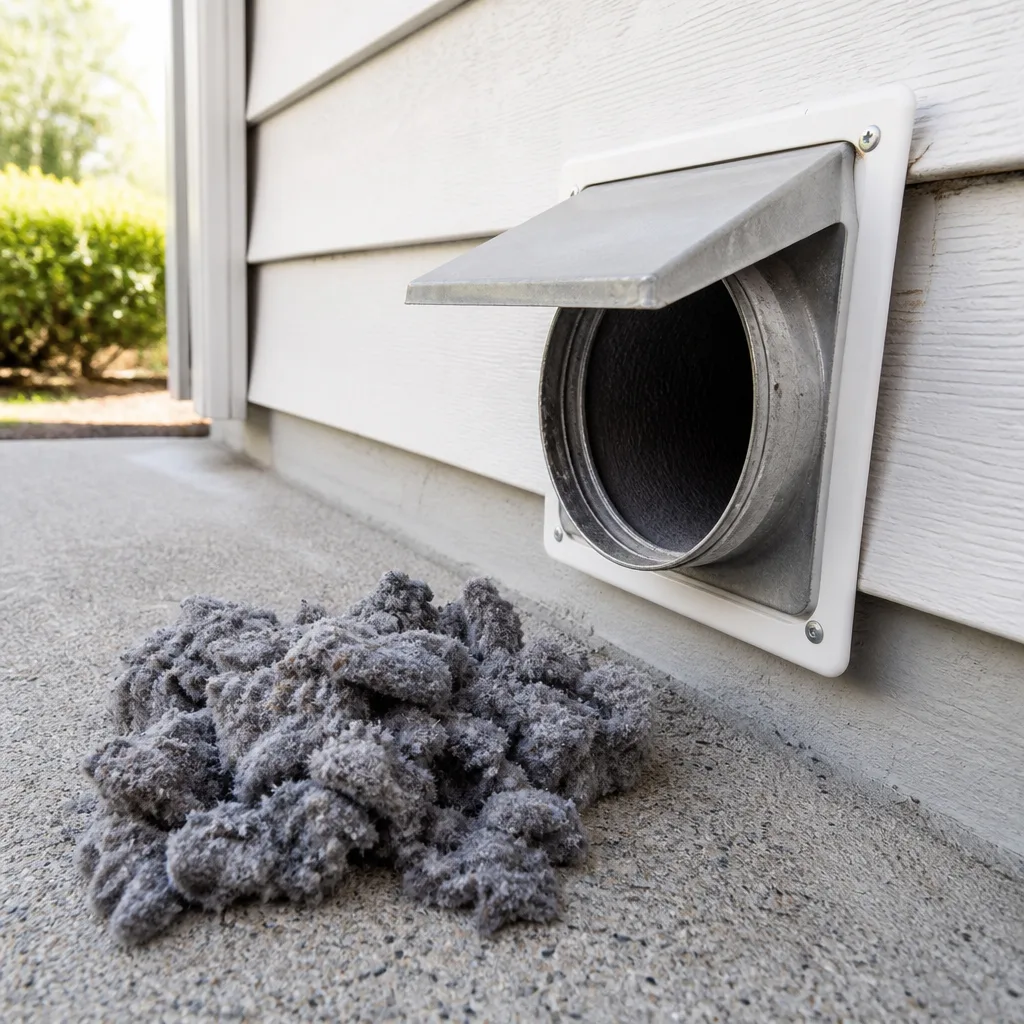
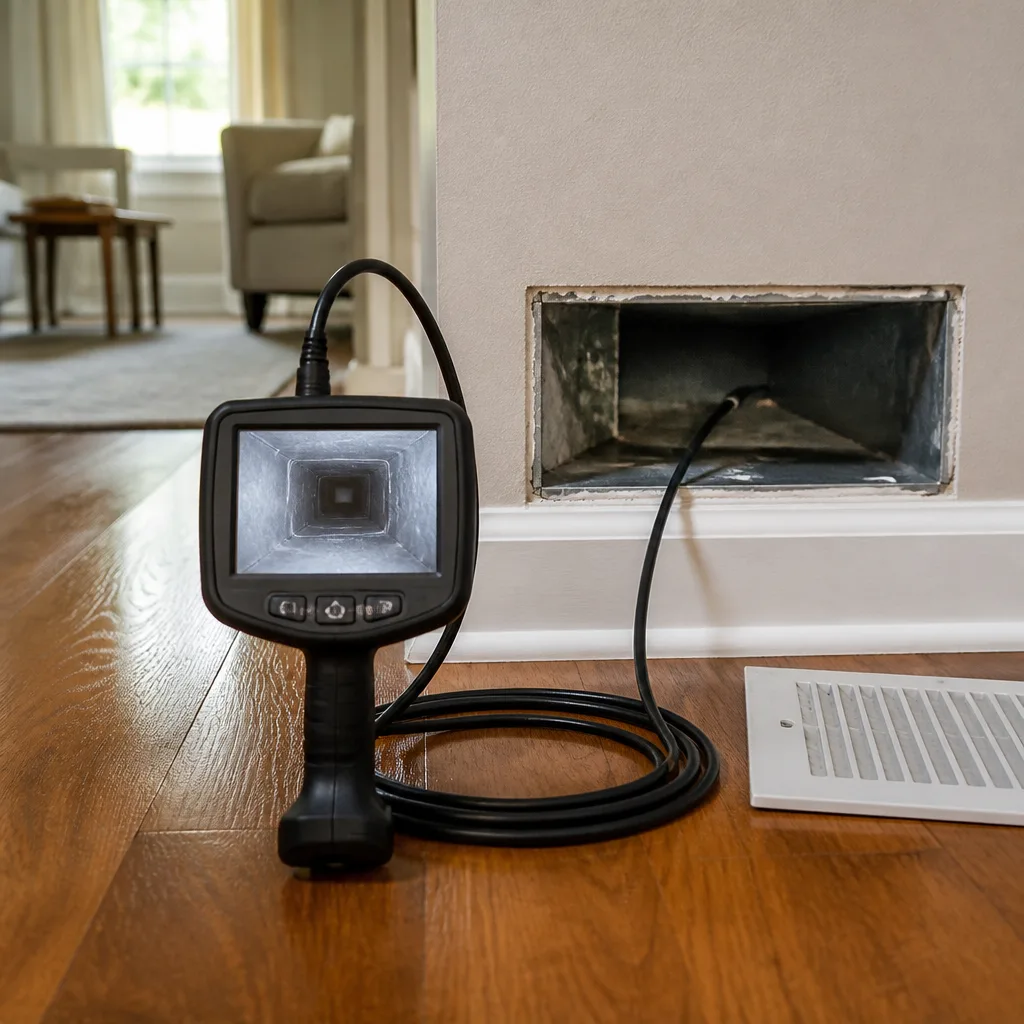
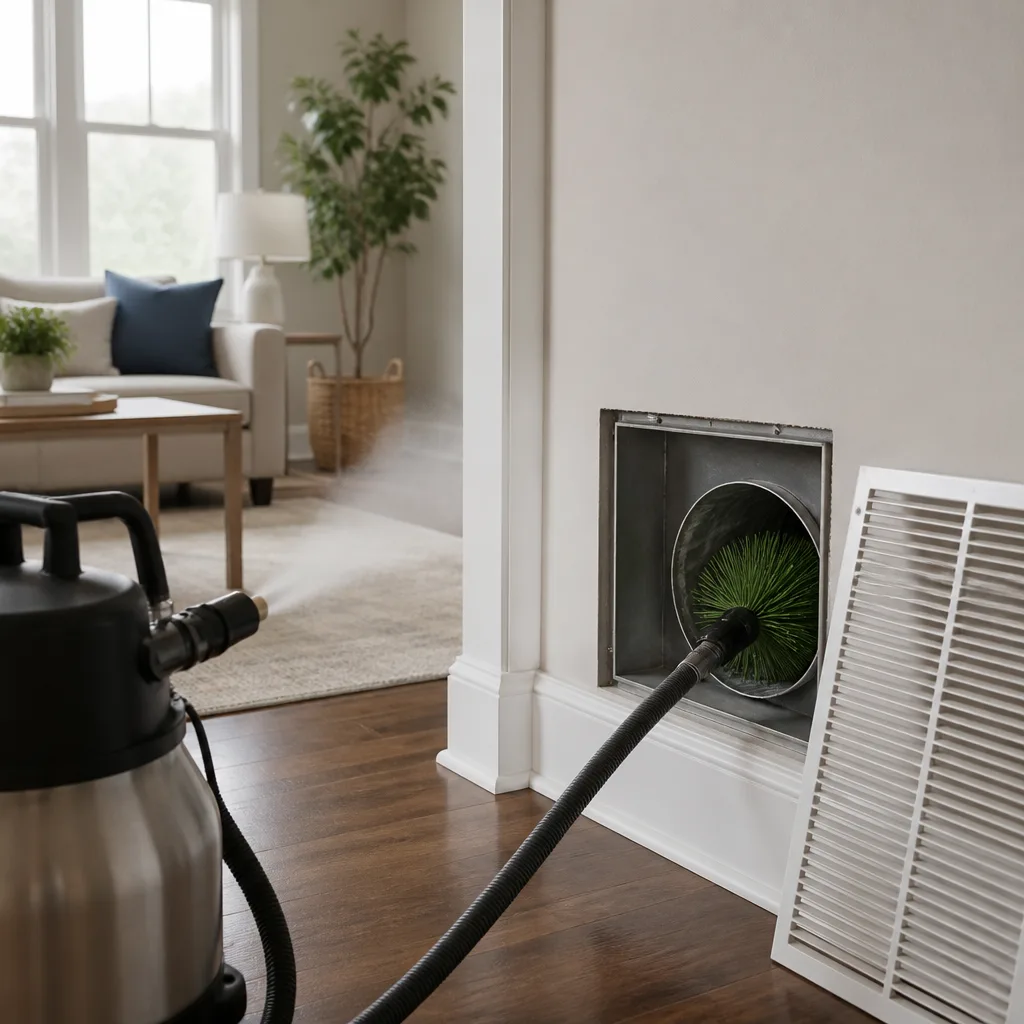
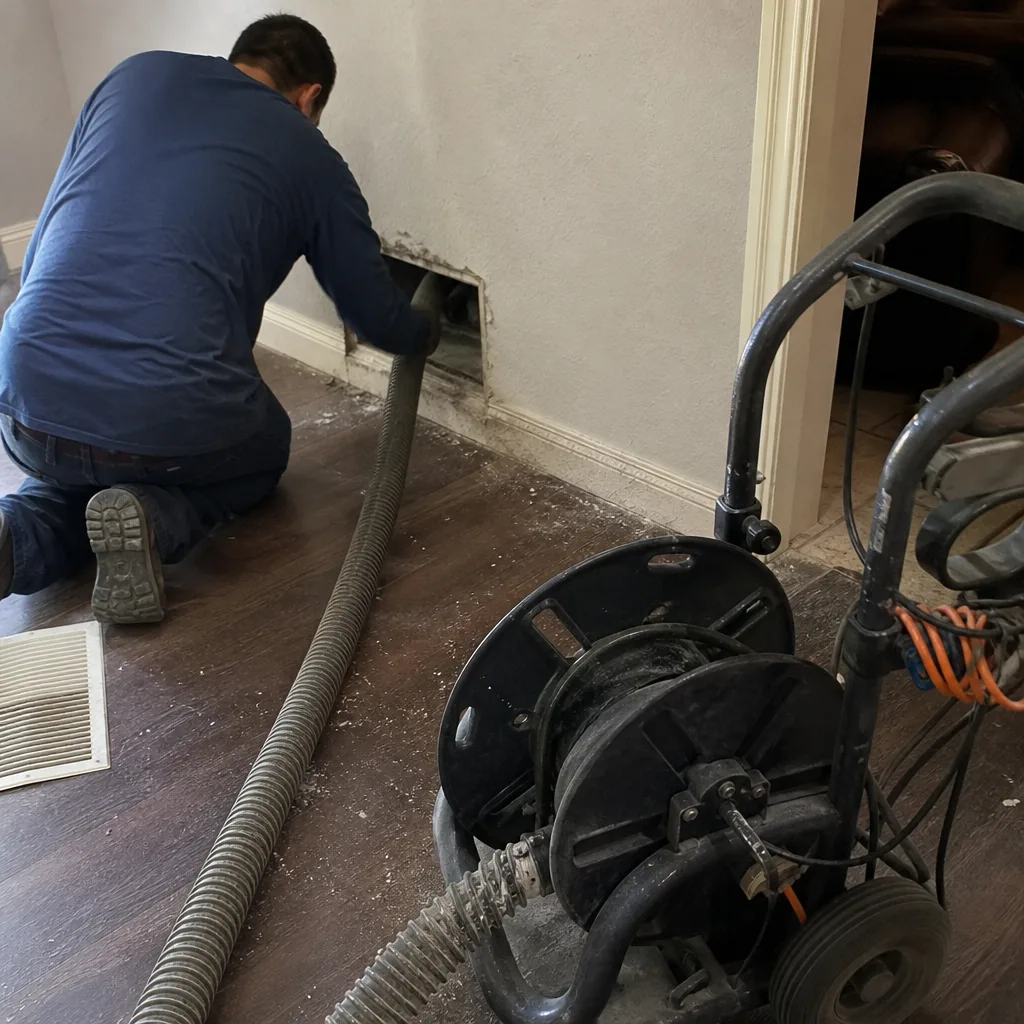 Before
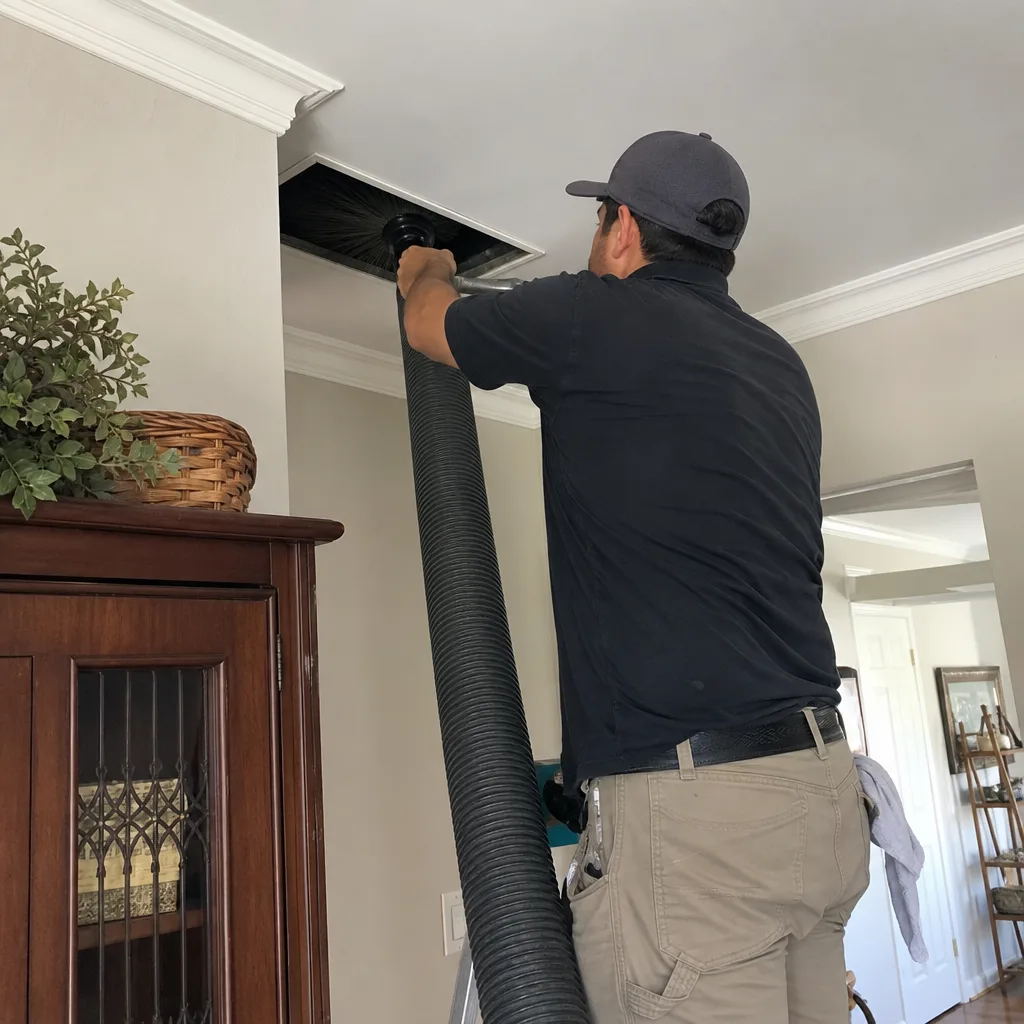 After
After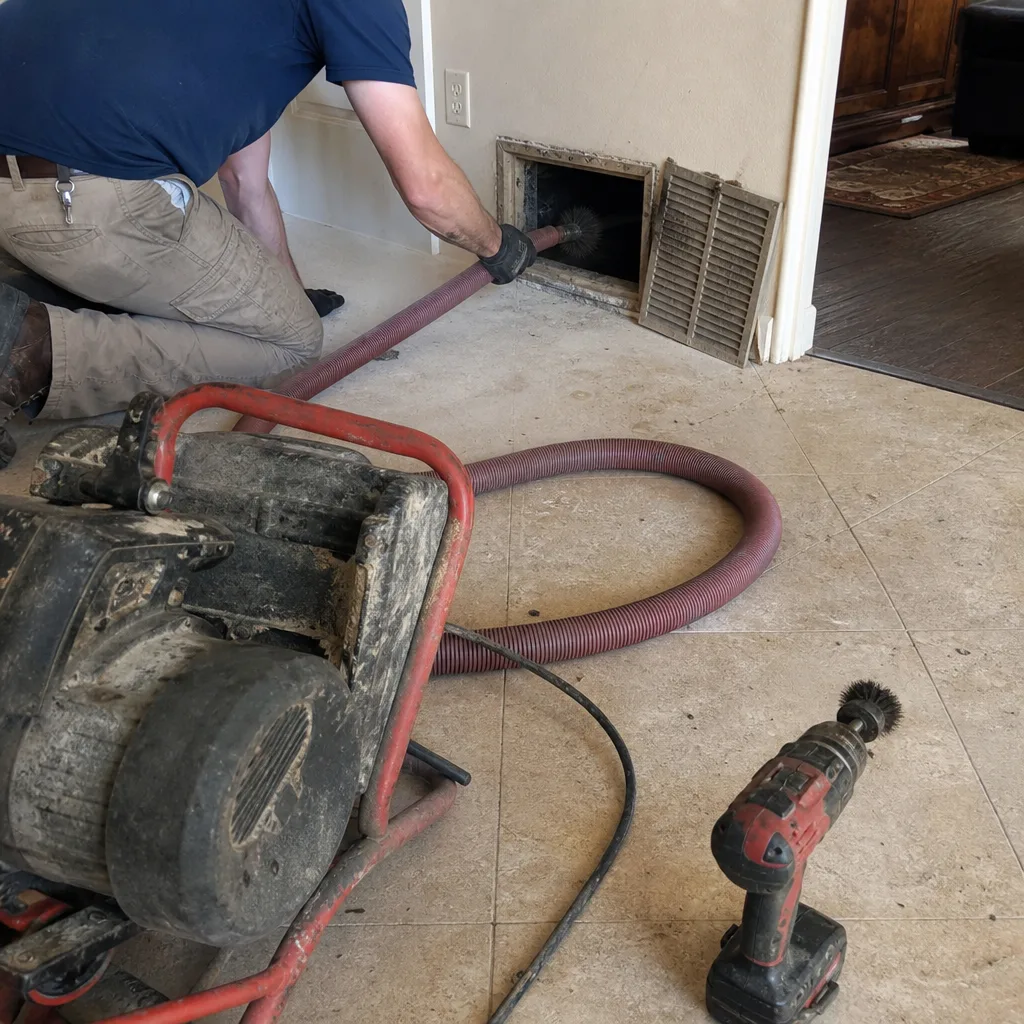 Before
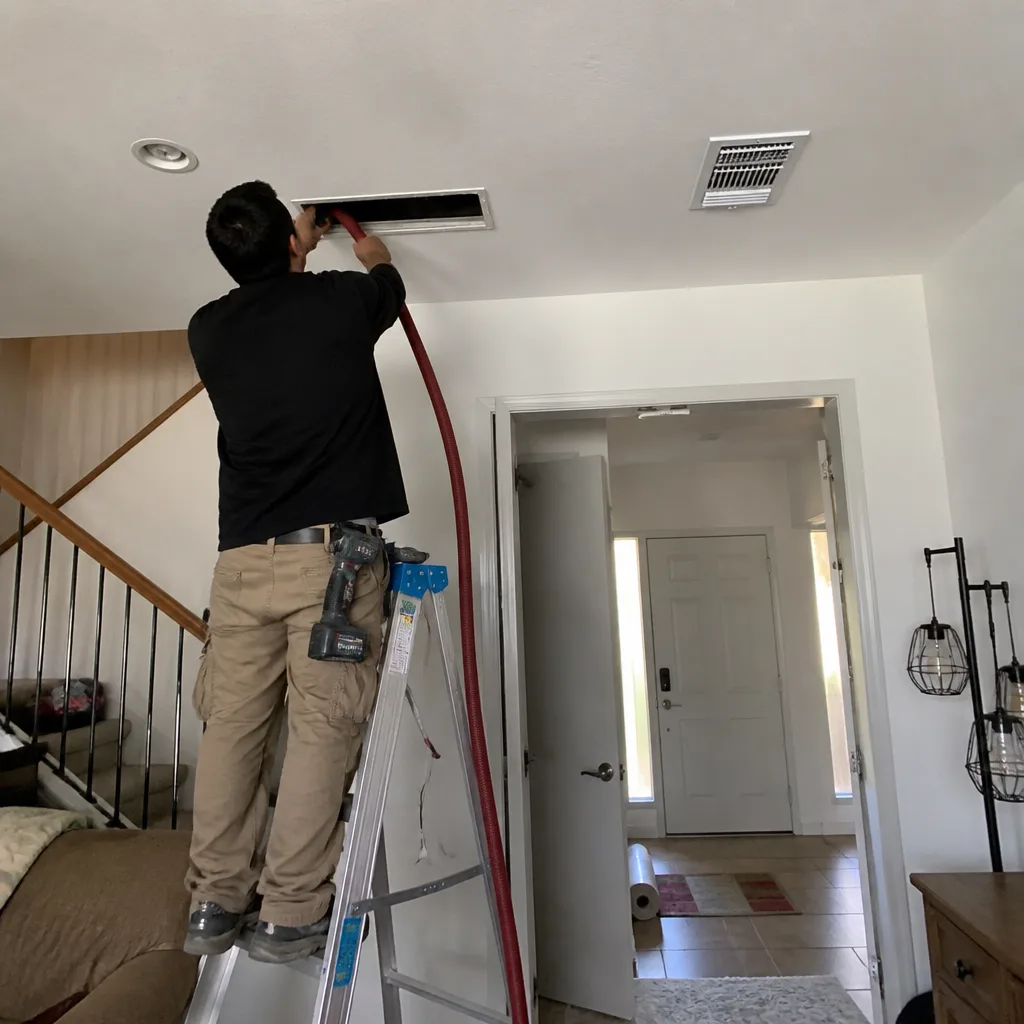 After
After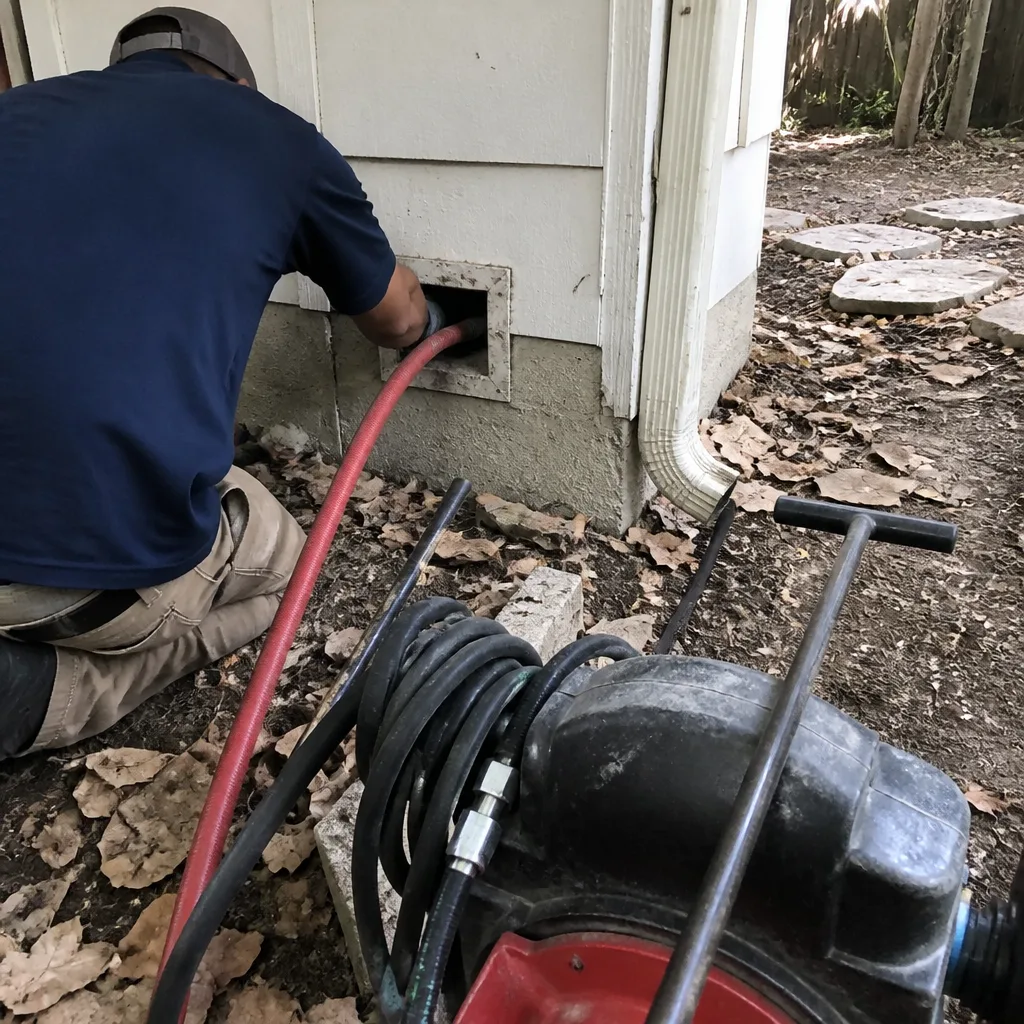 Before
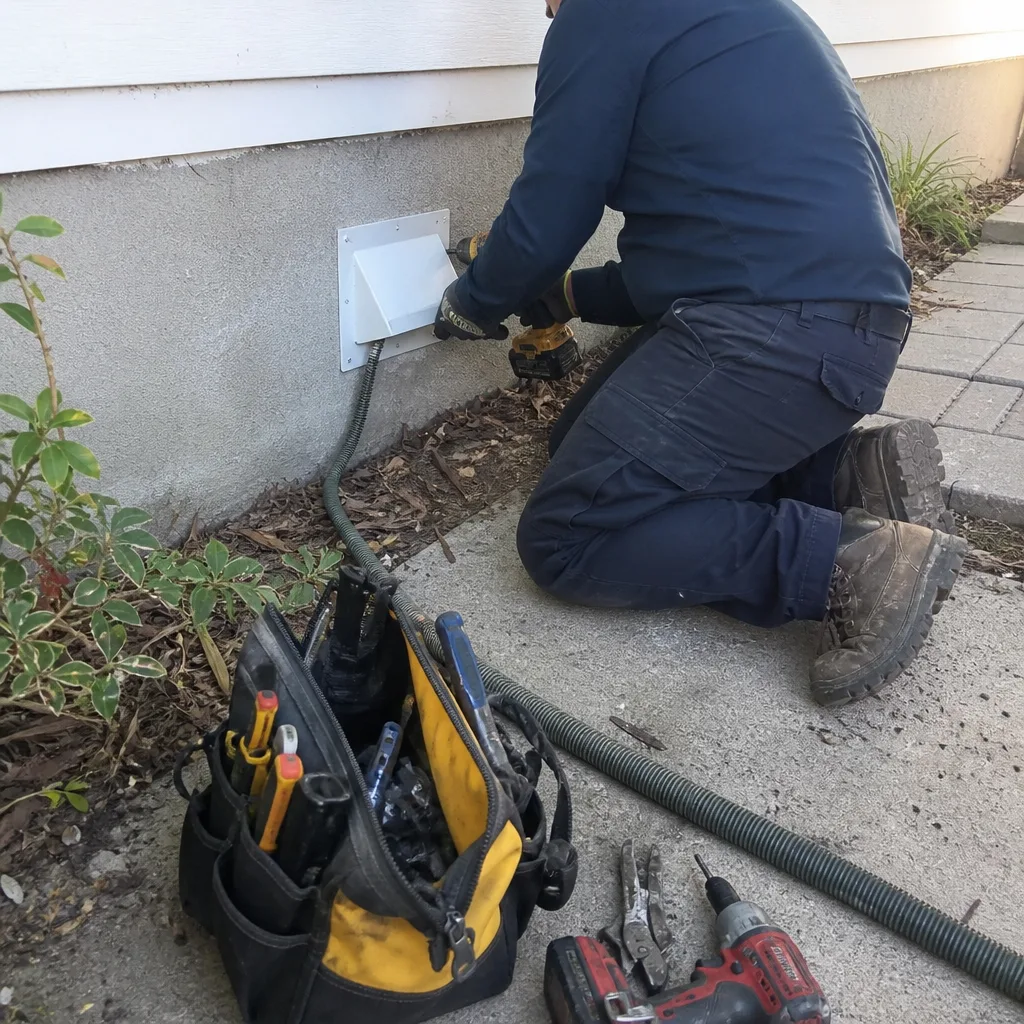 After
AfterThe Complete Guide to Air Duct Cleaning in New Braunfels
A shop vac pulled up to one supply register and run for 20 minutes produces the same invoice line - “air duct cleaning, complete” - as a job that photographs every run. We’ve been in New Braunfels homes since 2013 where the customer paid twice: once for the coupon special, and again six months later when the real work still needed doing. This guide defines what a documentable, complete duct cleaning actually looks like, component by component, so you can tell the difference before you book anyone.
Quick Answer
Professional air duct cleaning in New Braunfels costs $450-$950 for a typical 1,500-2,500 square foot home and should include cleaning of all supply runs, return plenums, the air handler cabinet, and coil housing under negative-pressure extraction, with before-and-after photography of every duct run. A complete job takes 3-5 hours for a standard residential system and follows the NADCA ACR standard, which specifies mechanical agitation and source removal - not just vacuuming at the register.
Table of Contents
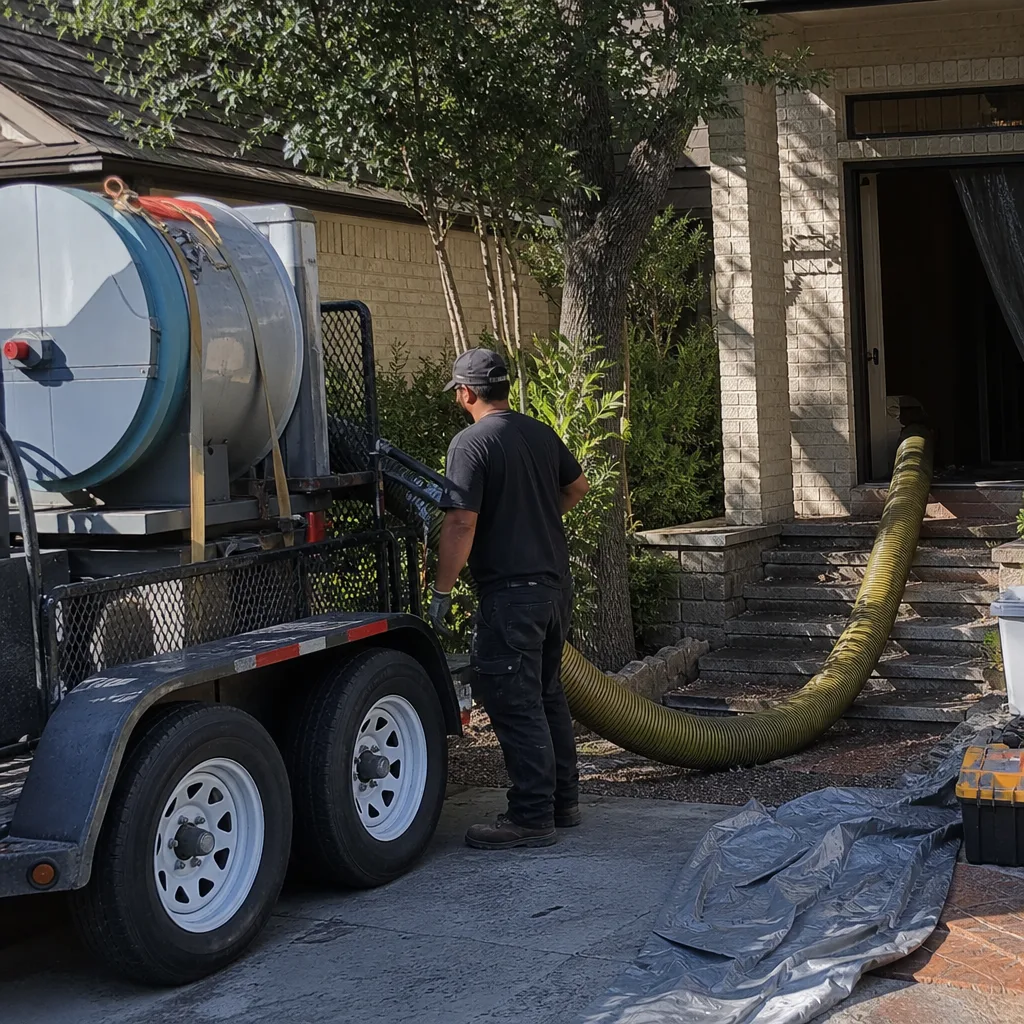
- What Complete Duct Cleaning Actually Includes
- What New Braunfels Conditions Leave Inside Your Ductwork
- The NADCA ACR Standard in Plain Language
- What Before-and-After Photos Should Actually Show
- Air Duct Cleaning Pricing in New Braunfels
- Why Equipment Brand and Method Matter
- How to Choose a Provider in New Braunfels
- How Often to Clean and What to Watch For
BeforeAfterWhat Complete Duct Cleaning Actually Includes
Most homeowners in New Braunfels don’t know their duct system has eight distinct zones that need attention. A technician who cleans two registers and calls it done has left 75% of the system untouched. Here’s what a complete job addresses:
- Supply trunk line: The main highway that carries conditioned air from the air handler to the branch lines. Debris collects at low points and where the trunk changes direction.
- Supply branch runs: The individual lines that run to each room’s register. These are where we most often find the heaviest buildup, especially in homes near the Guadalupe River where humidity has been high for years.
- Return air trunk: The large duct that pulls air back to the system. Because it’s under suction, it acts like a vacuum hose for the house - and everything airborne in it.
- Return branch runs and drop: The pathways from each return grille. In New Braunfels homes with tile or hard flooring, these often contain fine limestone dust that doesn’t get trapped by carpet fibers.
- Return plenum: The sheet-metal box where return air enters the air handler. This is a common bypass point for incomplete jobs - it’s awkward to reach and easy to skip.
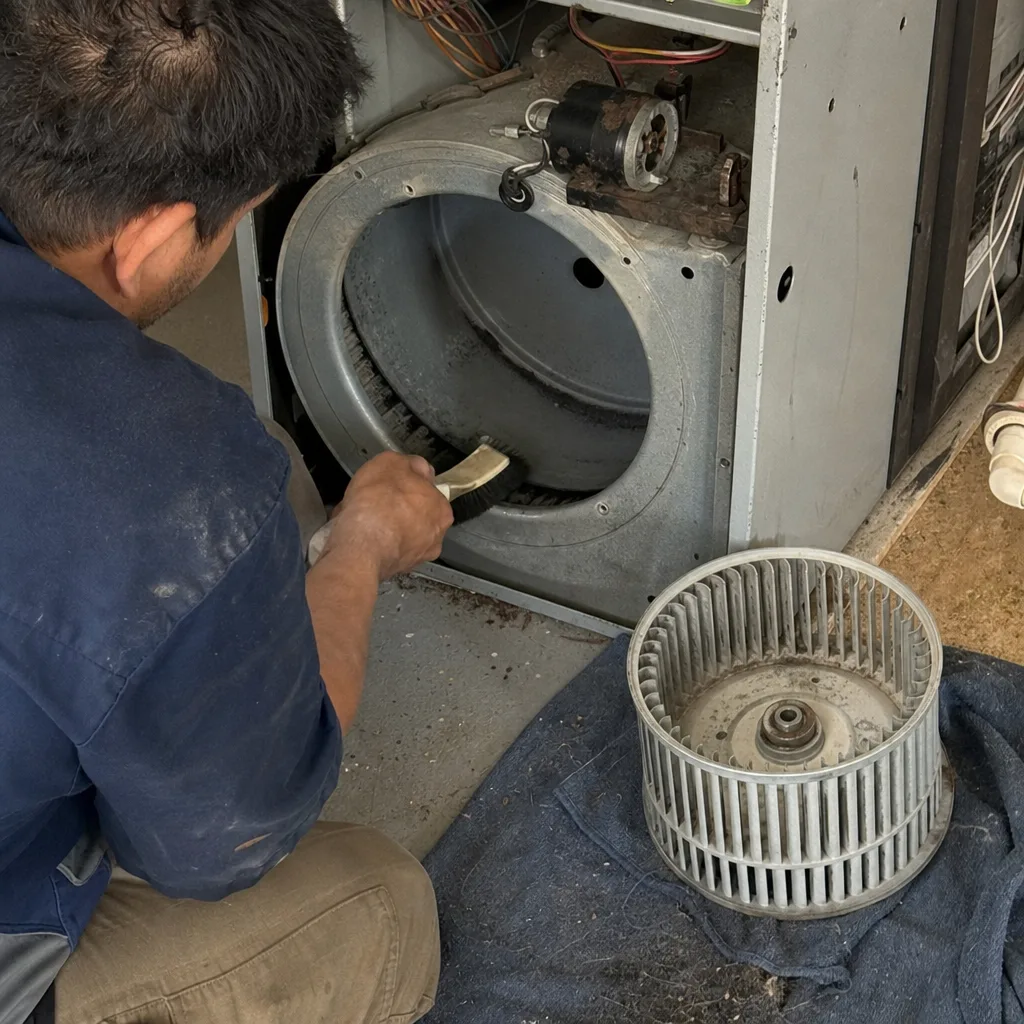
- Air handler cabinet: The housing that contains the blower motor and wheel. The blower wheel itself can hold pounds of debris that recirculate with every cycle.
- Evaporator coil housing: The area around the indoor cooling coil. A dirty coil restricts airflow and can harbor microbial growth in our humid summers.
- Registers and grilles: The visible covers. These matter, but they’re also the only part most coupon operators actually touch.
Each of these components requires a different access approach. The supply trunk might need access panels cut and resealed. The evaporator coil housing may require removal of sheet-metal panels with specific torque on the screws so they seal properly afterward. The return plenum in many New Braunfels homes built 2015-2020 is a flexible duct connection that has to be detached carefully and reattached with proper support straps.
We’ve documented jobs in the Vintage Oaks and River Chase areas where the previous “cleaning” never made it past the registers. The camera showed the same debris layer at the first elbow that was there before the truck arrived. That’s why CleanRun’s Air Duct Cleaning in New Braunfels includes photography of every run - so you can verify what was reached, not just what was promised.
What New Braunfels Conditions Leave Inside Your Ductwork
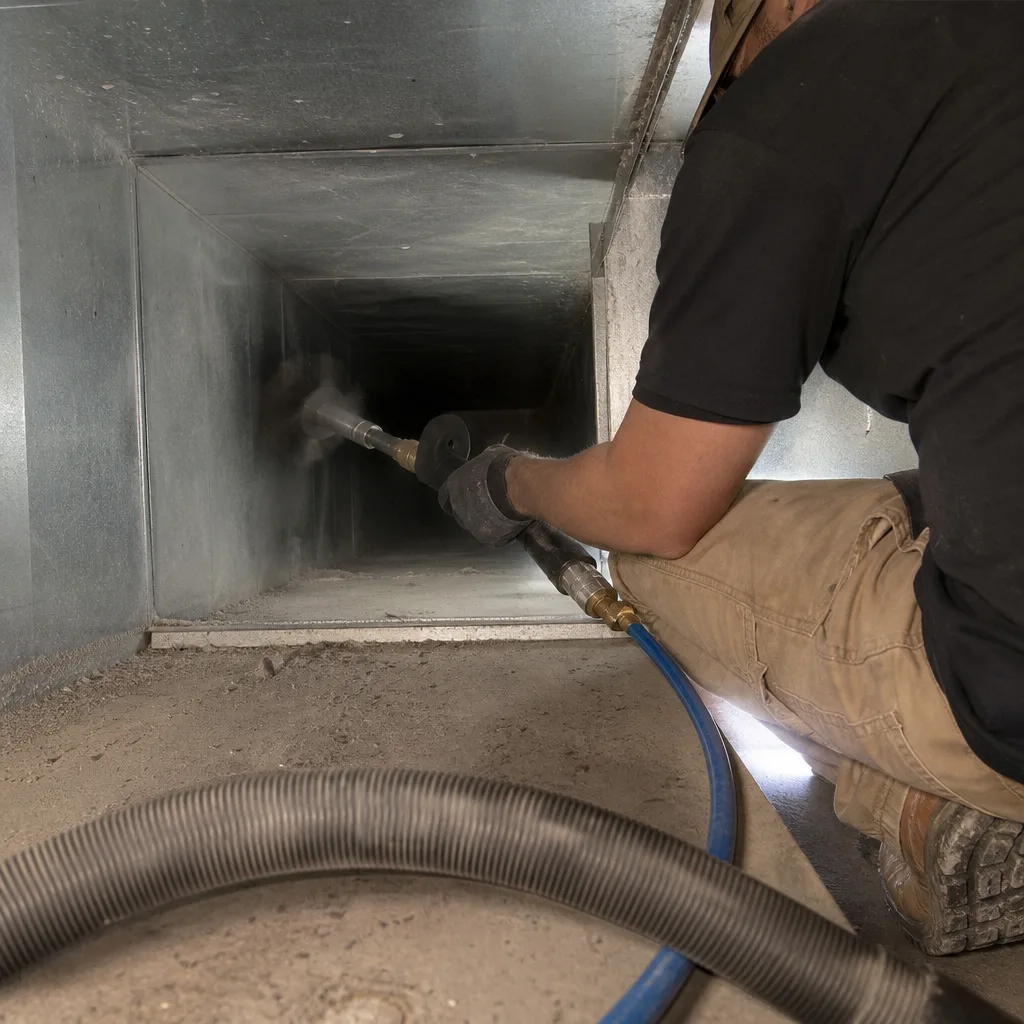
The Hill Country environment around New Braunfels creates a specific contamination profile that differs from coastal or northern Texas markets. Understanding what you’re actually breathing helps explain why cleaning methods matter.
Caliche and limestone dust. The Edwards Plateau geology means fine mineral dust is constantly resuspended by construction, road traffic, and dry-season winds. This dust is angular and abrasive - it doesn’t compress easily and can accumulate in layers on duct floors. We’ve photographed 2-inch buildups in 10-year-old homes near the I-35 corridor where construction activity has been continuous. Unlike organic debris, limestone dust doesn’t break down with standard brushing; it requires mechanical agitation with nylon or poly brushes that won’t damage galvanized duct.
Cedar pollen (mountain cedar). From December through February, New Braunfels experiences some of the highest pollen counts in Texas. Cedar pollen is particularly fine - 19-25 microns - and penetrates standard fiberglass filters. It accumulates in return ducts and on blower wheels, then recirculates with every system cycle. For allergy-sensitive households, this is often the invisible trigger that persists even with medication.
High summer humidity residue. From June through September, outdoor dew points in New Braunfels regularly exceed 70°F. When humid return air hits a cool evaporator coil, condensation forms on the coil and nearby duct surfaces. This moisture binds dust into a clay-like deposit that’s harder to remove than dry debris alone. It also creates conditions for microbial growth on organic components, particularly in homes where the system has been oversized and short-cycles without adequate dehumidification.
Pet dander and hair. New Braunfels has a higher-than-average pet ownership rate, and homes in neighborhoods like Copper Ridge and Meyer Ranch often have multiple large dogs. Pet hair wraps around blower wheels and collects at duct transitions where airflow changes direction. Hair doesn’t respond to vacuuming alone - it has to be mechanically dislodged first.
Each contaminant behaves differently. A method that works for light dust won’t touch adhered humidity residue. A brush stiff enough for limestone dust might damage flex duct. This is why we match equipment to condition, not run the same tool on every job.
The NADCA ACR Standard in Plain Language
The National Air Duct Cleaners Association publishes the Assessment, Cleaning, and Restoration of HVAC Systems standard - ACR for short. It’s the only industry-recognized specification for what “clean” means. Most New Braunfels homeowners have never heard of it, and many duct cleaning companies hope it stays that way.
Here’s what the standard actually requires, translated from technical language:
- Source removal, not just vacuuming. The standard mandates that contaminants be dislodged and removed from the system, not just drawn past them. This means mechanical agitation - brushes, whips, or compressed air tools - must contact the duct surface, followed by negative-pressure extraction that carries debris out of the home.
- Negative-pressure containment. The entire duct section being cleaned must be under suction while agitation occurs. This prevents debris from escaping into occupied space. Portable HEPA vacuums alone don’t achieve this; truck-mounted or dedicated portable systems with sufficient CFM are required.
- Protection of mechanical components. The blower motor, control boards, and coil fins must be protected during cleaning. We’ve found moisture and debris damage in systems where previous cleaners were careless with access.
- Post-cleaning verification. The standard requires visual inspection after work is complete. At CleanRun, this means photography - Haven Standard Clause 2: Documented Outcomes. The images are your proof that the standard was met, not just claimed.
The ACR standard also specifies what doesn’t count as duct cleaning. Chemical biocides applied without mechanical removal, ozone generators, and sealant sprays applied to dirty surfaces are all addressed - and in most cases, discouraged or prohibited as primary cleaning methods. If a New Braunfels contractor proposes a “fogging” or “sanitizing” treatment without first performing source removal, they’re not following ACR.
One detail competitors rarely mention: the standard requires that access panels be of sufficient size for proper cleaning and inspection. A 4-inch round cut in a trunk line doesn’t allow a camera or brush to evaluate the full duct circumference. We cut proper access panels, clean through them, and seal them with code-compliant covers - not tape. This is permanent work that protects your system integrity.
What Before-and-After Photos Should Actually Show
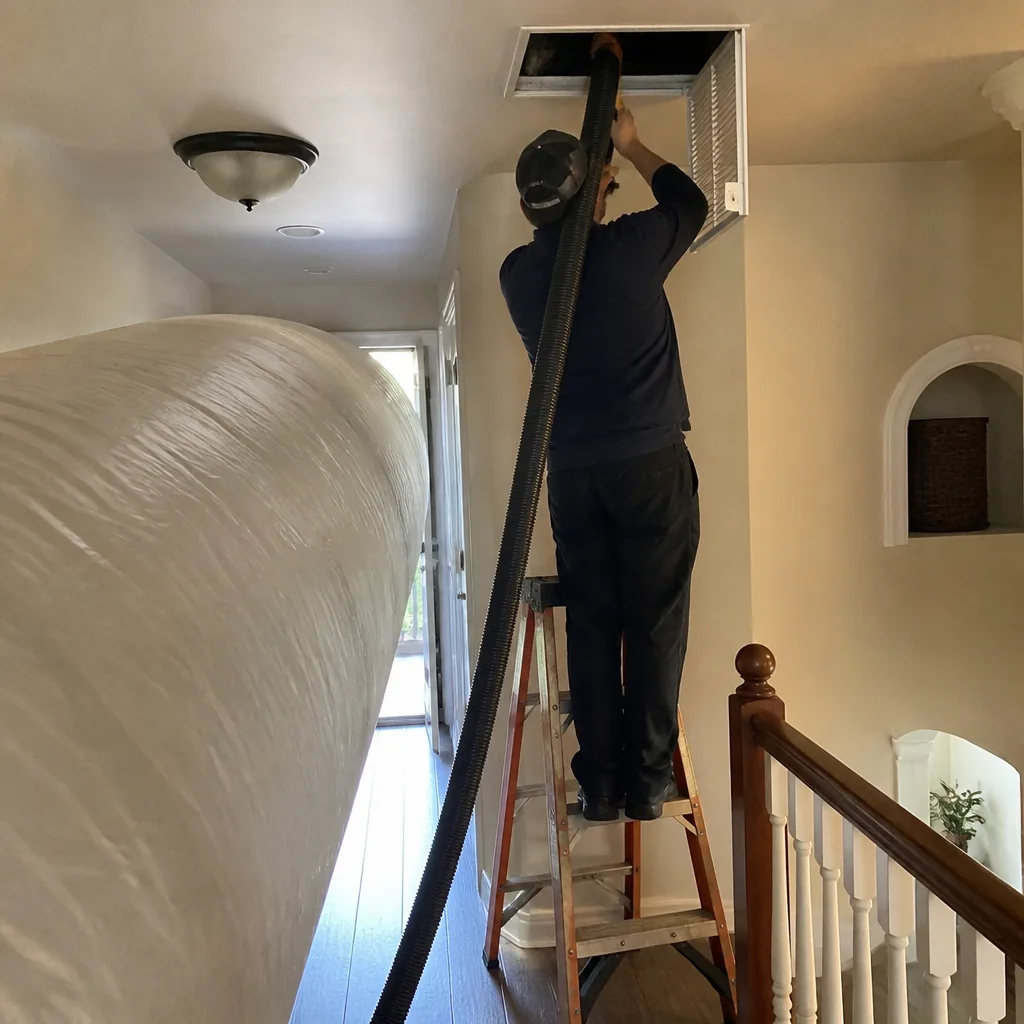
The photo record is where most duct cleaning claims fall apart. A clean register cover proves someone wiped the vent. It proves nothing about the duct behind it.
Here’s what a legitimate before-and-after documentation set includes:
- Interior duct walls at multiple points per run. Not the register, not the boot - the actual duct surface 3, 6, and 10 feet down the line. The camera should show the full circumference, not a narrow forward view.
- The blower wheel and housing. Before: debris accumulation on blades. After: clean metal with no visible residue. This component alone can hold 3-5 pounds of material in a residential system.
- The evaporator coil face. Before: restricted airflow through fin blockage. After: visible light through the fins when backlit. We photograph this with a flashlight behind the coil for verification.
- The return plenum interior. This is the most commonly skipped component. The photo should show all four walls and the floor of the plenum, not just the entrance.
- Access panel installation. The sealed panel, with proper cover and fasteners, proving the system was returned to intact condition.
CleanRun has delivered this documentation on every job since 2013 - 52,000 homes, every one with a photo record. The images are timestamped and delivered as part of the standard job record, not held hostage for a review or additional fee. Haven Standard Clause 2 requires this; we don’t consider a job complete without it.
When you’re evaluating a New Braunfels duct cleaning company, ask to see sample documentation before you book. A contractor who can’t produce examples of their own work is telling you what they intend to do, not what they’ve done. Evidence first.
Air Duct Cleaning Pricing in New Braunfels
The bait-and-switch structure of this industry starts with pricing. A $79 coupon for “whole house duct cleaning” is mathematically impossible for a legitimate operation - the labor alone for a 4-hour job exceeds that figure before equipment, fuel, insurance, or wages are considered. What happens next is predictable: the technician arrives, discovers “unexpected conditions,” and the final invoice reaches $600-$1,200.
CleanRun operates under Haven Standard Clause 1: Written Price Before Work Starts. The price you agree to in writing is the price you pay. No per-vent add-ons, no “surprise” contamination fees, no equipment upgrades once the crew is inside.
Here are the real price ranges for professional air duct cleaning in New Braunfels, based on system size and configuration:
| Home Size / System Type | Typical Range | Notes |
|---|---|---|
| 1,200-1,600 sq ft, single system, slab foundation | $450-$650 | 8-12 supply runs, 2-3 returns; standard access |
| 1,800-2,400 sq ft, single system, pier-and-beam or two-story | $650-$850 | 12-18 supply runs; additional access points common |
| 2,500-3,500 sq ft, single large or zoned system | $850-$1,150 | 18-24+ runs; may include multiple air handlers |
| 3,500+ sq ft, dual systems | $1,100-$1,500 | Two complete systems; often in Canyon Lake area or custom builds |
| System with substantial remediation need | Add $200-$400 | Heavy buildup requiring extended agitation time; documented before work begins |
These ranges reflect actual New Braunfels market conditions in 2024-2025, including labor costs, fuel, and equipment maintenance for truck-mounted or high-CFM portable systems. Prices below $400 for a complete residential system should prompt serious questions about scope - what’s actually being cleaned, with what equipment, by what personnel.
Additional services that may be relevant:
- Dryer vent cleaning: $150-$250 when performed with duct cleaning; $200-$350 as standalone. This is distinct from duct cleaning and uses different equipment. Dryer Vent Cleaning in New Braunfels addresses fire safety and drying efficiency separately.
- Coil cleaning (chemical or mechanical): $150-$300 if accessible without refrigerant recovery; more if the coil must be removed.
- Duct repair or sealing: Priced per linear foot or by access difficulty. CleanRun Air Duct Cleaning New Braunfels home includes evaluation of duct integrity as part of every cleaning scope.
Every CleanRun estimate includes the full scope in writing before work begins. Bring a competitor’s written quote and we’ll provide a free second opinion - Haven Standard Clause 4 - with our number next to theirs, line by line.
Why Equipment Brand and Method Matter
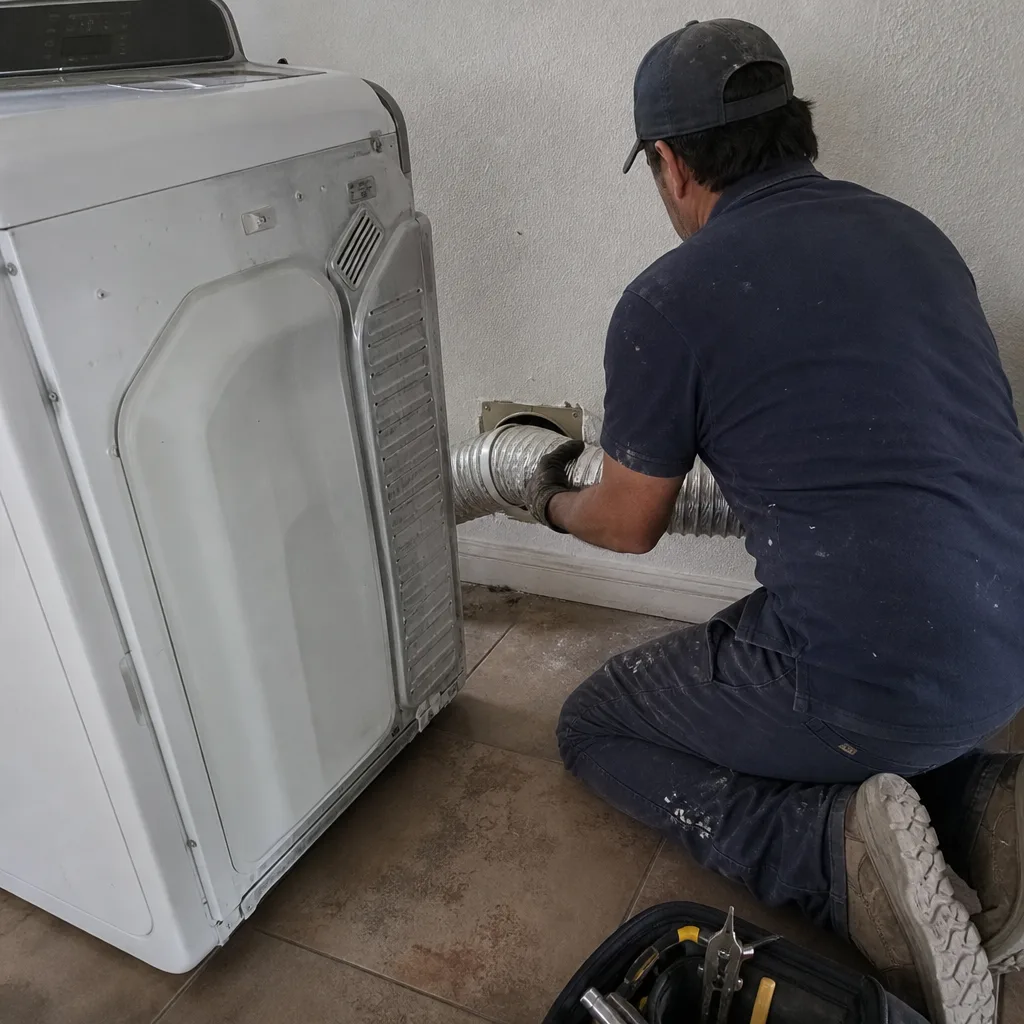
The tool determines what can be achieved. A shop vac with a 30-foot hose cannot generate the airflow or reach the access required for complete source removal. Yet this equipment, or its equivalent, is what many low-price operators deploy.
CleanRun’s equipment roster includes trade-recognized brands that customers can verify independently:
- Rotobrush: Brush-and-vacuum systems for residential duct runs, with interchangeable brush heads matched to duct material and diameter.
- Nikro: High-CFM portable HEPA extraction units for negative-pressure containment in homes where truck-mounted access isn’t practical.
- Abatement Technologies: Air scrubbers and containment equipment for projects requiring enhanced particulate control.
- Guardsman: Access tools and inspection cameras for documentation and verification.
The method follows the equipment. For a typical New Braunfels home with galvanized steel supply ducts and flex return drops, we:
- Install containment and negative-pressure extraction at the air handler.
- Cut access panels at strategic points in trunk lines - typically one per trunk section, sized for brush and camera entry.
- Mechanically agitate each duct run with brushes or compressed air whips, working from farthest register toward the extraction point.
- Extract dislodged debris continuously during agitation.
- Clean the blower wheel and housing with dedicated brushes and vacuum.
- Inspect and photograph the evaporator coil; clean if within scope and accessible.
- Seal all access panels with permanent covers, gaskets, and proper fasteners.
- Photograph every component before and after; deliver the photo record with the invoice.
Homes in the Hill Country fringe - areas like Spring Branch or Bulverde that some New Braunfels contractors serve - often have longer duct runs and more elevation change between air handler and farthest register. These systems require higher static-capacity equipment and more time. We price for the actual work, not an average that leaves some jobs rushed and others subsidized.
How to Choose a Provider in New Braunfels
The New Braunfels market includes national lead-generation services, independent operators, HVAC companies that added duct cleaning as a sideline, and specialists like CleanRun. Here’s how to distinguish them:
Verify the license. Texas requires a HVAC Cleaning in New Braunfels contractor to hold appropriate licensing for work on mechanical systems. Ask for the license number and verify it with the Texas Department of Licensing and Regulation. CleanRun publishes its license on every proposal - Haven Standard Clause 3: Verified Crews.
Ask about the photo record. Not whether they “take pictures” - whether they photograph the interior of every duct run, before and after, and deliver those images as part of the standard job record. Request sample documentation. If they can’t produce it, they haven’t been doing it.
Request written scope and price before work starts. Not an estimate range, not a “typically” figure - the actual price for your actual system, with the actual components to be cleaned listed. Haven Standard Clause 1 exists because verbal quotes become verbal disputes.
Confirm insurance and bonding. Ask for a certificate of insurance naming you as additional insured for the project date. This is standard in construction trades and should be routine for anyone working inside your mechanical system.
Check for background-checked, uniformed technicians. Haven Standard Clause 3 requires this. You should know who’s arriving, by name, before they knock. Not a subcontractor dispatched from a platform, not a technician whose identity you verify only after they’re in your home.
Review the guarantee in writing. The 365-Day Done Right Promise means if the work isn’t right, CleanRun makes it right - and that commitment is on the proposal, not just the website. A guarantee that requires manager approval or disappears into a call center isn’t a guarantee.
How Often to Clean and What to Watch For
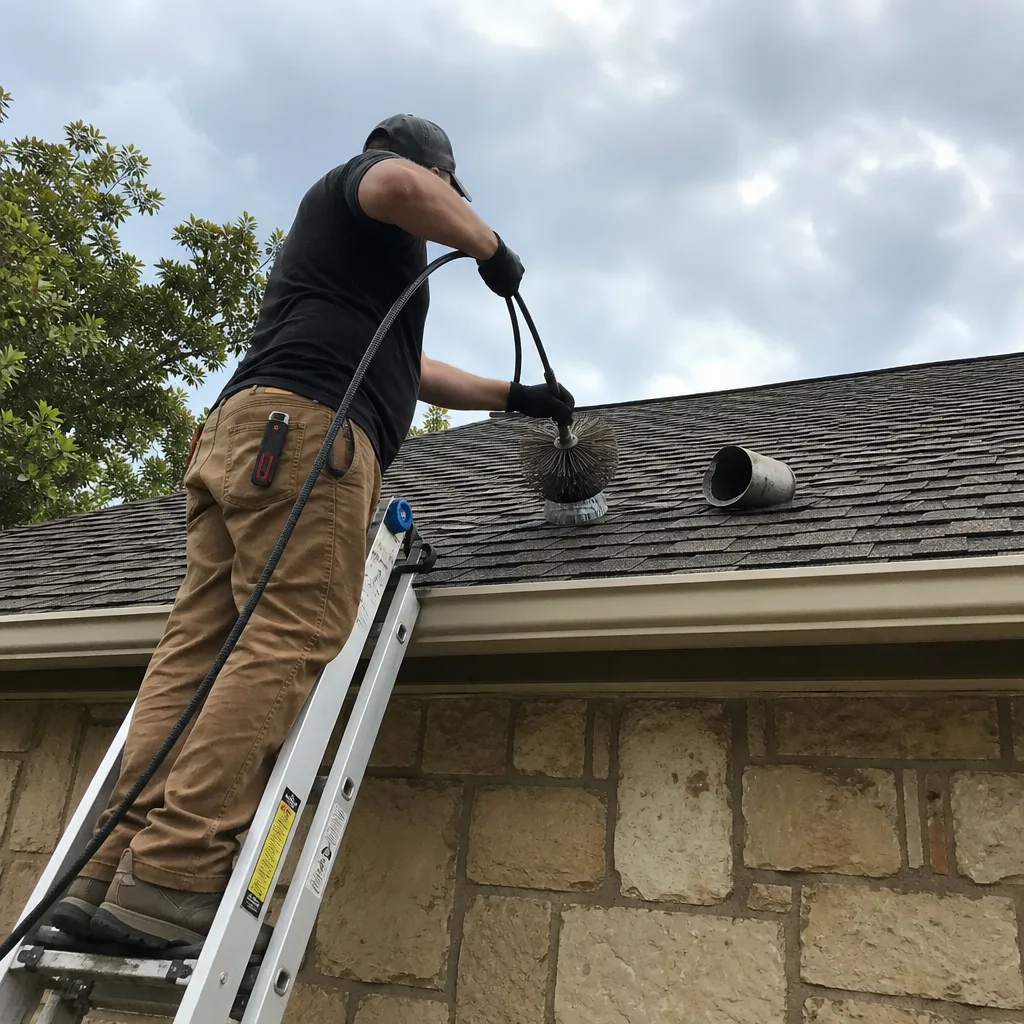
NADCA recommends cleaning every 3-5 years for typical residential systems. In New Braunfels, we adjust this based on specific conditions:
- Every 2-3 years: Homes with multiple pets, recent construction or renovation, or occupants with allergy or respiratory sensitivity. The cedar pollen season alone justifies shorter intervals for sensitive households.
- Every 3-4 years: Standard residential occupancy, no pets, no recent construction, routine filter changes with MERV 8-11 filters.
- Every 4-5 years: Minimal occupancy, no pets, high-quality filtration (MERV 13+ with properly sized filter media), consistent maintenance.
Signs that cleaning is needed sooner:
- Visible debris at registers, or dust blowing out when the system cycles on.
- Uneven heating or cooling, particularly at distant rooms - may indicate duct blockage or blower wheel restriction.
- Increased dust accumulation on surfaces despite regular cleaning.
- Musty or stale odors when the system operates, particularly at startup.
- Recent pest intrusion - rodents or insects in ductwork require cleaning and often repair of access points.
- System runtime increasing without thermostat change - restricted airflow from dirty components.
New Braunfels homes built during the 2019-2022 construction surge deserve particular attention. Fast-track building schedules often left construction debris in ducts - drywall dust, insulation fragments, wood chips - that wasn’t fully removed before occupancy. We’ve documented substantial construction residue in homes less than three years old in developments along FM 306 and the Highway 46 corridor.
Common Mistakes to Avoid
- Booking by price alone. The $79 coupon special cannot cover legitimate labor, equipment, and insurance costs. The difference comes from reduced scope, unskilled labor, or upsell pressure once inside your home.
- Accepting “sanitizing” without cleaning. Chemical treatments applied to dirty ducts don’t remove the debris - they treat its surface. Source removal comes first; any sanitizing is secondary and should be optional, not mandatory.
- Ignoring the return side. Many homeowners focus on supply registers where air blows out. The return side is where the system inhales - and where the heaviest contamination often accumulates. A quote that doesn’t specify return plenum and branch cleaning is incomplete.
- Skipping the photo documentation request. If a contractor won’t show you what they found and what they achieved, you’re buying a promise, not a result. This is particularly important in New Braunfels’ competitive market where new companies appear seasonally.
- Assuming new homes are clean. Construction debris in ductwork is routine, not exceptional. A home’s age doesn’t determine duct condition - its construction and occupancy history do.
- Neglecting dryer vent cleaning. A clogged dryer vent restricts airflow, extends drying time, and creates fire risk. It’s a separate service from duct cleaning but often needed on the same schedule. Dryer Vent Cleaning in New Braunfels should be part of your home maintenance plan.
- Choosing a provider who can’t explain their method. If a technician can’t tell you what equipment they’ll use, how they’ll access each component, and what the photo record will show, they may not know themselves.
When to Call a Professional
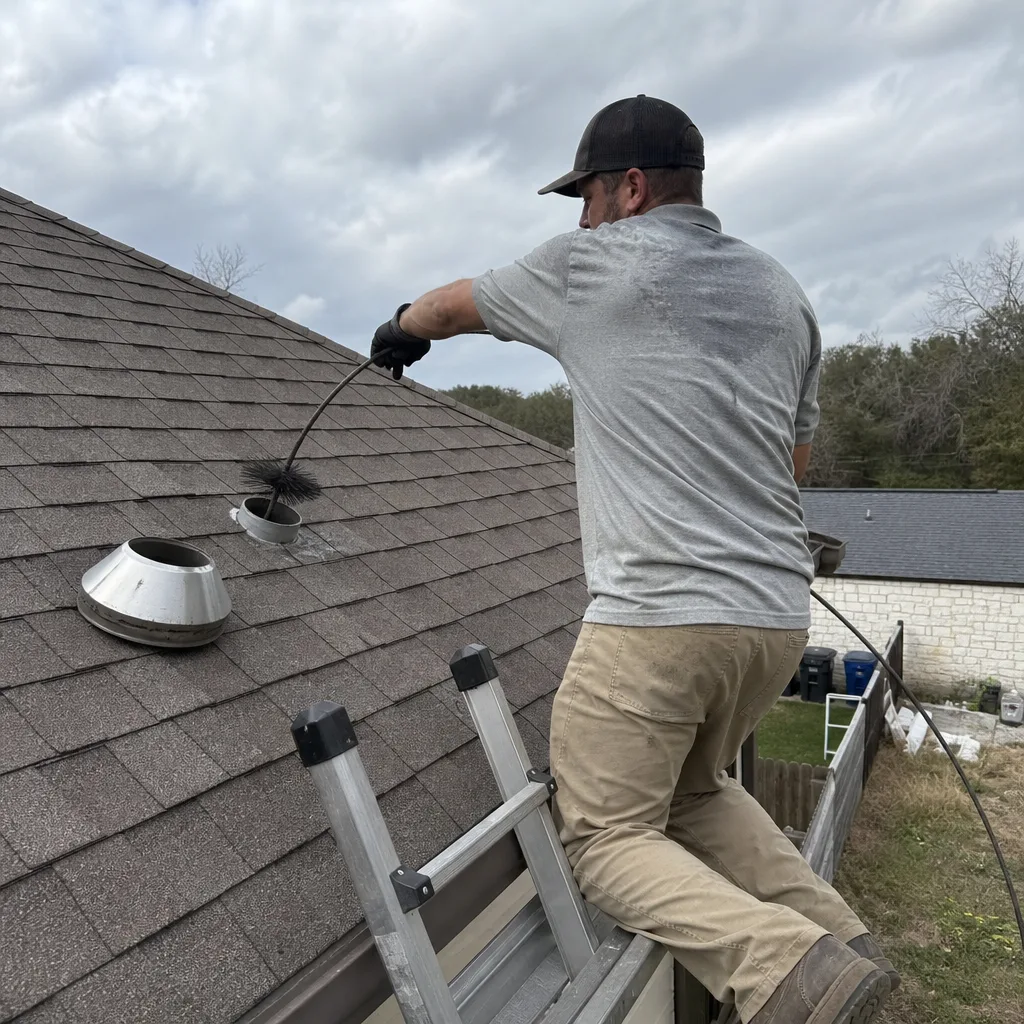
Call for an evaluation when you notice persistent dust, uneven airflow, odors at system startup, or if it’s been more than five years since your last documented cleaning. New Braunfels homeowners in neighborhoods like Morningside, Oak Run, or the Historic District should also consider evaluation after any major renovation, foundation repair, or pest treatment - these events often introduce debris or compromise duct integrity.
CleanRun Air Duct Cleaning New Braunfels offers free estimates in New Braunfels - call (830) 549-6847. Every estimate includes a written scope and price before any work begins, and every job concludes with a Documented Photo Record of every duct run. The 365-Day Done Right Promise means the work is accountable long after the truck leaves.
Frequently Asked Questions
Professional air duct cleaning in New Braunfels typically costs $450-$950 for homes between 1,500 and 2,500 square feet, with larger homes or dual systems ranging up to $1,500. Prices below $400 for complete service should be scrutinized carefully, as they often indicate reduced scope or undisclosed add-on fees. Call (830) 549-6847 for a written estimate specific to your home - estimates are free and include the full scope in writing before any work starts.
Low quotes usually reflect one of three conditions: reduced scope (cleaning only registers and visible trunk sections), unskilled or uninsured labor, or a deliberate bait-and-switch structure where the low price attracts the call and conditions are “discovered” to justify upsells. A legitimate quote specifies every component to be cleaned, the equipment to be used, and the final price - not a range, not a “starting at” figure. CleanRun’s Haven Standard Clause 1 requires a written price before work starts, with no exceptions.
Demand a photo record showing the interior of every duct run before and after cleaning, plus the blower wheel, coil, and return plenum. Timestamped images of interior duct walls - not just clean register covers - are the only verifiable proof. CleanRun has delivered this documentation on every job since 2013 as part of Haven Standard Clause 2: Documented Outcomes. If your contractor can’t produce sample documentation before you book, they likely can’t produce it after.
Every 3-5 years for typical homes, every 2-3 years for homes with pets, allergies, or recent construction. New Braunfels’ cedar pollen season and high summer humidity can justify shorter intervals for sensitive occupants. The right interval depends on your specific conditions - filter quality, occupancy, pets, and local environment - not a calendar alone. Call (830) 549-6847 and we’ll evaluate your system and usage to recommend an appropriate schedule.
It can, when the cleaning is complete and the allergen source is in the duct system. Cedar pollen, pet dander, and dust mite debris all accumulate in ductwork and recirculate. However, duct cleaning is not a standalone allergy solution - it should accompany source control (quality filtration, humidity management, pet grooming) and may need to be more frequent for sensitive individuals. The key is complete source removal under negative pressure, not surface treatment.
Air duct cleaning addresses the distribution network - the ducts, plenums, and registers that move air throughout your home. HVAC Cleaning in New Braunfels includes the mechanical components: the air handler cabinet, blower wheel, evaporator coil, and sometimes the condensate system. A complete job typically addresses both, but the terms are not interchangeable. Ask any provider to specify exactly which components are included in their scope.
The Bottom Line
A complete air duct cleaning in New Braunfels addresses eight distinct system components with mechanical agitation and negative-pressure extraction, follows the NADCA ACR standard, and produces verifiable documentation of results. Anything less leaves debris in your system and money wasted on a performance that didn’t happen. The difference between a shop vac at the register and a documented, component-by-component cleaning is the difference between a receipt and a result. Know what you’re buying before anyone enters your home.
Written by Tomas Reyes, Owner at CleanRun Air Duct Cleaning New Braunfels, serving New Braunfels since 2013.