
Last updated September 23, 2026
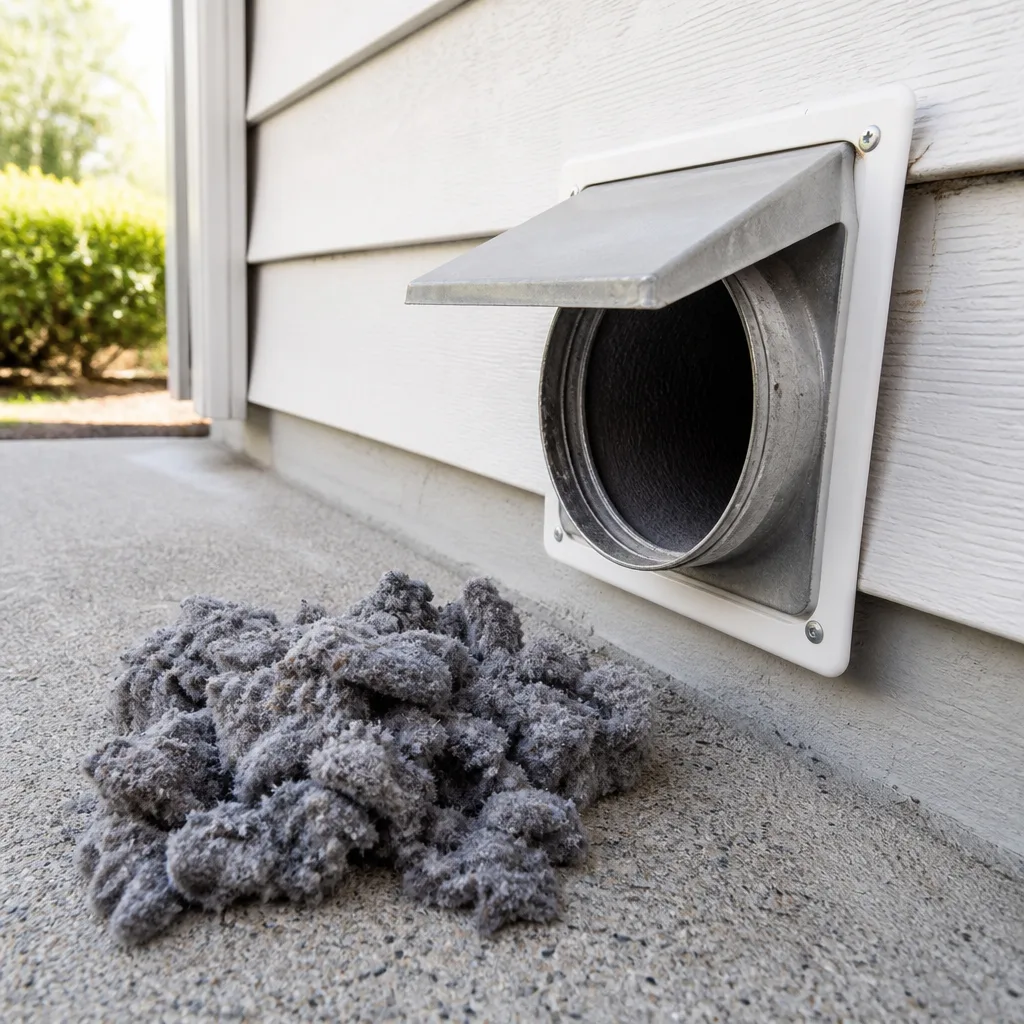
Whole-system duct and dryer vent check with before-and-after photos - you see exactly what came out of your vents
That "$99 whole-house special" is a bait ad - the real number appears once they are in your hallway, or the "clean" is a shop-vac at the register. We photograph the inside of your ducts before and after instead.
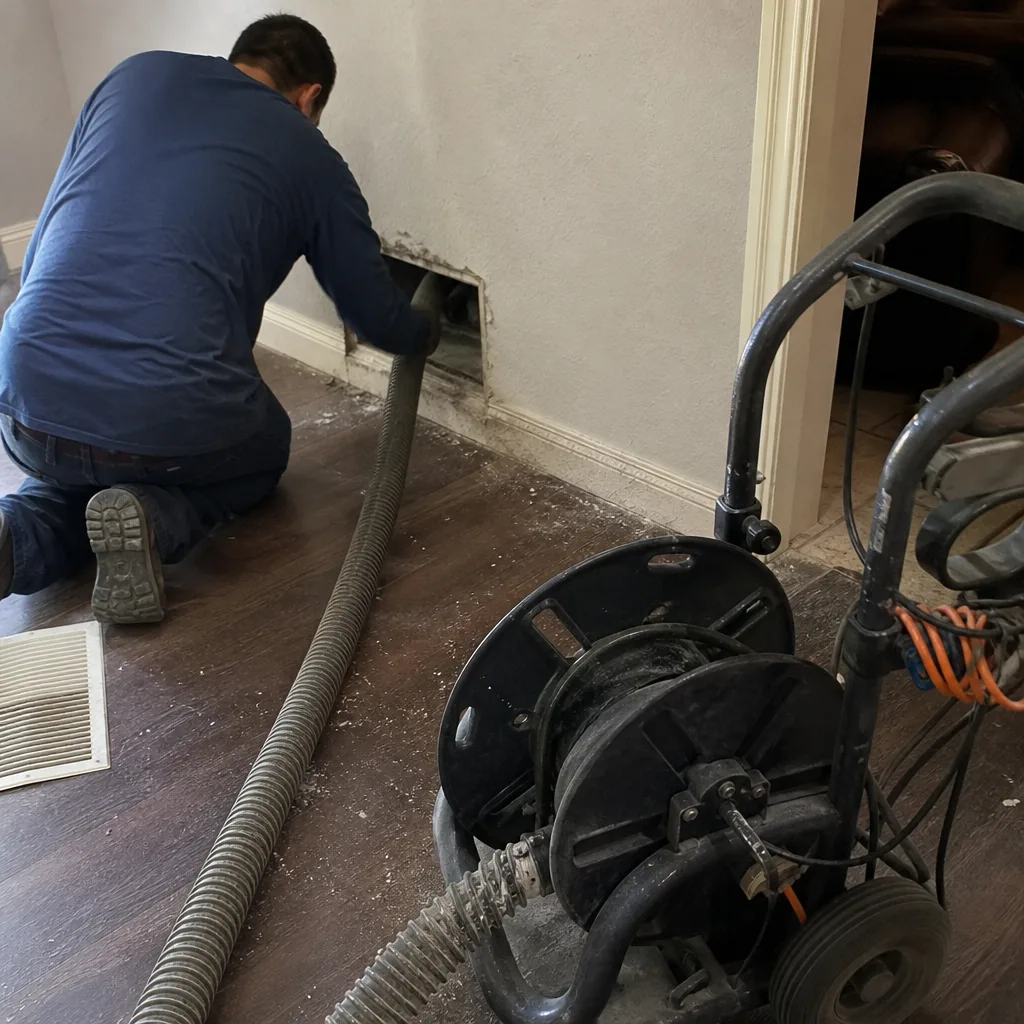 Before
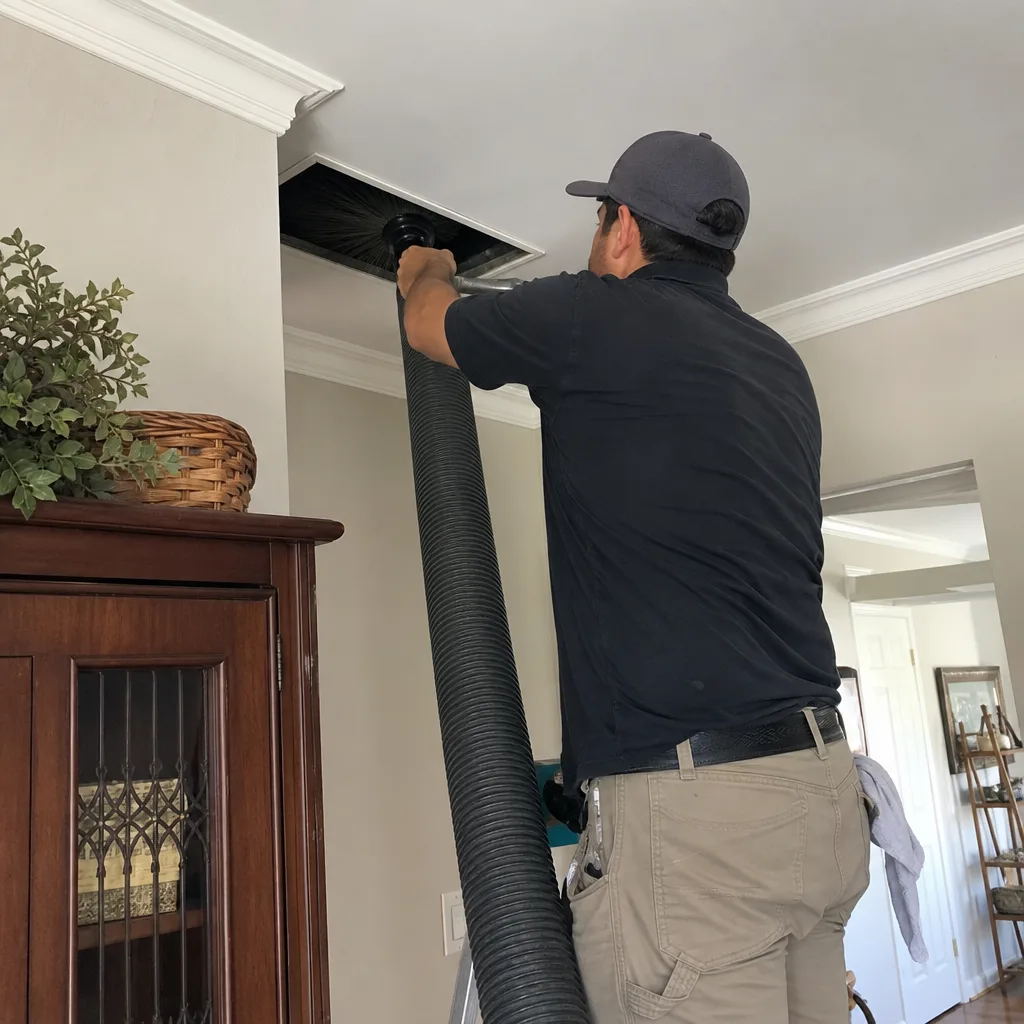 After
After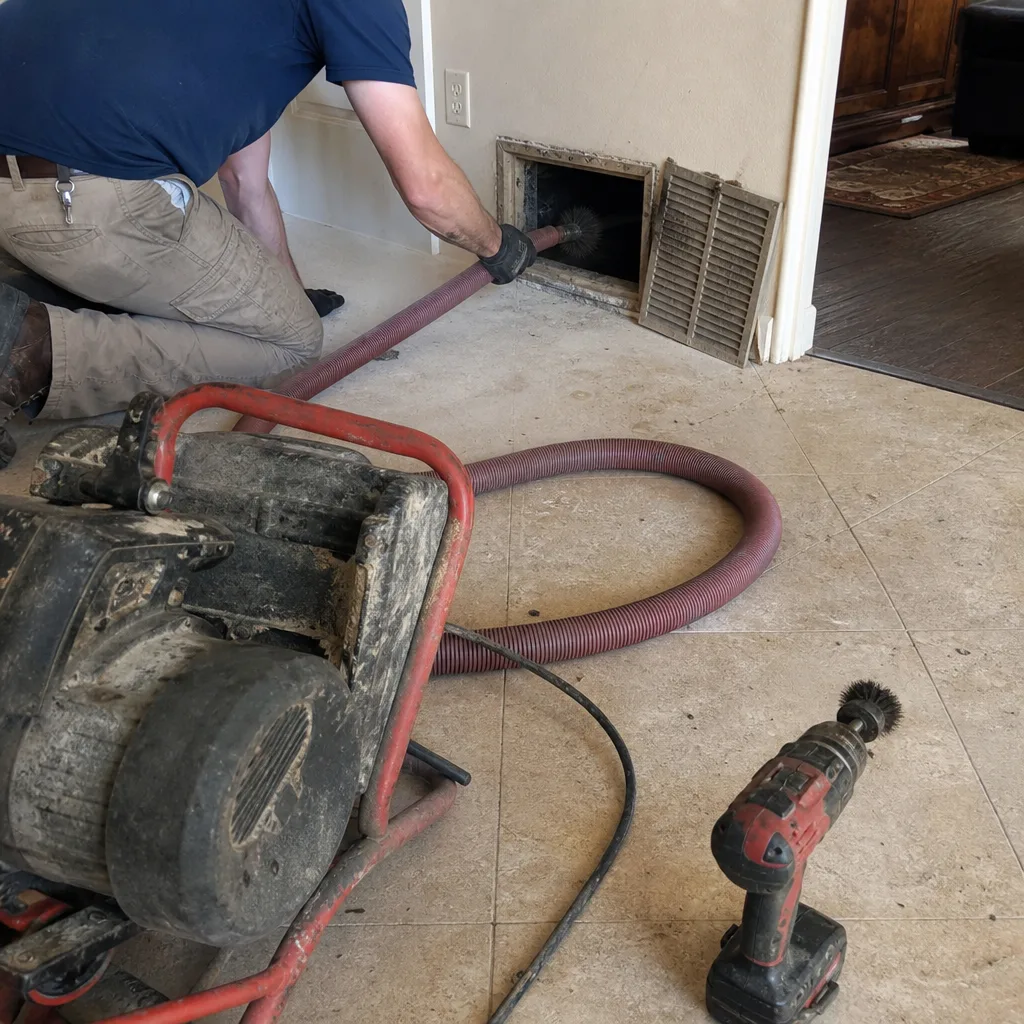 Before
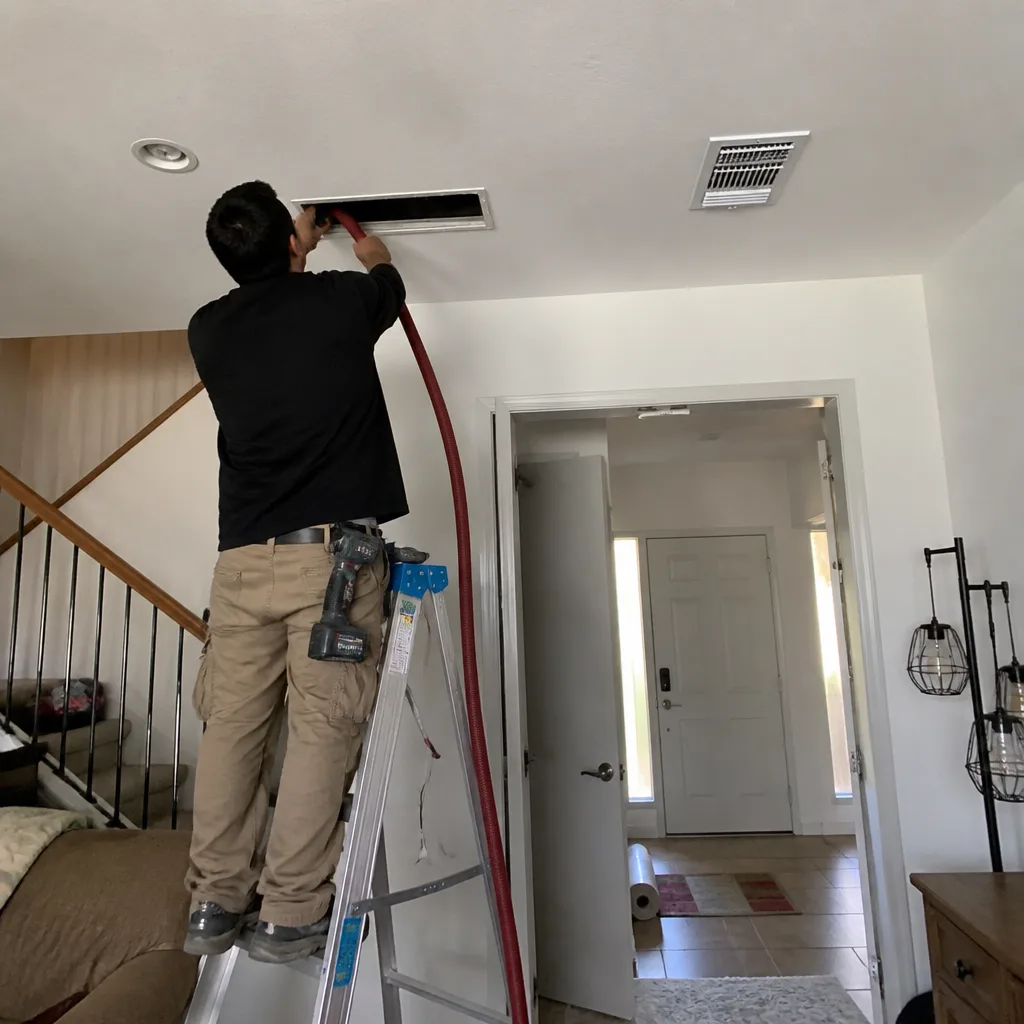 After
After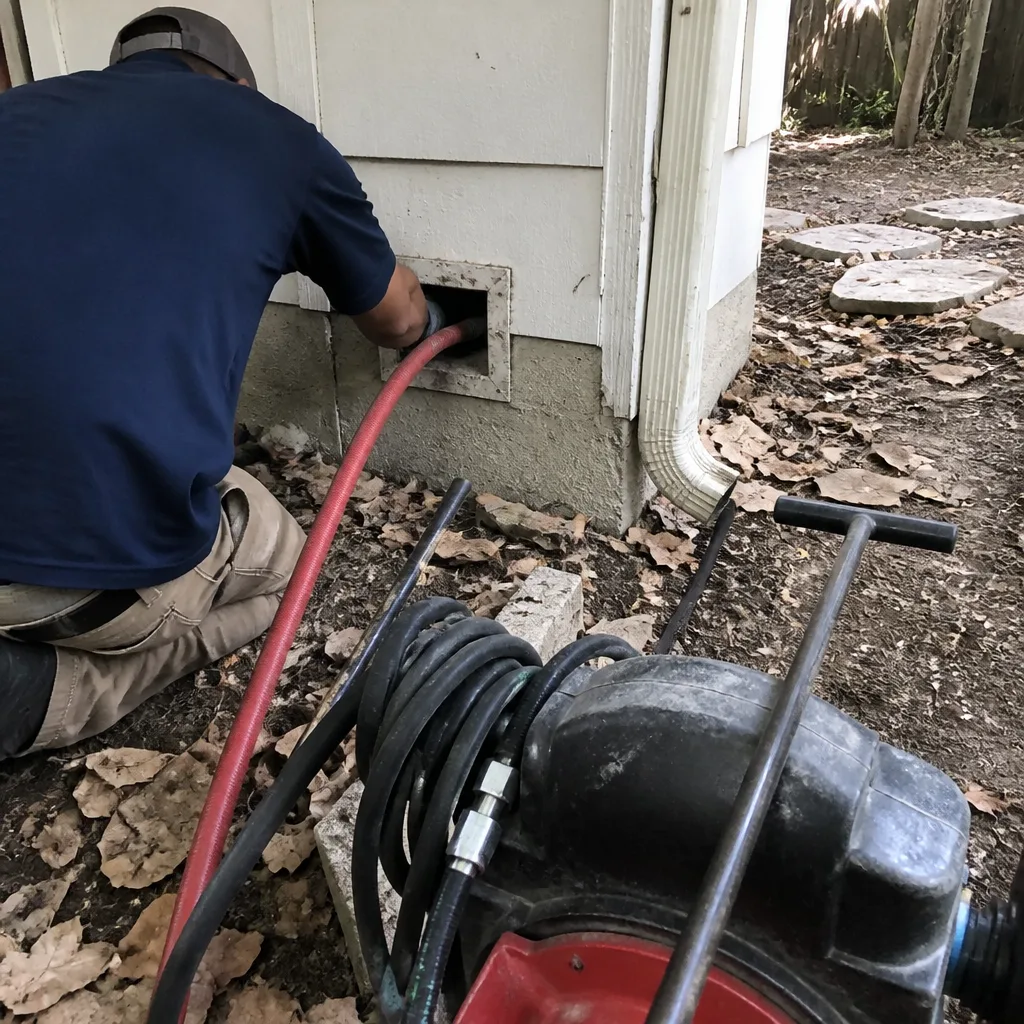 Before
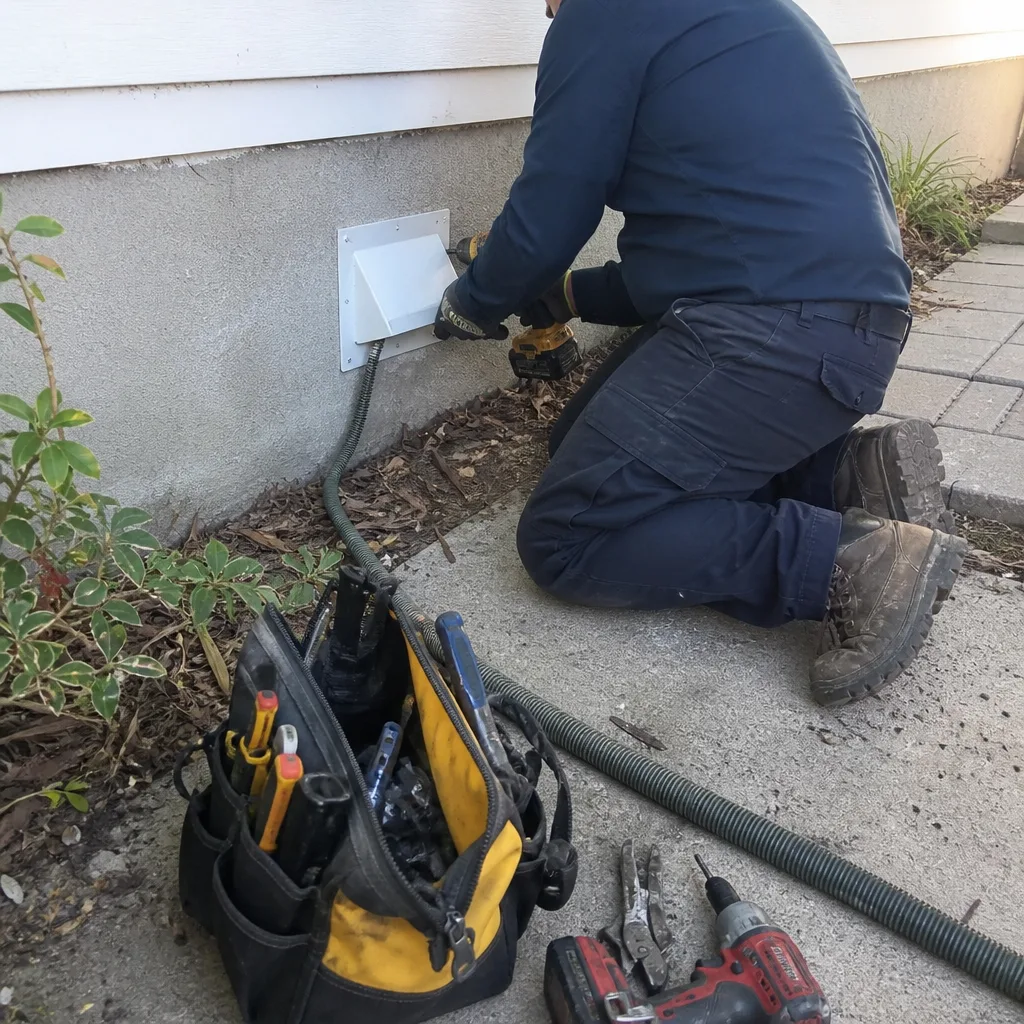 After
AfterAir Duct Cleaning Permits, Codes & Inspections in TX: What You Need to Know
A technician who opens a duct joint, replaces a flex run, or seals a plenum breach without a mechanical permit in Texas is performing unlicensed work on your home’s mechanical system, and your insurance carrier may not cover subsequent damage. Most homeowners in New Braunfels assume air duct cleaning is lightly regulated, which is true for cleaning alone. The problem is that many duct cleaning jobs in Comal County cross the line into repair without anyone documenting the crossing. In this guide and our related resource on The Complete Guide to Air Duct Cleaning in New Braunfels, we’ll show you exactly where Texas law draws that line, what triggers a permit in New Braunfels city limits, how to verify a contractor’s license, and why the EPA registration on a sanitizer matters more than the brand name on the truck.
Quick Answer
Air duct cleaning as a standalone service does not require a state license or permit in Texas. However, duct repair, replacement, or any mechanical alteration, including resealing disconnected joints or replacing crushed flex duct, must be performed by a licensed HVAC contractor under Texas Occupations Code Chapter 1302 and may require a local mechanical permit. In New Braunfels and unincorporated Comal County, any modification to your home’s HVAC distribution system triggers permit requirements, and unpermitted work can surface on resale inspections.
Table of Contents
- Where Texas Law Draws the Line: Cleaning vs. Repair
- New Braunfels Permit Requirements and Comal County Codes
- How to Verify a Contractor’s HVAC License in Texas
- Specific Duct Work Scenarios That Trigger Permits
- Resale Consequences of Unpermitted Duct Work
- EPA Sanitizer and Biocide Rules for Ductwork
- What CleanRun Documents on Every Job
- Common Mistakes to Avoid
BeforeAfterWhere Texas Law Draws the Line: Cleaning vs. Repair
Texas does not license air duct cleaning as a standalone trade. A technician can legally operate a negative-pressure extraction system (a vacuum unit that pulls debris from your ducts while agitation tools knock it loose) and clean every register, return, and trunk line in your home without holding an HVAC license. The Texas Department of Licensing and Regulation, or TDLR, does not regulate this activity.
The line appears when the technician touches the physical integrity of the duct system. Under Texas Occupations Code Chapter 1302, any work that “installs, maintains, or repairs” an air conditioning or heating system, including its ductwork, requires a Texas Air Conditioning and Refrigeration Contractor license. The statute is broader than most homeowners expect. It does not distinguish between new installation and minor repair. If a technician detaches a duct run to gain access and reattaches it with mastic sealant, that is repair work. If a crushed flex duct in your attic is replaced with new material, that is installation work. Both require licensure.
We’ve seen this confusion - which we detail further in Air Duct Cleaning Warning Signs: A New Braunfels Homeowner’s Reference Guide - play out repeatedly in neighborhoods like River Chase, Vintage Oaks, and the older homes near downtown. A homeowner books a “duct cleaning” to address weak airflow in a back bedroom. The crew discovers a detached boot collar, the connection point where the duct meets the wall or floor register. They reattach it with tape or sealant, bill it as part of the cleaning, and leave. The homeowner got better airflow. But if that reattachment was done by an unlicensed technician without a permit, the work exists in a legal gray zone that can complicate insurance claims, home sales, and warranty coverage.
The practical takeaway: ask before the truck arrives whether the scope includes anything beyond our Air Duct Cleaning services. A legitimate contractor will tell you exactly what they plan to do and whether it crosses into regulated territory.
New Braunfels Permit Requirements and Comal County Codes
New Braunfels operates under the 2021 International Mechanical Code with local amendments, and the city’s Development Services Department requires permits for any mechanical alteration to existing HVAC systems. This includes ductwork modifications, not just equipment replacement. The unincorporated areas of Comal County follow similar standards through the county’s building inspection office.
In New Braunfels city limits, a mechanical permit is required when a contractor:
- Removes or replaces any section of rigid or flexible duct
- Modifies duct routing or adds new duct runs to serve additional spaces
- Seals or repairs plenum breaches, the large sheet-metal box that connects your air handler to the duct trunk lines
- Installs or replaces dampers, turning vanes, or other airflow-control devices inside the distribution system
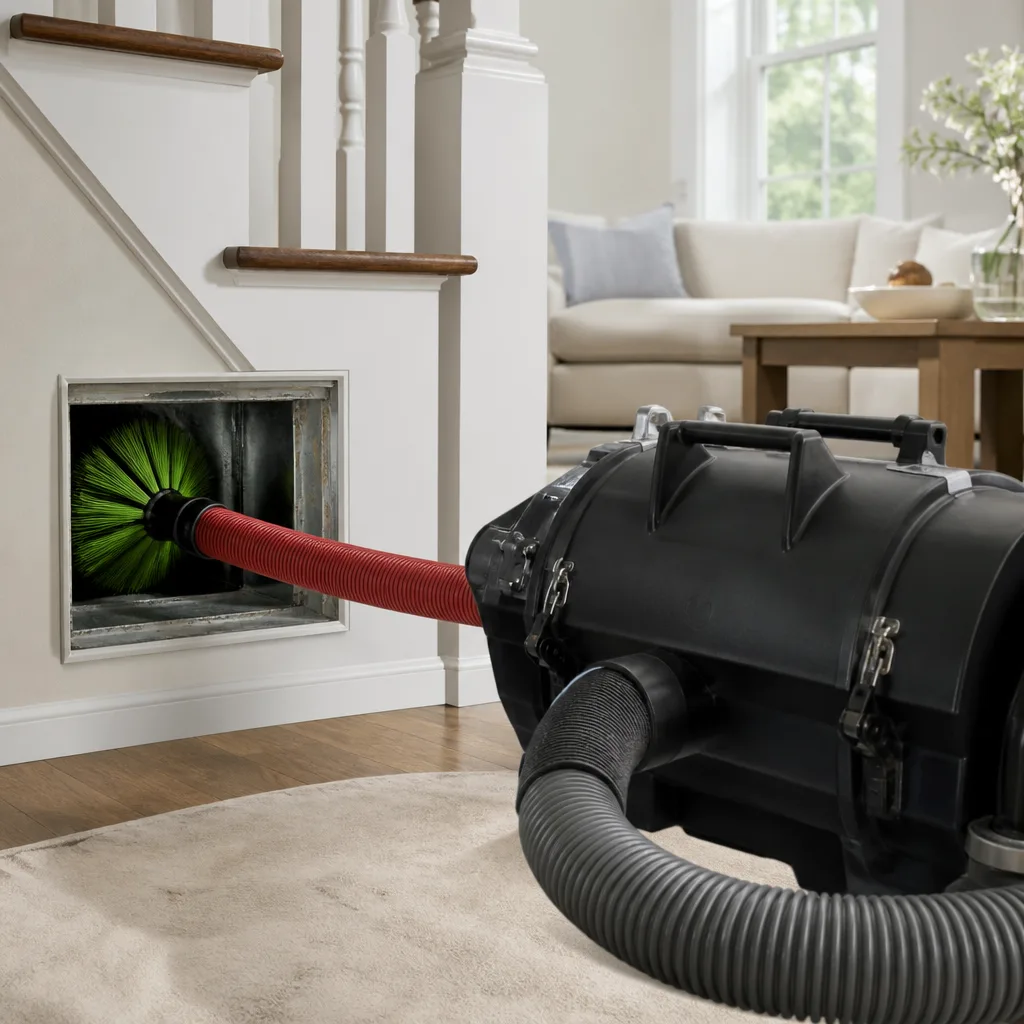
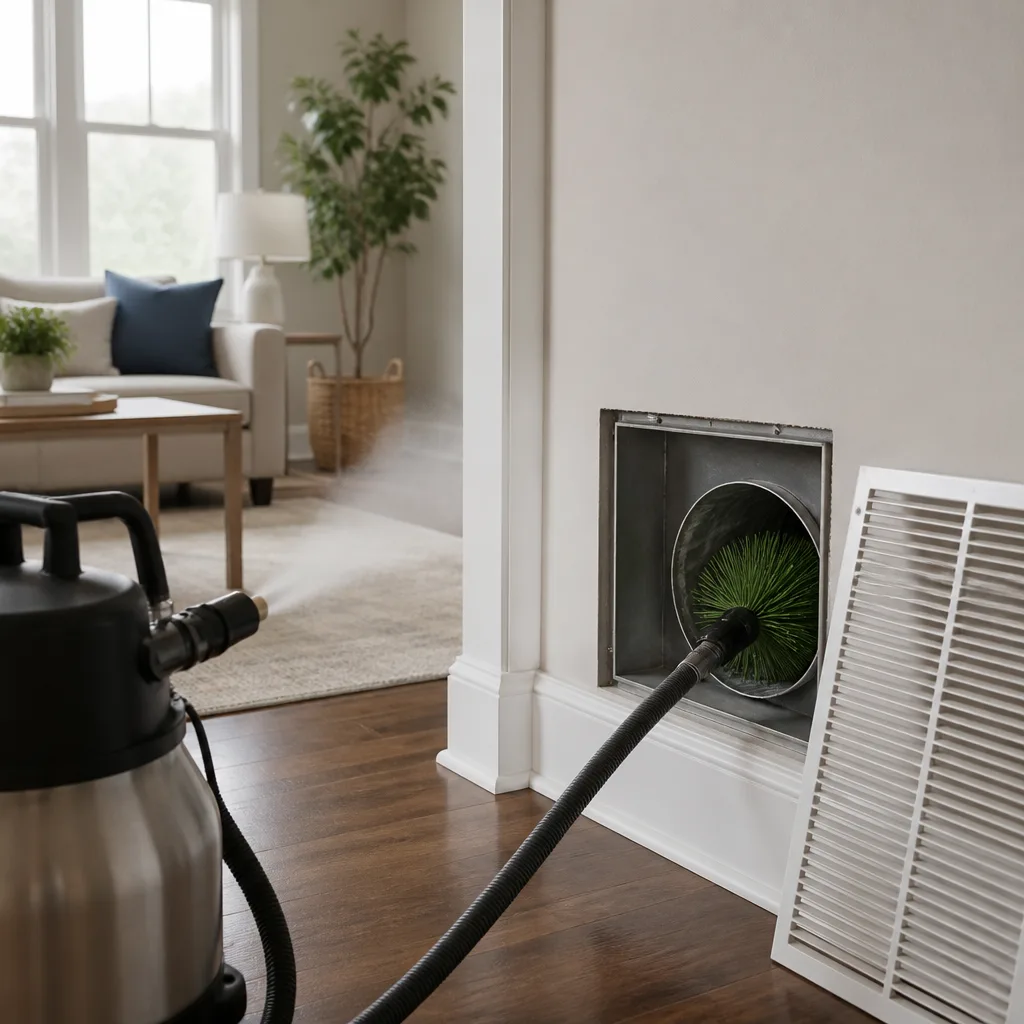
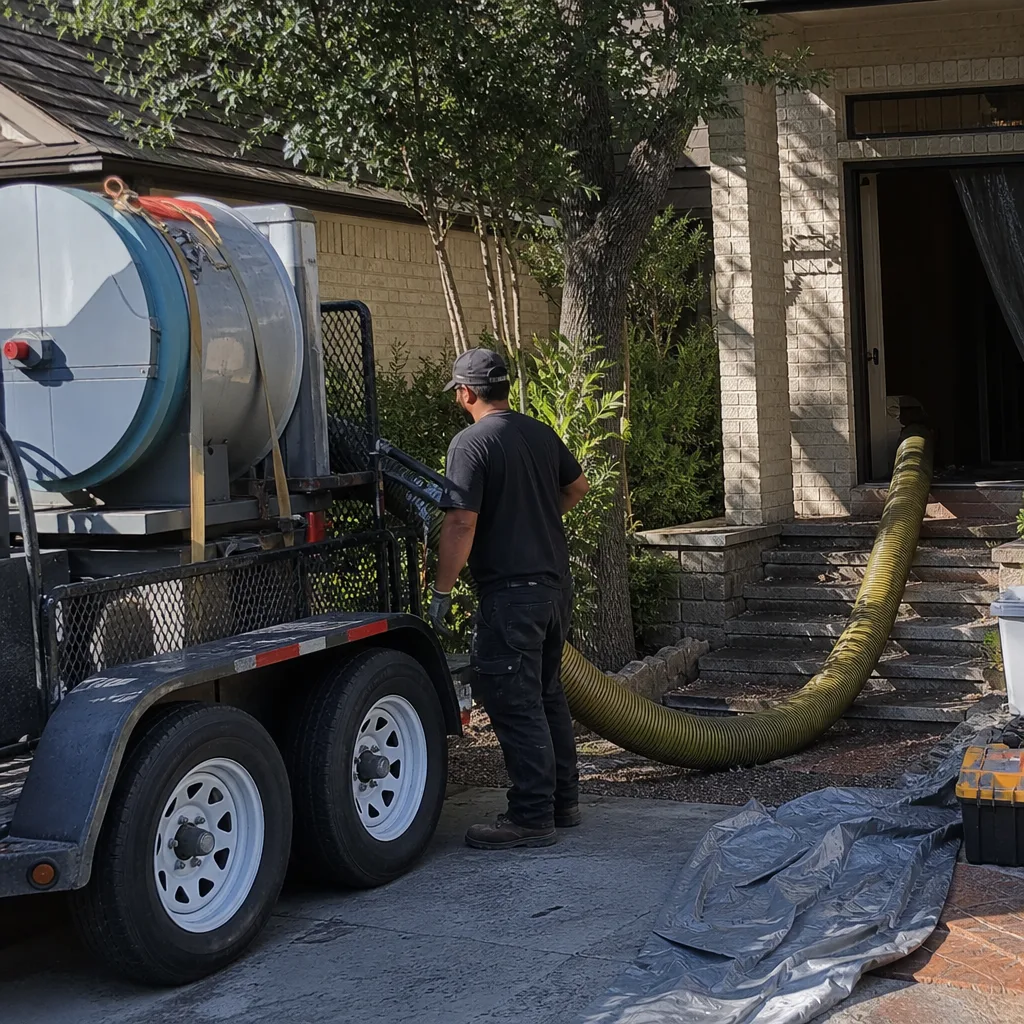
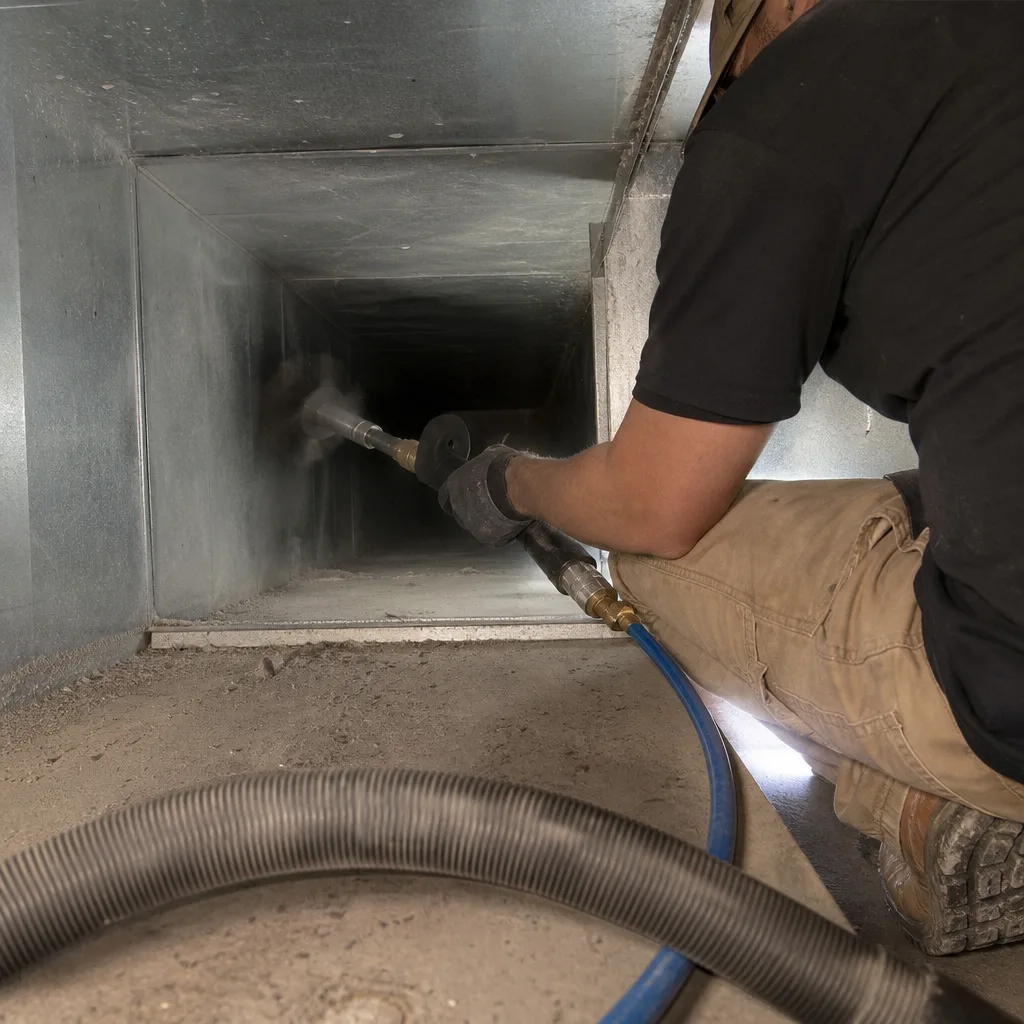
What does not require a permit is the cleaning itself. A technician can insert a Rotobrush or Nikro vacuum hose, run agitation tools through the full length of each duct run, and extract debris without pulling a permit. The moment they cut, seal, or replace material, the permit requirement activates.
New Braunfels also enforces energy code compliance on any ductwork that is modified or replaced. Duct insulation in unconditioned spaces must meet R-8 minimum, and flex duct must be fully extended and supported per manufacturer specifications, not compressed between joists or draped over insulation. We’ve found crushed flex duct in attics throughout the Hill Country, where summer attic temperatures exceed 140 degrees and compressed ductwork loses both capacity and insulation value. A proper repair replaces the damaged section with new, properly supported material, and that replacement requires both a licensed contractor and a permit.
Homeowners can verify permit requirements for a specific project by calling New Braunfels Development Services at (830) 549-6847 or checking the city’s online permit portal. Comal County residents outside city limits should contact the county’s Community Services Department.
How to Verify a Contractor’s HVAC License in Texas
Texas makes contractor verification straightforward, and you should complete this step before anyone enters your home. The TDLR maintains a public license lookup at tdlr.texas.gov where you can search by company name, individual name, or license number.
There are two relevant license types for duct work:
- Air Conditioning and Refrigeration Contractor (TACLA): Required for any business that installs, maintains, or repairs HVAC systems, including ductwork. The license holder must carry general liability insurance and maintain a registered responsible master electrician or mechanic.
- Technician Registration (TACLT): Allows an individual to perform HVAC work under the supervision of a licensed contractor. A technician registration alone is not sufficient for unsupervised work or for a company to operate independently.
When you search the TDLR database, confirm three things:
- The license status reads “Active” with no disciplinary history
- The license classification matches the work being performed
- The company name on your contract matches the licensed entity, or the licensed contractor is named as the responsible party
Some duct cleaning companies in the New Braunfels market operate without TACLA licensure and subcontract any repair work to a third party. This is legal if disclosed, but it creates accountability gaps. If the cleaning company damages your ductwork and the repair subcontractor’s work fails, you may face a dispute over which party is responsible. We recommend requiring that any repair or modification be performed by or directly supervised by the TACLA-licensed contractor whose name appears on your permit application.
CleanRun Air Duct Cleaning New Braunfels operates under the Haven Standard, and our license number is published on every proposal and on our website, not buried in a footer. We believe a customer should be able to verify credentials before the technician arrives, not after a problem surfaces.
Specific Duct Work Scenarios That Trigger Permits
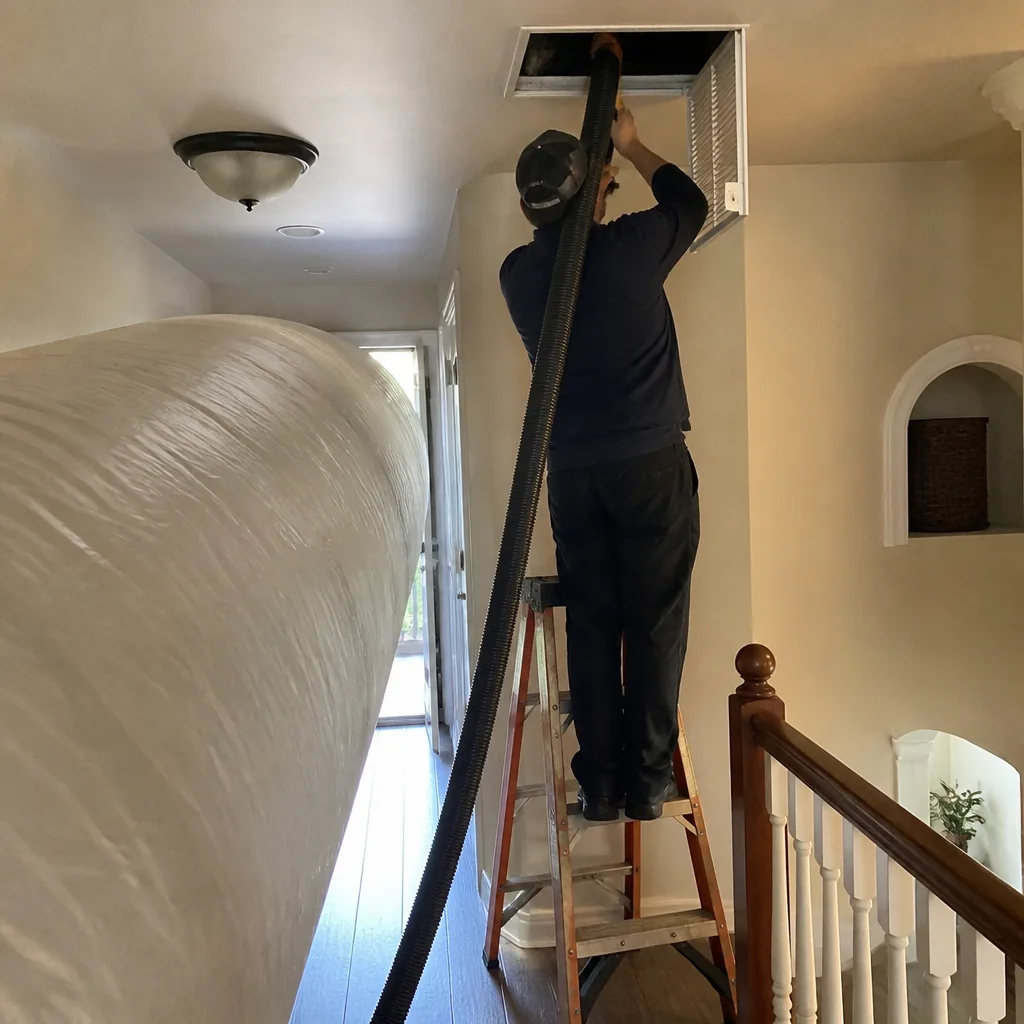
The following scenarios commonly arise during duct cleaning appointments in New Braunfels homes. Each describes where the line falls between cleaning and regulated repair.
Scenario 1: Disconnected Joint at a Plenum or Trunk Line
The technician’s camera shows a 2-inch gap where the main trunk line has separated from the plenum, blowing conditioned air into your attic. Reconnecting this joint with mastic, foil tape, or a mechanical collar is duct repair under Chapter 1302. It requires a licensed HVAC contractor and, in New Braunfels, a mechanical permit.
Scenario 2: Crushed or Kinked Flex Duct
Flex duct in attics often gets compressed by storage boxes, insulation installation, or original poor routing. A technician cannot simply “uncrush” it and call the job done. Replacement with new flex duct, properly sized and supported, is installation work. The old material must be removed, new material cut to length, and connections sealed. Permit required.
Scenario 3: Detached Boot Collar
The boot is the sheet-metal fitting that transitions from round duct to rectangular floor or wall register. When the duct pulls away from the boot, airflow to that room drops sharply. Reattaching with screws, draw bands, and sealant is repair work. If the boot itself is damaged and must be replaced, that crosses into installation.
Scenario 4: Duct Sealing as a Standalone Service
Aeroseal and similar aerosol-based duct sealing technologies are increasingly marketed to New Braunfels homeowners. These systems seal leaks from inside the ductwork by injecting a vinyl polymer fog that bonds at leak points. In Texas, this is generally classified as repair or modification, not cleaning, and should be performed by a licensed contractor with appropriate permits.
Scenario 5: Register and Grille Replacement
Replacing a painted-over floor register with a new adjustable model seems cosmetic. But if the replacement requires modifying the boot opening or adjusting duct connections behind the wall, the work becomes mechanical alteration. Simple drop-in replacements without duct modification typically do not trigger permits.
Our crews carry Rotobrush and Nikro equipment for cleaning, and we document every duct run with before-and-after photography. When our inspection finds conditions like those above, we stop and explain the finding. If repair is needed, we provide a written scope and price for the licensed repair work, separate from the cleaning estimate, and we pull the required permit before returning to complete the job.
Resale Consequences of Unpermitted Duct Work
Unpermitted mechanical work in Texas can surface during a real estate transaction and create problems that outlast the original job by years. Here’s how it typically plays out in New Braunfels and Comal County.
When a buyer makes an offer on a home, their inspector examines visible HVAC components. If the inspector finds new duct tape at a plenum joint, replaced flex duct with a newer manufacturing date than surrounding material, or a sealed breach that doesn’t match the original construction, they flag it. The standard Texas Real Estate Commission disclosure form asks whether the seller is aware of any work performed without required permits. A seller who knows of unpermitted duct repair must disclose it or risk liability.
The consequences range from minor to deal-breaking:
- The buyer requests permit documentation, which doesn’t exist
- The buyer’s lender or insurer requires a retroactive inspection, which the seller must pay for
- The deal is delayed while a licensed contractor pulls a permit and inspects the work, sometimes requiring access to finished spaces
- In worst cases, the work must be redone to visible standards, at full cost, with no recourse against the original unlicensed provider
New Braunfels has seen rapid appreciation since 2020, with many homes in developments like Meyer Ranch and Copper Ridge selling above $400,000. At these price points, buyers are thorough, and inspectors are detail-oriented. A $200 duct repair done without a permit in 2022 can become a $2,000 problem at closing in 2026.
The protection is simple: demand that any duct work beyond cleaning be permitted, and keep the permit documentation with your home records. CleanRun provides a complete job record including photos, written scope, and permit copies when applicable, as part of our standard deliverable on every visit.
EPA Sanitizer and Biocide Rules for Ductwork
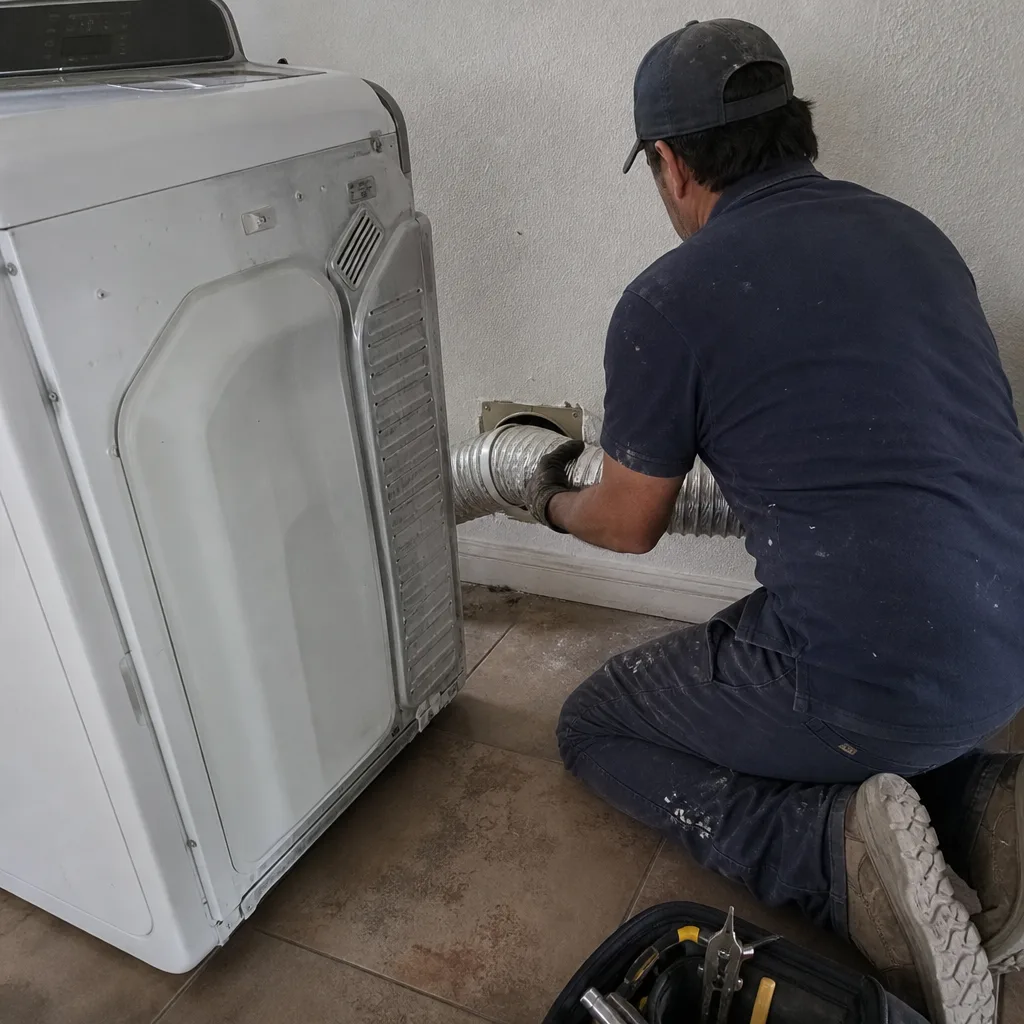
Duct cleaning often includes an offer to apply a sanitizer or deodorizer inside the ductwork. This is legally distinct from cleaning and falls under federal pesticide law, not Texas mechanical codes. The Environmental Protection Agency regulates all products used to kill, repel, or control microorganisms in ducts, and only EPA-registered products are legal for this purpose.
The relevant regulation is FIFRA, the Federal Insecticide, Fungicide, and Rodenticide Act. Under FIFRA, a product applied inside ductwork to control mold, bacteria, or odors must have an EPA registration number and a label that specifically lists HVAC use. The label is the law. A contractor cannot legally use a product in a manner inconsistent with its labeling, and they cannot substitute a general-purpose cleaner or an unregistered “natural” alternative.
What this means for homeowners in New Braunfels:
- A contractor applying sanitizer should provide the EPA registration number on request
- The product label should specify use in HVAC systems, not just general surfaces
- Application should follow label directions for concentration, contact time, and ventilation
- Post-application, the system should not be operated until the required re-entry or ventilation period has passed
Some companies market “fogging” services with proprietary or unnamed products. We recommend declining these offers unless the contractor can produce a label with EPA registration. CleanRun uses only EPA-registered sanitizers from established manufacturers, and we include the product name and EPA number in the written job record delivered to every customer.
The EPA also cautions that sanitizers are not a substitute for physical removal of debris. A duct system with visible contamination should be cleaned before any sanitizer is applied. Applying chemicals to a dirty surface reduces effectiveness and can distribute contaminants rather than remove them.
What CleanRun Documents on Every Job
Our response to this regulatory environment is documentation. Every Air Duct Cleaning in New Braunfels job we perform includes a written record that protects the homeowner and creates accountability for our work.
Haven Standard Clause 1 requires a written price before any work starts. When our technician arrives, they inspect the system, identify any conditions that cross from cleaning into repair, and present a written scope with line-item pricing. If repair work requiring a permit is needed, we explain the finding, provide a separate repair estimate, and schedule the permitted work for a later date. We do not perform unpermitted repairs.
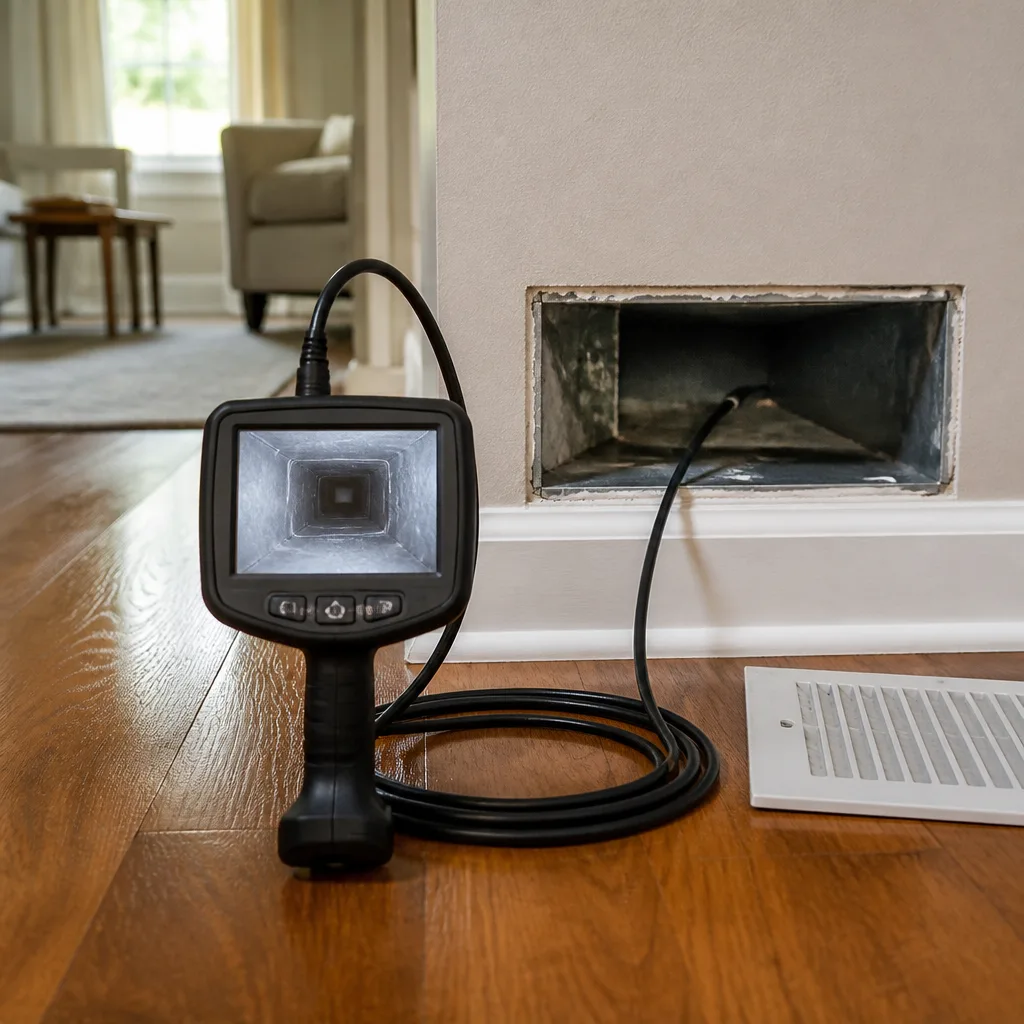
The Documented Photo Record, included on every visit, shows the inside of every duct run before and after cleaning. These images are delivered to the customer as part of the standard job record. In a New Braunfels home built in 2019 near Fischer Park, our camera recently showed a 3-inch debris build-up at the first elbow of the master bedroom return, with construction dust and drywall fragments from original build-out. The after photo showed the full diameter restored. This is the difference between real work and vacuum noise.
For jobs that include repair or modification, we pull the required New Braunfels mechanical permit and include the permit number and inspection sign-off in the job record. The 365-Day Done Right Promise, backed in writing on every job, means that if any aspect of our work is not right, we make it right. This is not a policy subject to manager approval. It is a written guarantee.
Our equipment roster includes Rotobrush and Nikro for agitation and negative-pressure extraction, and we use Honeywell and Aprilaire components when air quality upgrades are part of the scope. Customers can look up these brands independently to verify what equipment is being used before agreeing to a price.
We also offer a Free Second Opinion on any written estimate. Bring a competitor’s quote, and we’ll put our number next to it in writing, with no obligation.
Common Mistakes to Avoid
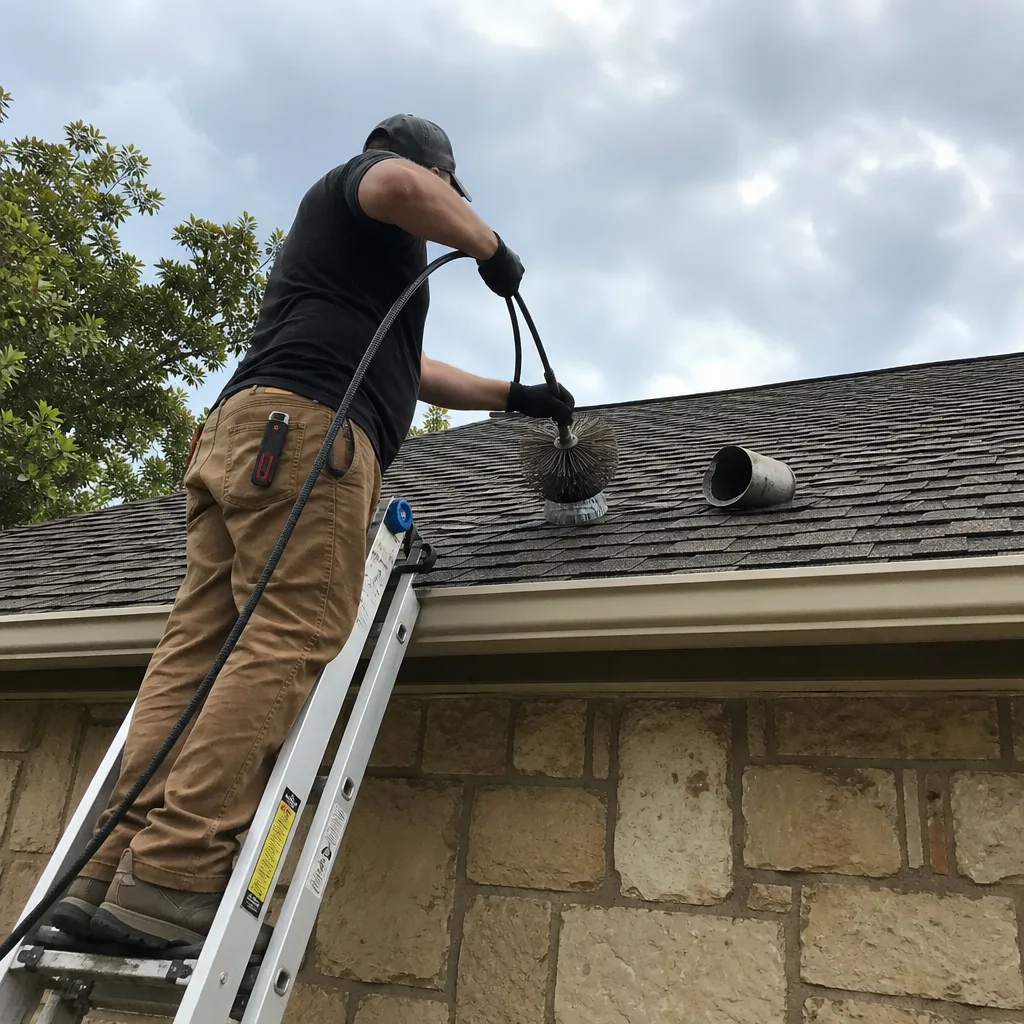
- Hiring based on the lowest cleaning price without asking about repair scope. A $79 coupon special becomes expensive when the technician discovers “unexpected” repair needs and performs them without licensure or permits.
- Assuming duct cleaning and duct repair are the same regulated activity. They’re not. Texas regulates one and not the other, and the distinction matters for your home’s legal and insurance standing.
- Accepting verbal assurances about licensing. Every TACLA license can be verified in 60 seconds on tdlr.texas.gov. A contractor who hesitates to provide a license number is telling you something.
- Ignoring permit requirements for “minor” repairs. New Braunfels does not exempt small duct repairs from its mechanical code. A detached boot collar resealed without a permit is still unpermitted work.
- Agreeing to sanitizer application without seeing the EPA label. Unregistered products are illegal for duct use and may leave residues that affect indoor air quality.
- Failing to retain job documentation for resale. Keep permits, photos, and written scopes with your home records. Future buyers and inspectors will ask.
- Allowing a cleaning technician to modify ductwork on the spot. If repair is needed, it should be scoped, priced, and permitted separately, not rushed through as an add-on to a cleaning appointment.
When to Call a Professional
For more guides & resources, see our blog, or call a licensed professional when your duct system needs anything beyond debris removal. If you have weak airflow in specific rooms, visible mold inside registers, disconnected ductwork in your attic, or you’re preparing to sell your home and want clean documentation of its mechanical condition, a TACLA-licensed contractor can assess the system legally and pull any required permits.
CleanRun Air Duct Cleaning New Braunfels offers free estimates in New Braunfels and surrounding Comal County communities. Every estimate includes a written price before work starts, and our technicians are background-checked, uniformed, and identified by name before arrival under Haven Standard Clause 3: Verified Crews. Call (830) 549-6847 to schedule.
Frequently Asked Questions
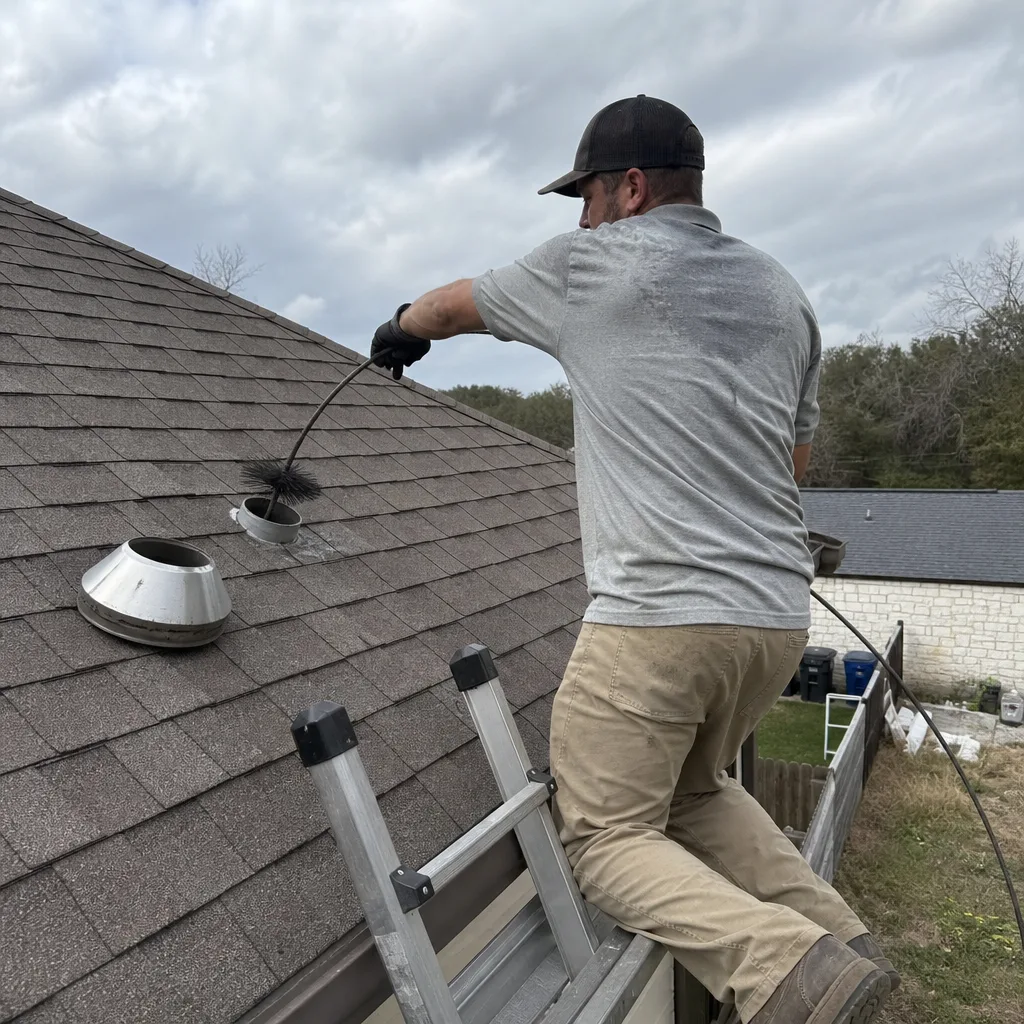
No. Air duct cleaning as a standalone service does not require a state license or local permit in Texas. The activity is not regulated by TDLR. However, if the cleaning process reveals damage that requires repair, replacement, or modification of ductwork, those subsequent activities require a licensed HVAC contractor and may require a local mechanical permit.
Permitted duct repair typically costs 15-25% more than unpermitted work because it includes the contractor’s licensure costs, permit fees, and inspection coordination. In New Braunfels, a standard mechanical permit for minor duct repair runs $75-150, with inspection included. The difference is that permitted work is insurable, transferable at sale, and backed by the contractor’s license bond. Unpermitted work carries none of these protections. Call (830) 549-6847 for an exact quote on your specific repair - estimates are free.
Ask for their TACLA license number and verify it at tdlr.texas.gov. If they subcontract repairs, ask for the subcontractor’s license number and confirm that the licensed entity will appear on the permit application. A legitimate company will provide this information without hesitation. CleanRun publishes its license number on every proposal and on our website.
Yes. If unpermitted duct repair causes water damage, mold growth, or fire due to improper installation, your insurer may deny the claim based on the unlicensed work exclusion in most policies. Insurance carriers expect mechanical work to be performed by licensed contractors in compliance with local codes. Documentation of proper permitting protects your coverage.
Most homes in New Braunfels benefit from duct cleaning every 3-5 years, though the interval varies with conditions. The Hill Country’s caliche dust, pollen loads from live oak and cedar, and new construction debris in homes built between 2015 and 2025 all accelerate accumulation. Homes with pets, recent remodeling, or occupants with allergies may need more frequent service. The camera doesn’t lie - if the inspection shows significant build-up, cleaning is warranted regardless of calendar time.
You should receive a written invoice with scope of work, a photo record showing before and after conditions inside your ducts, documentation of any products used (including EPA registration for sanitizers), and copies of any permits pulled for repair work. This documentation belongs in your home file for future reference and resale. CleanRun delivers all of these as standard on every job, not as optional add-ons.
The Bottom Line
Texas law leaves air duct cleaning unregulated, which benefits homeowners seeking straightforward maintenance. The same legal framework creates risk when cleaning turns into repair without proper licensure and permitting. In New Braunfels and Comal County, any modification to your HVAC distribution system requires a TACLA-licensed contractor and a mechanical permit. The cost of compliance is modest compared to the liability of unpermitted work, particularly at resale. Verify licenses through TDLR, demand EPA-registered products for sanitizing, and keep complete documentation. The contractor who shows you the before photo, names the exact price in writing, and pulls the required permit is the one whose work will still be defensible years later.
Written by Tomas Reyes, Owner at CleanRun Air Duct Cleaning New Braunfels, serving New Braunfels since 2013.